Starving In A Manufactured Famine
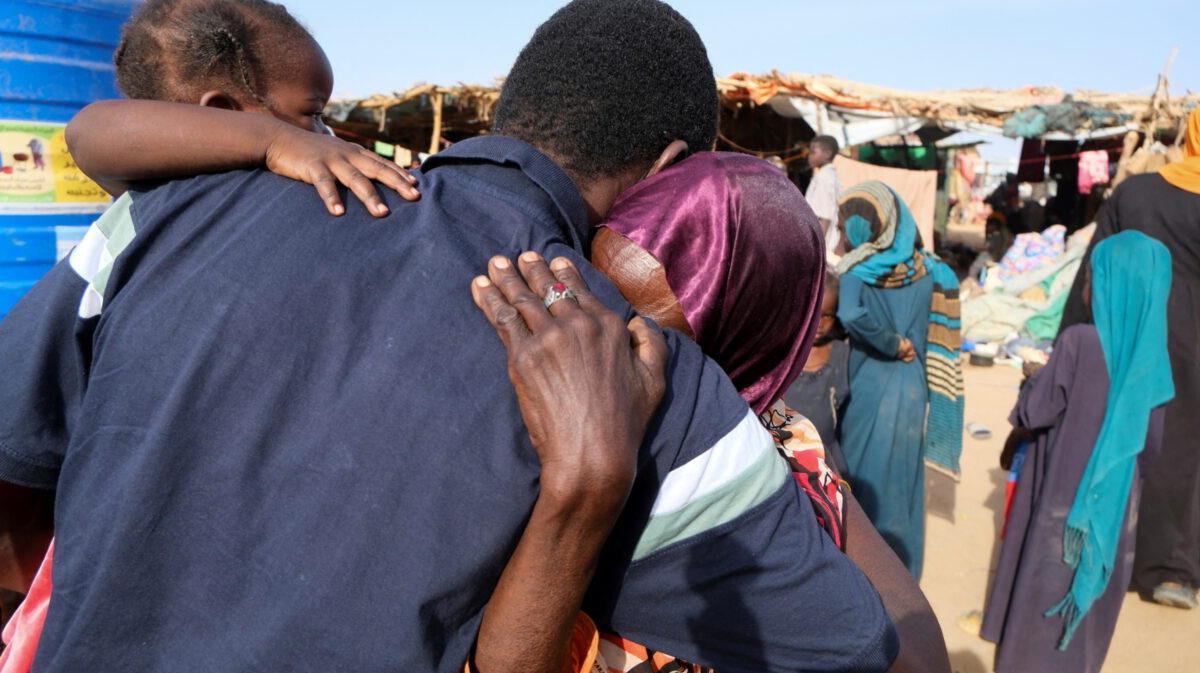
Sudan’s war has become a grinding catastrophe, stretching into a fourth year as hunger and fear seep into nearly every corner of daily life. For millions of civilians, the conflict is no longer breaking news but a constant, suffocating reality.
What began in April 2023 as a power struggle between rival military leaders has turned the country into a testing ground for cruelty. The national army and the paramilitary Rapid Support Forces, once uneasy partners in a coup that derailed Sudan’s democratic hopes, are now locked in a brutal contest that has shredded cities, emptied villages, and poisoned the countryside with violence. International officials describe the conflict as an “atrocities laboratory,” a phrase that captures both the scale of the suffering and the sense that the world is watching without stopping the experiment.
The hunger crisis consuming Sudan is not a quirk of bad weather or misfortune; it is the outcome of choices. Aid agencies warn that farmlands have been abandoned under threat of attack, seed stores looted or destroyed, and basic agricultural services dismantled by the fighting. Before the war, most Sudanese families leaned on farming, herding, or small plots to feed themselves. Now, millions struggle to find even a single meal a day, and in some areas, people survive on leaves, animal feed, or whatever they can pull from a ruined landscape.
Global turmoil has tightened the chokehold. The American-Israeli war on Iran has driven up fuel and fertilizer prices, adding a new layer of pressure to a country already on its knees. Moving food is more expensive, growing it is harder, and the price of staples rises even as incomes collapse. The World Food Program’s leadership describes a vicious feedback loop: conflict drives hunger, hunger fuels instability, and both together make it harder for aid to reach the people who need it most.
Few places have been spared the upheaval of mass displacement. Around 14 million Sudanese have been forced to leave their homes, scattering into overcrowded camps, temporary settlements, and neighboring countries. Khartoum, once the nerve center of political and economic life, now bears the scars of burned neighborhoods and bombed-out streets. In rural areas, fallow fields and shuttered markets tell the same story: communities uprooted, livelihoods erased, and families left to navigate an endless search for shelter, food, and safety.
The roots of the conflict lie in a broken promise. After the fall of longtime ruler Omar Hassan al-Bashir, Sudan seemed poised for a civilian-led future, only to see its transition hijacked by military power brokers. The army and the Rapid Support Forces joined forces in a 2021 coup, then turned their guns on each other two years later when competing ambitions for control boiled over. Since then, efforts to broker a lasting cease-fire or political settlement have repeatedly stalled, even as the death toll rises and the country’s institutions crumble.
Sudan’s natural wealth, far from offering a path out of crisis, has helped entrench it. The gold industry, a cornerstone of the wartime economy, continues to churn out profits that help finance both sides of the conflict. Foreign players have been drawn into this network of money and influence, shipping arms and cash into the country while denying any direct role in the fighting. The United Arab Emirates, in particular, has faced accusations of backing the Rapid Support Forces, allegations it rejects even as investigators trace supply lines and financial flows tied to the war.
The toll on ordinary life is staggering. Hospitals have been destroyed or abandoned, health workers are overwhelmed or displaced, and basic medicines are increasingly scarce. Schools have emptied out, leaving a generation of children with little more than memories of classrooms and lessons interrupted by gunfire. Official counts put civilian deaths in the tens of thousands, but broader estimates, factoring in hunger, disease, and unrecorded killings, suggest the true number could be several hundred thousand.
In Darfur and other regions, the violence has taken on an explicitly ethnic edge. The Rapid Support Forces and allied militias have been accused of targeting non-Arab communities in campaigns of killing, rape, and forced displacement. The United States has formally labeled these actions genocide, and United Nations investigators say genocidal acts were committed after the fall of El Fasher in 2025. For survivors, the echoes of earlier atrocities in Darfur are unmistakable, fueling a sense that history is repeating itself with chilling precision.
Children sit at the center of this disaster. UNICEF has documented thousands of children killed or injured since the war began, many of them the victims of air and drone strikes that tear through homes, streets, and crowded public spaces. Malnutrition quietly claims others, their weakened bodies too fragile to withstand disease or the harsh conditions of displacement camps. Aid workers emphasize that even these grim figures likely underestimate the reality, as vast swaths of the country remain difficult or impossible to reach.
The international response has been a mix of urgency and insufficiency. Donors have gathered at conferences and pledged billions of dollars in humanitarian assistance, including a recent $200 million commitment from the United States and additional promises totaling $1.53 billion in Berlin. Yet the gap between announcements and impact remains deep, especially as needs continue to swell. U.N. Secretary General António Guterres has been blunt: without a cease-fire and political progress, no amount of aid money will be enough to pull Sudan back from the brink.
Another cruelty of Sudan’s war is its relative invisibility. In a world riveted by conflicts in Europe and the Middle East, the slow-motion collapse of a vast African nation struggles to stay in the spotlight. Humanitarian leaders warn that this neglect risks turning extraordinary suffering into background noise, making it easier for governments and armed groups to treat the crisis as someone else’s problem. As long as the warring factions face more pressure to win on the battlefield than to compromise at the negotiating table, they argue, the war will drag on and the hunger will deepen.
As Sudan enters its fourth year of conflict, the country stands at a crossroads that feels less like a choice and more like a countdown. Each month of fighting strips away another layer of resilience—another harvest lost, another school closed, another community scattered. Whether the next years bring recovery or further ruin depends on decisions made in faraway capitals and military headquarters, but also on whether the world is willing to see Sudan not as a distant tragedy, but as a crisis that demands sustained attention, political courage, and a refusal to accept starvation and violence as the country’s permanent fate.