The Mighty Sparrow’s Enduring Calypso Legacy
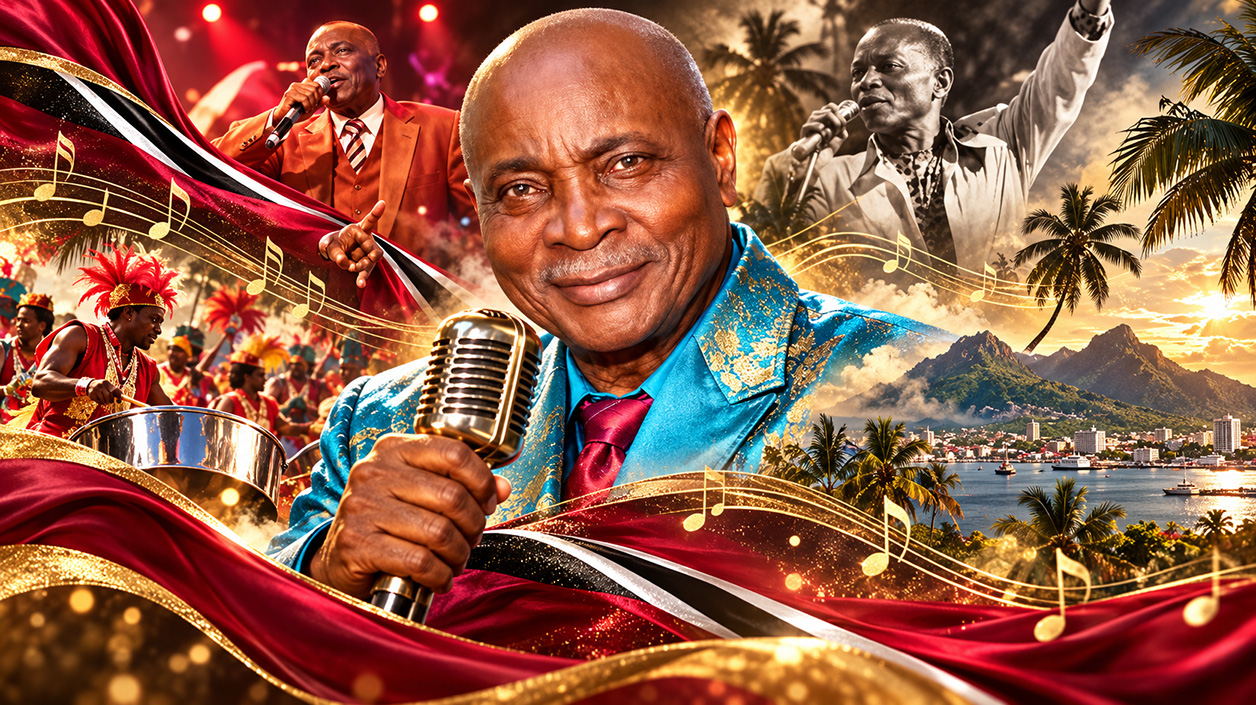
The Mighty Sparrow could make a crowd dance while asking it to think. With a commanding voice, sharp wit, and a gift for storytelling, he turned calypso into a stage for humor, romance, politics, and the concerns of ordinary people. His death on September 27, 2026, at age 91, closed a remarkable chapter in Caribbean music.
Born Slinger Francisco in Grand Roy, Grenada, in 1935, he moved to Trinidad as a young child. There he grew up surrounded by the sounds and stories that would shape his art. Trinidad’s Carnival culture gave him a place to develop his voice, while the experiences of working people gave him subjects worth singing about.
His breakthrough came in 1956 with “Jean and Dinah.” The song’s irresistible rhythm and sly account of American servicemen leaving Trinidad captured a moment of social change with a smile. It won Sparrow both the Calypso Monarch and Carnival Road March titles, announcing a performer who could command the competition stage and the streets at once.
Sparrow understood that laughter could carry a serious point. His songs drew listeners in with memorable characters and clever turns of phrase, then exposed the pressures beneath everyday life. He could be playful, provocative, or indignant, sometimes within the same performance.
He also used calypso to challenge authority. His work addressed colonial education, inequality, politics, and Caribbean self-determination. In “Dan Is the Man in the Van,” he questioned what children were taught in school; in other songs, he followed the hopes and disappointments of a region defining its future.
No subject seemed too large or too familiar for Sparrow’s pen. A government policy, a neighborhood character, an international event, or a complicated romance could become a calypso. His talent lay in finding the human story inside each one and giving audiences a refrain they would remember.
His stage presence was just as distinctive. Affectionately called “Birdie,” he sang with confidence and physical energy, moving easily between comic timing and vocal elegance. Audiences came to hear the songs, but they also came to watch a master entertainer take control of a room.
Over time, Sparrow widened calypso’s musical reach. He brought jazz and pop influences into his recordings and explored ballads, funk, soca, and spiritual music. That range helped him connect with listeners beyond Carnival while keeping his storytelling at the center.
His competitive record reflected that lasting appeal. Sparrow won Trinidad’s Carnival Road March eight times and the Calypso Monarch title eight times. Across a career that stretched for decades, he wrote more than 500 songs and recorded more than 70 albums, leaving an immense body of work for later performers to study and reinterpret.
His audience extended far beyond Trinidad and Tobago. Sparrow performed internationally and helped bring calypso to people who might never have encountered its wit, history, or musical richness. His success showed how a song rooted in Caribbean life could travel without losing the character of its birthplace.
Honors followed, including an honorary doctorate from the University of the West Indies and national recognition from Trinidad and Tobago. Yet his influence is easier to hear than to measure: it lives in the expectation that a calypsonian can entertain a crowd and speak boldly about the world that crowd inhabits.
The Mighty Sparrow leaves behind more than a collection of Carnival favorites. He leaves a record of Caribbean intelligence, humor, argument, and joy set to music. Every time a singer uses a lively melody to tell an uncomfortable truth, a little of Sparrow’s spirit takes the stage again.