
Tyler Perry, Puerto Rico, And Tax Controversies
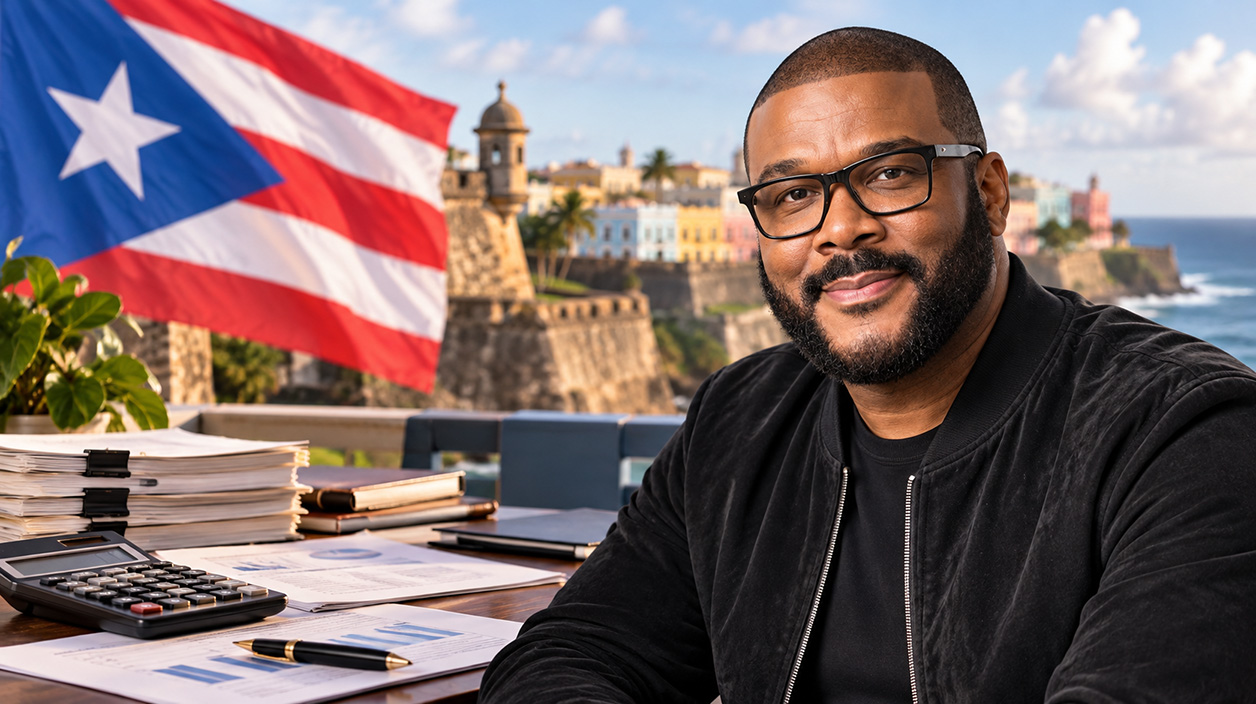
Tyler Perry, the celebrated filmmaker, actor, playwright, and entertainment entrepreneur, has announced plans to move to Puerto Rico in early 2027, sparking conversations about wealth, taxation, economic inequality, and the future of the island’s residents. Perry, whose career includes the creation of numerous successful films and television productions, has built an entertainment empire through determination and independent business ownership. His planned relocation has attracted attention not only because of his celebrity status but also because Puerto Rico offers special tax incentives to qualifying individuals who establish residency there. The controversy surrounding his move raises an important question: How can an island attract wealthy newcomers while ensuring that its existing population benefits from economic development?
Perry has publicly explained that he wants to slow down, enjoy life, and spend more time with his young son. His announcement does not establish that tax savings are the reason for his decision. Nevertheless, reports that he purchased a luxury property in Puerto Rico have placed his plans within a larger discussion about wealthy Americans relocating to the island. His move also highlights the contrast between the financial freedom available to affluent newcomers and the economic difficulties experienced by many Puerto Rican families.
The controversy centers largely on Act 60, Puerto Rico’s tax incentives code, which incorporates provisions previously associated with Acts 20 and 22. These programs were designed to attract investors, entrepreneurs, and businesses by offering favorable tax treatment to eligible applicants who meet specific requirements. Under the resident investor provisions, qualifying individuals have historically been able to receive substantial tax advantages on certain investment income, including qualifying dividends, interest, and capital gains. Supporters argue that such incentives can attract outside money, encourage business activity, create employment, and expand the island’s tax base. Critics question whether the benefits delivered to wealthy newcomers justify the public revenue the government forgoes.
The rules are also changing. Puerto Rico enacted legislation in March 2026 that establishes a 4% tax rate on specified investment income for new resident investor applicants beginning January 1, 2027, while extending the program’s legal framework through 2055. The details depend on application dates, the type of income involved, and compliance with residency and other requirements. Existing qualifying decree holders may remain subject to different terms. Although these incentives can be financially attractive, they do not automatically eliminate every tax obligation, and U.S. citizens must satisfy applicable federal residency and tax rules. Perry’s relocation should therefore not be treated as proof that he will receive any particular tax benefit.
One of the strongest objections to these incentives concerns Puerto Rico’s housing market. As wealthy mainland Americans purchase expensive homes, invest in luxury properties, and establish residency in affluent communities, some local residents worry that they will be priced out of neighborhoods where their families have lived for generations. Rising housing costs can place additional pressure on working-class households, young adults, and retirees whose incomes have not kept pace with the cost of living. However, housing prices are influenced by several factors, and it would be inaccurate to attribute the island’s housing challenges entirely to tax incentives. The concern is whether policies intended to attract wealth adequately protect the people who already call Puerto Rico home.
Puerto Rico’s economic challenges extend far beyond housing. The island has experienced a prolonged debt crisis, financial restructuring, and the devastating effects of hurricanes, including Hurricane Maria in 2017. Many communities continue to face concerns about electricity reliability, infrastructure, employment opportunities, and access to essential services. The island’s territorial relationship with the United States also creates a complicated political and economic environment. Puerto Ricans are U.S. citizens, but residents of the island cannot vote for president in the general election and lack voting representation in Congress. These circumstances contribute to longstanding debates about political representation, self-determination, and the island’s economic future.
The departure of longtime residents presents another concern. Some Puerto Ricans have moved to the mainland United States in search of better-paying jobs, educational opportunities, affordable housing, and greater economic stability. When working-age residents leave, communities can lose skilled workers, customers for local businesses, and younger generations who might otherwise support older relatives. At the same time, wealthy newcomers can bring capital, professional networks, and spending that benefit certain industries. The central question is whether these competing population movements produce broad-based prosperity or leave many longtime residents struggling to participate in the economy developing around them.
There is also a cultural dimension to the controversy. Puerto Rico possesses a rich heritage shaped by Indigenous Taíno traditions, African ancestry, Spanish colonial history, and centuries of cultural exchange. Its music, food, language, literature, and community traditions are central to its identity. Some residents fear that an influx of affluent newcomers could transform established neighborhoods, weaken local businesses, or make communities less accessible to the people who built them. Others welcome outside investment while emphasizing that newcomers should respect Puerto Rican culture, learn about the island’s history, and support its communities. Economic development need not come at the expense of cultural preservation, but achieving that balance requires deliberate policies and meaningful participation by residents.
For Perry, the discussion also presents an opportunity to consider the responsibilities that can accompany extraordinary financial success. He has established himself as a prominent Black entertainment entrepreneur whose work has created opportunities for performers, writers, and production professionals. If his relocation leads to additional filming, production facilities, or employment on the island, those activities could contribute to Puerto Rico’s creative economy. However, the purchase of a luxury home or the arrival of a famous individual does not automatically translate into lasting benefits for ordinary families. Meaningful contributions would be better measured by local hiring, fair wages, support for independent Puerto Rican businesses, investment in training, and partnerships with community organizations.
Ultimately, Puerto Rico’s tax incentive debate is about more than Tyler Perry or any other wealthy newcomer. It concerns the relationship between public policy, private wealth, and the well-being of an entire population. The government must weigh the potential benefits of attracting investment against the cost of reduced tax revenue and the need to fund infrastructure, education, housing, and essential services. Stronger transparency, effective enforcement, and reliable assessments of economic outcomes can help determine whether these programs serve the wider public. At the same time, community organizations and residents deserve a meaningful voice in decisions that affect their neighborhoods and their future.
Tyler Perry’s planned move places a spotlight on questions Puerto Rico has been confronting for years. Attracting wealthy investors may create economic opportunities, but investment alone cannot resolve the island’s longstanding challenges. Lasting progress requires policies that encourage business development while protecting affordable housing, strengthening public services, supporting local entrepreneurs, and preserving cultural heritage. Perry has not publicly established that tax savings are the reason for his move, and his intentions should not be assumed. The broader issue, however, deserves serious attention: Puerto Rico’s success should be measured not simply by the wealth it attracts, but by whether the people who live there can build secure, dignified, and prosperous lives.


