Voices Across Generations
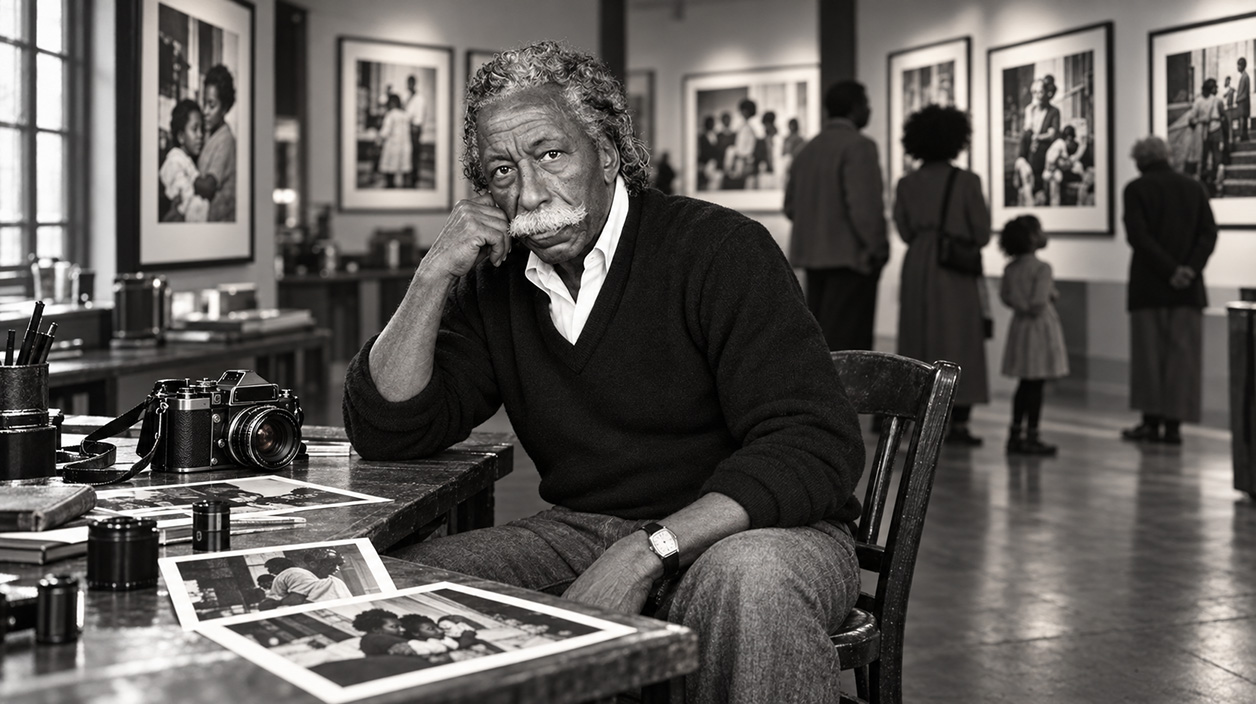
Gordon Parks remains one of the most influential photographers, filmmakers, writers, and visual storytellers in American history. His work documented the African American experience with an extraordinary combination of artistic sensitivity, social awareness, and journalistic courage. His photographs went beyond simply recording moments in time; they revealed the humanity, struggles, aspirations, and dignity of people whose stories were frequently overlooked by mainstream America. The exhibition Gordon Parks: Voices in the Mirror in New York City offers visitors an opportunity to revisit that remarkable legacy.
Located at the Jack Shainman Gallery at 46 Lafayette Street in Manhattan’s Tribeca neighborhood, the exhibition invites visitors to explore how Parks used photography to capture the beauty, dignity, and complexity of Black life. The exhibition is scheduled to remain on view through November 6, 2026. One particularly appealing aspect is that visitors do not need to purchase tickets to experience the exhibition, making this an accessible cultural opportunity for New Yorkers and visitors alike.
Parks was born in Fort Scott, Kansas, in 1912, and his early experiences with racial discrimination profoundly influenced the direction of his life and artistic career. Growing up in a segregated America, he understood firsthand the challenges Black Americans faced in their everyday lives. Rather than allowing those experiences to limit him, Parks transformed them into a powerful creative vision. He eventually became one of the first African American photographers to achieve national recognition in the predominantly white world of professional photojournalism.
What makes this exhibition particularly special is its central concept: allowing the people Parks photographed, along with their families, to share their own memories and reflections about the images. Relatives of some of his most celebrated subjects contribute personal perspectives that deepen the meaning of photographs that have been examined for generations. Rather than presenting the photographs as historical documents alone, the exhibition creates a conversation between the photographer, the people in front of his camera, and the generations who inherited their stories.
Among the important figures represented in the exhibition are Muhammad Ali and Malcolm X. Parks photographed both men during significant periods of their lives, capturing sides of their personalities that audiences did not always see in public. Lonnie Ali, Muhammad Ali’s widow, offers reflections on photographs that reveal the legendary boxer’s quieter and more personal moments. Qubilah Shabazz, daughter of Malcolm X, also contributes reflections on images of her father. These personal connections give visitors an opportunity to understand the historical figures beyond their public identities.
Another important part of the exhibition revisits Parks’ 1956 photographs documenting segregation in Alabama. While working for Life magazine, he traveled throughout the South to document the everyday experiences of Black families living under Jim Crow laws. One memorable photograph captures a young Black girl being lifted toward a drinking fountain marked for Black people only. Cora Taylor, who witnessed the moment and appeared in the photographs, provides a personal recollection that reminds visitors that these images represent real people who experienced the humiliation and injustice of segregation.
The exhibition also revisits Parks’ photographs of the famous doll experiments conducted by psychologists Dr. Kenneth Clark and Dr. Mamie Clark in Harlem during 1947. Their research examined how racial segregation and prejudice affected the self-esteem of Black children. Parks photographed the experiments, documenting the psychological consequences of racism at a time when the nation was beginning to confront the damaging effects of institutional discrimination. Kate Clark Harris, the daughter of the researchers, contributes reflections that help explain the significance of these photographs and their continuing relevance to conversations about race, identity, and childhood.
Another memorable photograph features Black Panther leader Eldridge Cleaver and his wife, Kathleen Cleaver, in Algiers in 1970. Parks traveled internationally to photograph members of the Black Panther movement and explore their political experiences. Kathleen Cleaver provides personal reflections about the photograph and the circumstances surrounding that period of their lives. Her contribution demonstrates how a single photograph can preserve an important historical moment while also revealing intimate details about the people who lived through it.
The exhibition brings together an impressive collection of additional voices from the worlds of photography, literature, filmmaking, scholarship, and social justice. Contributors include filmmaker Ava DuVernay, author Alice Walker, civil rights leader Andrew Young, attorney Bryan Stevenson, photography scholar Deborah Willis, and Studio Museum in Harlem director Thelma Golden. Their perspectives help establish why Parks’ photographs remain essential to understanding American history and the continuing contributions of African Americans to the country’s cultural and social development.
For photographers and visual artists, this exhibition offers another opportunity to study the remarkable artistic abilities of Gordon Parks. His mastery of lighting, composition, timing, and storytelling allowed him to create photographs that were simultaneously beautiful and socially meaningful. He understood that photography was not simply about pointing a camera at an interesting subject. It was about developing a relationship with the person being photographed and recognizing the story that existed beyond the frame. His work continues to inspire generations of photographers who want their images to communicate something meaningful about the human experience.
The timing of Voices in the Mirror is also significant because it marks the 20th anniversary of The Gordon Parks Foundation, established in 2006 to preserve his artistic legacy and support future generations of creative voices. The Foundation continues to promote photography, education, and social justice through exhibitions, publications, fellowships, and educational initiatives. This exhibition demonstrates that Parks’ influence extends well beyond the photographs he created during his lifetime. His work continues to encourage important conversations about equality, representation, history, and the power of visual storytelling.
For anyone interested in photography, African American history, or the cultural contributions of Black artists, Gordon Parks: Voices in the Mirror is an exhibition worth experiencing. Located at Jack Shainman Gallery, 46 Lafayette Street, in Tribeca, the exhibition runs through November 6, 2026. Admission is free, making it an opportunity to experience the work of one of America’s greatest photographers while listening to the voices of the people whose lives he so beautifully documented.