Leading People Before Leading Players
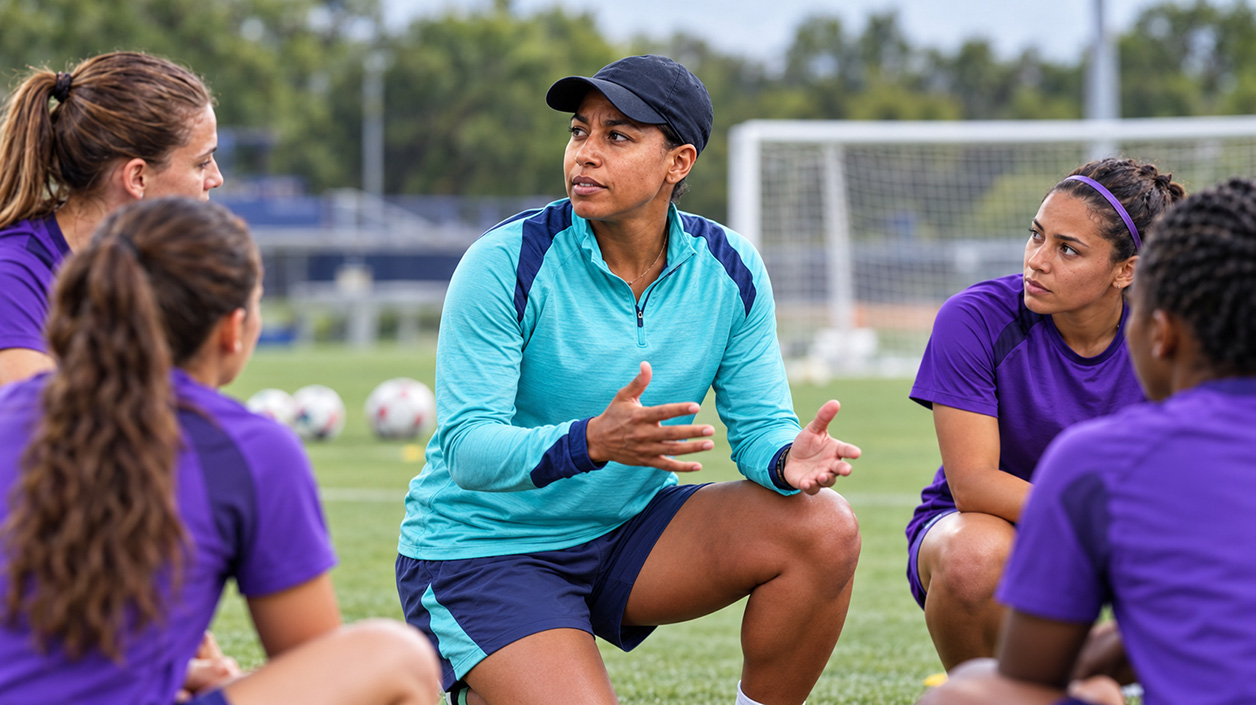
Yolanda Thomas arrived at an important moment in the history of the National Women’s Soccer League, but she did not arrive unprepared. When she stepped onto the sideline as interim head coach of the Orlando Pride, she became the first Black woman to serve as a head coach in the league. For Thomas, however, the significance of the appointment was not simply about making history. It was about accepting responsibility for a group of people she already knew well and helping them navigate a difficult season.
At 42, Thomas brought considerable coaching experience to the opportunity. She had previously served as a head coach at Rogers State University in Oklahoma and with Fortuna Tulsa in the Women’s Premier Soccer League. Her professional experience also included work with the U.S. Under-23 women’s national team. Most importantly, she had spent two seasons inside the Orlando organization as an assistant, helping the Pride capture the NWSL championship in 2024. She understood the players, the culture and the expectations surrounding the club.
Her promotion came under difficult circumstances. Orlando dismissed Seb Hines in the middle of the season after the team had struggled to reproduce the extraordinary success it achieved two years earlier. Hines had originally brought Thomas into the organization and had been the coach alongside whom she helped win the championship. His departure therefore carried an emotional dimension that went beyond the normal business of professional sports.
Thomas openly acknowledged that the most difficult part of assuming the position was not learning how to run a team. She already understood the technical and tactical demands of coaching. The challenge was helping people process an abrupt change while continuing to compete. Coaches and players invest enormous portions of their lives in their teams, and when leadership changes unexpectedly, the emotional consequences can be significant.
That understanding has shaped Thomas’s philosophy. She frequently describes her responsibility as managing human beings who happen to play soccer. It is a simple distinction, but an important one. Professional athletes are often evaluated almost entirely through statistics, victories and losses. Thomas believes the person behind the performance must also be recognized. A player can be talented, experienced and physically prepared while still carrying disappointment, uncertainty or exhaustion that affects performance.
Her approach became especially visible in her first match after taking over. Rather than overwhelming the team with tactical instructions, Thomas encouraged the players to express themselves. Orlando responded with a convincing victory over the Houston Dash. The result offered more than three points in the standings. It gave the players an emotional release after a turbulent week and demonstrated that the group could respond positively to change.
The victory also revealed the level of trust Thomas had already established inside the locker room. She did not arrive as a stranger attempting to impose authority. She had worked alongside many of the players and understood their personalities and capabilities. That familiarity gave her room to challenge them while maintaining the relationships she had developed as an assistant. General Manager Caitlin Carducci also expressed confidence in Thomas, emphasizing her ability to lead during a complicated period.
Orlando’s struggles, however, were not solved by a single victory. The Pride entered the season with enormous expectations following their championship success and subsequent playoff appearance. Despite possessing internationally recognized talent, including Barbra Banda, Marta and other accomplished players, the team found itself near the bottom of the standings. Injuries, inconsistent performances and changing circumstances made the road back to the postseason increasingly difficult.
Thomas nevertheless refused to define success solely through the final standings. Her message to the team was centered on resilience. Instead of allowing a difficult season to become an exercise in simply surviving, she challenged the players to find ways to improve, compete and grow. That philosophy reflects a broader understanding of leadership: sometimes success is measured not by achieving the original goal, but by how a group responds when circumstances make that goal much harder to reach.
Thomas’s promotion also raises larger questions about the pathway for assistant coaches hoping to become head coaches in women’s professional soccer. Success as an assistant does not always translate into an obvious opportunity to lead a team. Thomas believes leagues and organizations have a responsibility to create clearer pathways while recognizing the value of experience gained by coaches working behind the scenes. Her own career demonstrates how much knowledge can be developed before someone receives the opportunity to occupy the top position.
Her historic appointment is therefore significant beyond the distinction of being the first Black woman to hold an NWSL head-coaching position. Thomas represents the growing visibility of Black women in leadership roles within professional sports, but her philosophy suggests that representation is most meaningful when accompanied by substance, preparation and opportunity. She is not interested in simply occupying the position. She wants to build an environment where athletes feel respected, challenged and supported.
For Thomas, leadership ultimately begins with people. Tactics matter. Results matter. Championships matter. But none of those things exist independently of the human beings responsible for achieving them. Her early tenure with Orlando suggests that she understands this distinction deeply. Whether her interim appointment eventually develops into a permanent position remains to be seen, but her approach has already established an important principle: great coaching is not simply about managing players. It is about understanding people well enough to help them become better athletes, teammates and human beings.