Yuja Wang: A Brilliant Piano Voice
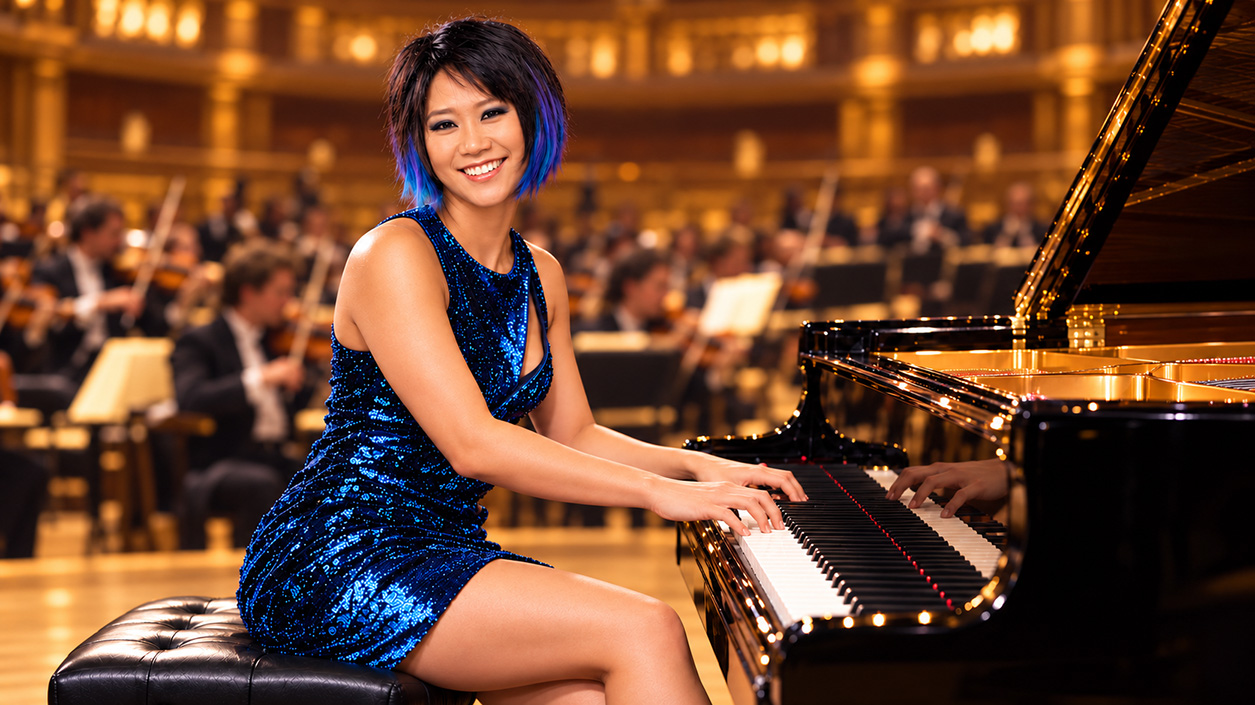
Yuja Wang is one of the most celebrated pianists of her generation, known around the world for her extraordinary technique, musical confidence and dynamic stage presence. Born in Beijing, China, in 1987, Wang began studying piano at a very young age. Her early talent quickly became apparent, and she eventually pursued advanced musical training in Canada and the United States.
Wang studied at the Curtis Institute of Music in Philadelphia, one of the most selective music schools in the world. There she studied with pianist Gary Graffman, who also taught several internationally recognized musicians. Her education at Curtis helped prepare her for an international career while giving her a strong foundation in both the technical and artistic sides of classical piano.
Her professional career began attracting significant attention while she was still very young. In 2007, Wang gained international recognition when she replaced pianist Martha Argerich with the Boston Symphony Orchestra. Her performance was widely noticed, helping establish her as a major new presence on the classical music stage.
One of Wang’s greatest strengths is her remarkable technical ability. She is particularly admired for playing extremely difficult compositions with speed, precision and control. Works by composers such as Sergei Rachmaninoff, Franz Liszt, Sergei Prokofiev and Maurice Ravel have become important parts of her repertoire.
But Wang’s performances are about more than technical difficulty. She brings dramatic energy and individuality to her interpretations. Her playing can move from delicate and intimate passages to powerful, explosive moments within the same performance. This ability to combine precision with emotional intensity has become an important part of her musical identity.
Wang has performed with many of the world’s leading orchestras and conductors. Her career has taken her to major concert halls throughout North America, Europe and Asia. She has also developed important artistic relationships with musicians and ensembles, including the Los Angeles Philharmonic, New York Philharmonic and other major orchestras.
Chamber music has also played an important role in Wang’s career. She has collaborated with prominent musicians in smaller ensembles, where the interaction between performers becomes especially important. These performances demonstrate another side of her musicianship, emphasizing communication, listening and interpretation rather than simply the power of a solo performance.
Wang has also become known for bringing a distinctive personality to the traditionally formal world of classical music. Her colorful stage clothing, confidence and relaxed personality have sometimes generated as much conversation as her performances. Rather than separating herself from popular culture, she has helped demonstrate that a classical musician can have a highly recognizable public personality.
Recording has been another significant part of Wang’s career. Her recordings have included works by composers ranging from Rachmaninoff and Prokofiev to contemporary composers. Through recordings, streaming and international performances, her interpretations have reached audiences far beyond the traditional concert-hall audience.
Today, Yuja Wang represents a generation of classical musicians who combine extraordinary traditional training with a modern sense of performance and communication. Her career demonstrates how technical mastery, artistic interpretation and individual personality can come together on the concert stage. Whether performing a demanding concerto with a major orchestra or presenting a solo recital, Wang continues to be an influential figure in contemporary classical music.