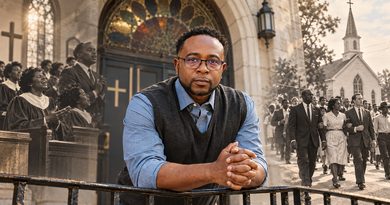
A New Vision For School Integration

New York City’s public schools are among the most diverse educational institutions in the country, but diversity does not automatically mean integration. Kamar H. Samuels, the city’s schools chancellor, has made that distinction an important part of his educational philosophy. His approach looks beyond the racial composition of individual classrooms and asks whether students from different backgrounds are actually receiving comparable opportunities, resources and educational experiences.
Samuels came to the chancellor’s position after spending much of his career inside the New York City school system. His professional experience includes teaching, school leadership and senior administrative positions. That background has influenced his view that improving public education requires understanding what happens inside individual schools as well as examining the larger structures that determine where children attend school and what opportunities are available to them.
At the heart of his integration strategy is the idea that students should have opportunities to learn alongside classmates from different racial, economic, cultural and linguistic backgrounds. But Samuels has also connected integration to the quality of education itself. A school can have a diverse enrollment and still have significant differences in access to advanced classes, arts programs, special services, experienced teachers and other opportunities. His vision therefore treats integration and educational equity as closely connected issues.
His previous work in Brooklyn and Manhattan provides some insight into how he approaches the subject. School mergers, changes in enrollment patterns and efforts to create more balanced school communities have all been part of his experience. One example frequently associated with his work involved schools in Brooklyn whose student populations and family demographics differed considerably. Bringing those communities together demonstrated both the possibilities and the complexities involved when schools attempt to become more integrated.
That history is important because school integration can be a particularly sensitive subject in New York City. Families have strong attachments to their neighborhood schools, and changes involving admissions, attendance zones or school mergers can generate understandable concerns. Parents may worry about transportation, academic programs, school culture and whether their children will continue receiving the services they need. Any effort to change the system therefore requires more than a policy announcement from City Hall or the Department of Education.
Samuels has attempted to incorporate community participation into the process. Working groups in several school districts have brought educators, parents, school leaders and community representatives into discussions about how schools can become stronger and more integrated. Rather than treating every neighborhood as though it has the same challenges, the approach allows local conditions to influence the solutions being considered.
His broader definition of integration also includes students who are often affected by barriers within the educational system. Students with disabilities, English-language learners, children experiencing homelessness, students in foster care and immigrant families can encounter obstacles that are not always visible when school integration is discussed strictly in terms of race. Addressing those barriers expands the conversation from where students sit to whether they have meaningful access to the full educational experience.
The classroom itself is another important part of the equation. Samuels has supported culturally responsive education and programs designed to expose students to histories and perspectives that reflect New York City’s population. Initiatives involving Black history, Latinidad and other previously underrepresented voices can help students understand that American history is made up of many experiences. For students, representation can become an important part of developing both academic knowledge and a sense of belonging.
There is also a practical dimension to Samuels’ strategy. New York City’s schools operate within neighborhoods shaped by housing costs, income differences, immigration patterns and decades of residential segregation. Schools cannot completely separate themselves from those realities. As a result, changing educational patterns requires attention to the larger forces that influence where families live and where children attend school.
The success of Samuels’ vision will ultimately depend on what happens beyond the policy language. Integration is difficult to measure if it only changes enrollment numbers without improving students’ daily experiences. The larger test will be whether children from different backgrounds have access to rigorous academics, supportive teachers, extracurricular opportunities, safe schools and a genuine sense that they belong.
Samuels’ approach places school integration within a much larger conversation about what New York City wants its public schools to accomplish. Rather than viewing integration simply as a question of demographics, his vision connects it to opportunity, representation, academic quality and community participation. The challenge now is turning that philosophy into lasting changes that families can see and students can experience. New York has attempted to address school segregation for generations, and Samuels’ tenure will provide another opportunity to examine whether a more inclusive school system can become a lasting reality.