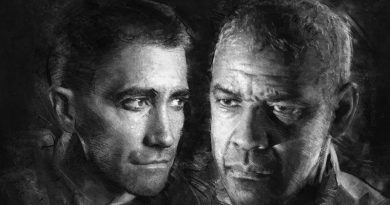
James Baldwin and William F. Buckley Jr.

Few moments in 20th-century intellectual history feel as electrifying—or as eerily current—as the 1965 debate between James Baldwin and William F. Buckley Jr. at the Cambridge Union. It was more than an exchange of ideas. It became a cultural flashpoint, a battle between two visions of America delivered by two men who embodied opposing philosophical worlds. One was a prophetic literary voice shaped by the brutal weight of racism. The other was the polished architect of modern American conservatism. And before an audience of British students, they clashed over a motion that cut to the nation’s core: “The American Dream is at the expense of the American Negro.”
Baldwin entered the hall not as a politician or a professional debater but as a writer whose emotional reach and moral clarity were already stirring a generation. He understood the stakes. His life, and the lives of people he loved, were the evidence he carried with him. When he rose to speak, he didn’t offer statistics or policy memoranda. He offered a devastating portrait of what it meant to grow up Black in a country built on promises it never intended to keep.
Buckley, by contrast, carried himself like the embodiment of elite American confidence. Founder of National Review, champion of conservative thought, he had come to defend the nation’s honor against what he viewed as Baldwin’s sweeping indictment. His position was that America, though imperfect, was fundamentally a land of upward mobility, and that Baldwin’s critique overstated the extent to which racism structured national life.
The contrast was not merely ideological. It was aesthetic. Baldwin spoke with an incandescent urgency—his voice sometimes trembling, always deliberate. Buckley leaned on patrician charm and rhetorical flourishes, at times smirking, at times condescending. Where Baldwin summoned lived experience, Buckley summoned detached philosophical frameworks. Their difference illuminated the chasm between those who bore the weight of injustice and those who theorized about it from safe distances.
For the Cambridge students watching, Baldwin’s words landed like a revelation. He dissected the absurdity of being told to believe in American ideals while being denied their protections. He described the psychic cost of constantly navigating white fear, white fantasies, and white violence. His argument was not simply that the American Dream excluded the American Negro—it was that this exclusion was structural, intentional, and centuries old.
Buckley responded with a defensive indignation. He accused Baldwin of being anti-American, of overstating racial barriers, of demanding too much too soon. He refused to admit that the Dream was built on Black subjugation, insisting instead that racial inequality was an unfortunate byproduct of modernization rather than a foundational design. His rhetoric sought to shift the debate toward individual responsibility rather than collective accountability.
Yet despite Buckley’s confidence, the energy in the room had already shifted. Baldwin had broken through abstraction and forced the audience to feel history rather than merely discuss it. Even students who admired Buckley’s intellect seemed to recognize that he was outmatched—not in vocabulary, but in moral force. Baldwin wasn’t performing; he was testifying.
The most powerful moment came when Baldwin described watching America “devour” its Black children. He reframed the debate not as a question of economics or opportunity but as a matter of the soul. His speech insisted that America’s greatest crisis was its inability to confront the truth about itself. And in that truth, the American Dream was not simply tainted—it was weaponized.
Buckley’s closing remarks, though polished, could not obscure the imbalance. His tone—part lecture, part scold—made clear that he saw Baldwin not as an equal interlocutor but as someone whose emotional testimony clouded his judgment. In doing so, Buckley revealed the very blindness Baldwin had spent his speech exposing: the refusal to see Black Americans as full protagonists in their own nation.
When the vote came, the audience delivered a landslide verdict: Baldwin had won. But the victory was symbolic as much as it was rhetorical. What Baldwin achieved in that debate was a rare moment when the moral truth of the Black American experience broke through the fog of political debate on an international stage.
In the decades that followed, the debate came to symbolize the broader conflict between America’s self-image and its reality. Baldwin’s argument aged with haunting precision. Buckley’s, meanwhile, became a reminder of how intellectualism can be used to defend the indefensible with a straight face and an elevated vocabulary.
The debate remains legendary not simply because it was dramatic but because it distilled the crisis of American identity into two voices standing a few feet apart. One argued from a place of longing for the nation to live up to its ideals. The other argued from a place of pride in a nation he believed had already done so. Baldwin asked America to confront its sins. Buckley asked America to trust its virtues.
And perhaps that explains why the footage still circulates today, decades after both men passed. It is not just a historical artifact—it is a living argument. It reminds us that the American Dream has been contested territory from the beginning, and that voices like Baldwin’s still speak directly to the present. The debate endures because America still hasn’t answered the question Baldwin forced into the light.
In the end, the Baldwin-Buckley debate was not simply about who won on points. It was a revelation of whose truth could withstand the weight of history—and whose could not.