Grace, Courage And Legacy
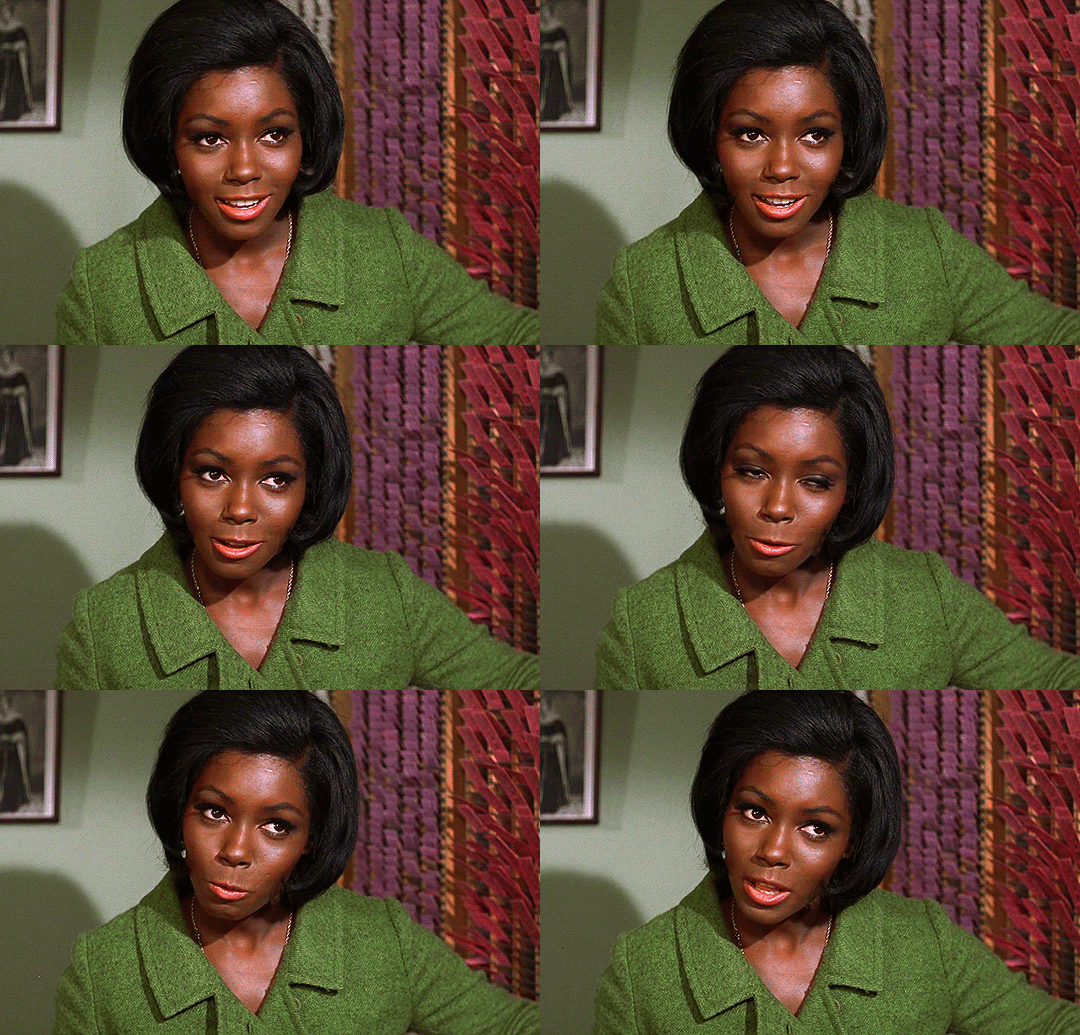
There are some lives that become more than personal stories. They become part of the history of a people, a culture and a generation. Judy Pace was one of those extraordinary women. A gifted actress, model, mother and trailblazer, Pace entered Hollywood when opportunities for Black women were painfully limited. Yet she refused to allow the limitations of her time to determine the possibilities of her future. Through talent, intelligence, beauty and determination, she helped redefine what a Black woman could look like, accomplish and represent on the American screen.
Born June 15, 1942, in Los Angeles, Pace grew up in a family that encouraged her ambitions. Her introduction to the world of fashion came through her sister Betty, who helped train her as a model. Pace became the youngest model to participate in the Ebony Fashion Fair national tour, an achievement that placed her in front of audiences across the country. At a time when mainstream America frequently failed to celebrate Black beauty, Pace carried herself with a confidence that quietly challenged those narrow definitions. She understood that representation mattered—and she understood that simply being visible could be an act of courage.
Her transition from modeling into acting was another step into territory where Black women were often asked to accept far less than their talent deserved. Pace began her film career in 1963 with 13 Frightened Girls! and went on to become the first Black woman reportedly placed under contract by Columbia Studios. That achievement was about much more than a Hollywood contract. It represented a crack in a wall that had kept countless talented Black performers outside the industry’s most powerful rooms. Pace walked through that opening with determination, knowing that her success could help make the path easier for someone coming behind her.
Television provided Pace with another important platform. Her role as Vickie Fletcher on Peyton Place introduced her to a national audience and allowed her to become part of a major television drama. At a time when Black characters were too often relegated to servants, sidekicks or background figures, Pace’s presence represented something different. She was a woman with a story, ambitions and emotional complexity. That distinction mattered. Representation is not simply about appearing on screen; it is about being seen as fully human.
Pace continued to build an impressive television résumé, including her role as Pat Walters on The Young Lawyers. Her performance earned her an NAACP Image Award for Outstanding Actress in a Drama Series in 1970. The recognition was a reflection of both her talent and the cultural importance of the work being done by Black performers during that transformative era. Every role she accepted became part of a larger movement toward visibility and respect. Pace was not simply building a career—she was helping change the expectations surrounding Black women in entertainment.
Then came Brian’s Song, one of the most memorable television films of its era. Pace portrayed Linda Sayers, wife of Chicago Bears football star Gale Sayers, played by Billy Dee Williams. The film touched millions of viewers with its story of friendship, love, courage and humanity. Pace’s performance brought emotional depth to the story and reminded audiences that behind every celebrated athlete is a family, a community and a human story. Her ability to bring warmth and authenticity to the character demonstrated why representation on screen is so powerful: sometimes the smallest roles can carry enormous emotional meaning.
Pace also became part of the emerging era of Black filmmaking, appearing in films including Cotton Comes to Harlem. Working during a period of tremendous cultural change, she belonged to a generation of artists who helped challenge Hollywood’s traditional ideas about Black stories. These performers understood that Black audiences deserved to see themselves represented not as stereotypes, but as people with dreams, struggles, humor, intelligence, beauty and complicated lives. Pace’s career reflected that evolution and helped establish a foundation upon which future generations could build.
What makes Pace’s story particularly inspiring is that she understood the importance of speaking about the barriers facing Black actresses. She did not pretend that talent automatically erased discrimination. She recognized that young Black performers were often given fewer opportunities and fewer meaningful roles. Her willingness to acknowledge those realities demonstrated another dimension of her courage. She knew that personal success was important, but creating greater opportunity for others was an even more meaningful accomplishment.
Her influence extended beyond Hollywood. Pace was a mother, a wife and a woman deeply connected to the broader story of Black achievement. She was married to actor Don Mitchell and later to baseball pioneer Curt Flood, whose fight against Major League Baseball’s reserve system changed professional sports forever. Pace also helped preserve Flood’s legacy and was a co-founder of the Kwanza Foundation with actress Nichelle Nichols. These chapters of her life reveal a woman whose definition of success extended far beyond fame. She understood that legacy is ultimately about what we leave behind for other people.
Judy Pace’s life offers a powerful lesson for anyone who has ever encountered a closed door. Sometimes progress begins with one person being willing to knock. Sometimes it begins with someone refusing to accept the word “no.” And sometimes it begins simply with having the courage to enter a space where people like you have not traditionally been welcomed. Pace did all three. She carried herself with grace while confronting an industry that was not always graceful toward Black women. She succeeded without forgetting the struggles of those who came before her or the possibilities for those who would follow.
As we remember Judy Pace, we should celebrate more than the roles she played. We should celebrate the doors she helped open. We should remember the young Black girl who could see someone who looked like her on television and begin to imagine that she, too, could become an actress, a model, a leader or anything else she desired. That is the true power of representation. Judy Pace’s career reminds us that sometimes changing the world does not happen through one dramatic moment. It happens through persistence, professionalism and the courage to keep showing up. Her legacy lives in every Black woman who walks confidently into a room where she was once told she did not belong. Judy Pace showed us that you can enter through a narrow door—and leave it open wide enough for generations to come.