A Voice for Peace and Equality
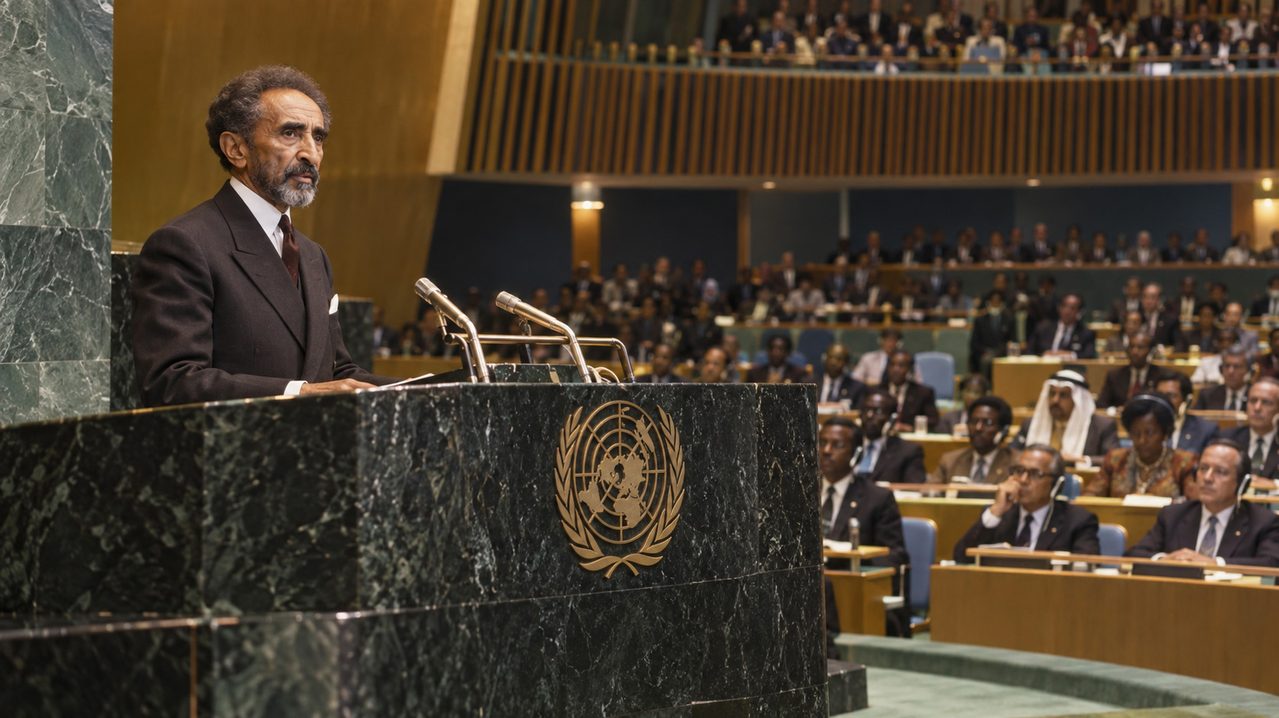
On October 4, 1963, Emperor Haile Selassie I of Ethiopia stood before the United Nations General Assembly in New York and delivered one of the most memorable speeches of the 20th century. Speaking during the Cold War and at a time when African nations were emerging from colonial rule, Selassie reflected on his earlier appeal to the League of Nations in 1936, when Ethiopia had been invaded by Fascist Italy. He urged the United Nations to learn from history and become a stronger institution capable of protecting nations, preserving peace and defending international law.
Selassie placed disarmament, racial equality, African liberation and international cooperation at the center of his message. He warned about the enormous destructive power of nuclear weapons and argued that the world’s resources should be directed toward improving human life rather than fueling an arms race. He also called for stronger international institutions and greater protection for smaller and weaker nations.
A major portion of his address focused on racism and colonialism in Africa. He specifically addressed the continued oppression of Africans in Angola, Mozambique and South Africa, arguing that lasting peace could not exist while racial discrimination and political domination remained.
One of the most famous passages declared:
“Until the color of a man’s skin is of no more significance than the color of his eyes.”
He continued by connecting racial equality with universal human rights and the possibility of lasting world peace. His message was that peace could not simply mean the absence of war; it required justice, equality, tolerance and respect for human dignity.
Selassie also challenged the world’s major powers to recognize that no nation could completely control its own destiny in the nuclear age. The survival of humanity, he argued, depended upon cooperation among nations and the willingness to resolve disputes through peaceful institutions rather than force.
The speech became particularly influential decades later because part of Selassie’s words was incorporated almost verbatim into Bob Marley’s 1976 song “War.” This helped introduce Selassie’s message about racial inequality, freedom and justice to an enormous international audience.
More than six decades later, the October 4, 1963 address remains an important historical document because it connected African liberation with a broader vision of human rights and international peace. Selassie’s central challenge was ultimately directed at the entire world: nations could not claim to want peace while tolerating racism, oppression and inequality. His speech called for courage, cooperation and action before humanity’s problems became irreversible.