Rembrandt’s Art Amid Exile
The exhibition “Rembrandt’s Lions: Art and Exile in the Dutch Republic” at The Morgan Library and Museum in New York City offers visitors an opportunity to explore the fascinating relationship between art, displacement, religious identity, and cultural freedom during the Dutch Golden Age. On view through January 31, 2027, the exhibition examines the historical world surrounding the celebrated Dutch artist Rembrandt van Rijn and the communities whose experiences helped shape the artistic environment of the Dutch Republic.
Rembrandt van Rijn, who lived from 1606 to 1669, is widely regarded as one of the greatest painters and printmakers in European history. His remarkable ability to capture human emotion, character, and everyday life made him an influential figure in the development of Western art. However, this exhibition looks beyond his artistic accomplishments to examine the diverse population, cultural exchanges, and migration stories that surrounded him. It offers a fresh perspective on an artist whose identity was closely connected to a changing society.
One of the central themes of the exhibition is the influence of immigrants, refugees, and exiles on the development of the Dutch Republic during the seventeenth century. Amsterdam, where Rembrandt spent much of his professional life, was an international center attracting people from different countries, religious backgrounds, and economic circumstances. Historians estimate that as many as 60 percent of the city’s residents came from elsewhere. Their presence helped transform Amsterdam into a culturally diverse community where different traditions, languages, and artistic influences intersected.
The Dutch Republic developed a reputation as a place of greater religious and political tolerance compared with many other parts of Europe. People escaping persecution and political instability frequently sought opportunities to establish new lives there. However, this freedom was not equally experienced by everyone, particularly those living under Dutch colonial rule. The exhibition explores this contradiction, reminding visitors that the history of tolerance is complicated and that the opportunities enjoyed by some communities existed alongside the exploitation and restrictions imposed on others.
The title, “Rembrandt’s Lions,” carries a deeper historical meaning. The lion was an important symbol representing the emerging Dutch Republic, its people, and its territories. Rembrandt incorporated lions into several of his drawings and etchings, sometimes connecting these images with biblical stories involving displacement, refuge, and migration. The animal becomes a symbolic representation of strength, survival, and the complicated relationship between national identity and the people who contribute to building a society.
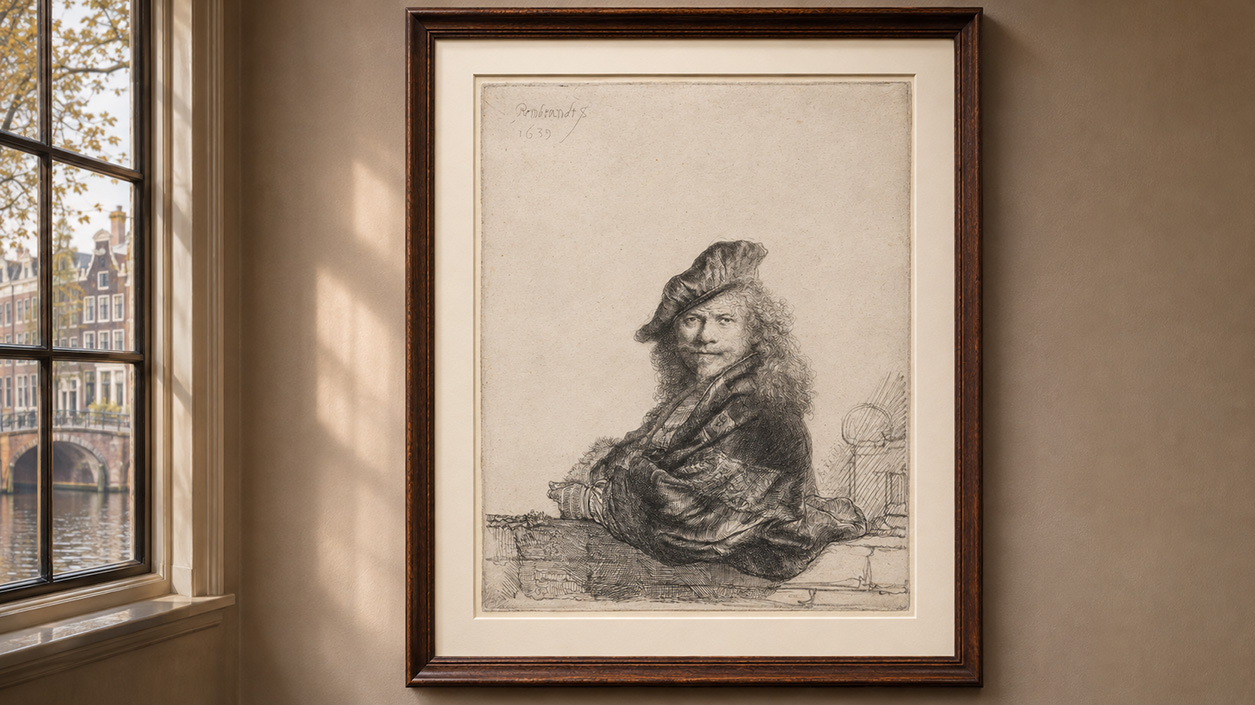
The exhibition brings together an extraordinary collection of drawings, paintings, and etchings, including rarely displayed works from the Morgan’s extensive Rembrandt collection. These pieces allow visitors to examine the artist’s remarkable technical abilities while considering the historical circumstances surrounding his subjects. His etchings, in particular, demonstrate an extraordinary understanding of human expression, light, texture, and movement. Through delicate lines and intricate details, Rembrandt was able to communicate emotion and tell compelling stories using relatively small sheets of paper.
Another important aspect of the exhibition is its exploration of diaspora, the movement of people away from their ancestral homelands while maintaining connections to their cultural identities. Rembrandt frequently explored biblical narratives involving people forced to leave familiar places in search of safety and opportunity. These stories provided opportunities to examine themes of belonging, displacement, family, and survival. By connecting these historical narratives with the experiences of migrants living in the Dutch Republic, the exhibition encourages visitors to consider how migration has influenced societies throughout history.
What makes this exhibition particularly interesting is its ability to connect seventeenth-century European history with conversations taking place in the modern world. Immigration, religious freedom, cultural identity, and the search for belonging remain important subjects in contemporary society. Although the circumstances surrounding migration have changed over the centuries, the human experiences of leaving home, adapting to unfamiliar environments, and building new communities remain remarkably familiar. Rembrandt’s work provides an artistic window into these experiences.
Organized by Sarah Mallory, assistant curator in the Morgan’s Department of Drawings and Prints, the exhibition brings together works that are rarely presented alongside one another. The carefully selected pieces create connections between Rembrandt’s artistic vision and the diverse communities that influenced the world in which he lived. Rather than presenting him simply as an isolated artistic genius, the exhibition recognizes the broader human environment that contributed to his creative development.
Ultimately, “Rembrandt’s Lions: Art and Exile in the Dutch Republic” offers much more than an opportunity to appreciate the work of a celebrated European master. It challenges visitors to reconsider how national identity, migration, and cultural exchange shape artistic achievement and historical memory. By examining the people who surrounded Rembrandt, the exhibition reveals that great art rarely develops in isolation. It emerges from encounters between cultures, shared experiences, and the complex stories of people searching for a place to belong.
Exhibition information: The Morgan Library & Museum, 225 Madison Avenue, New York City. October 23, 2026–January 31, 2027. The Morgan Library & Museum