Queen Ifrica Sings For Change
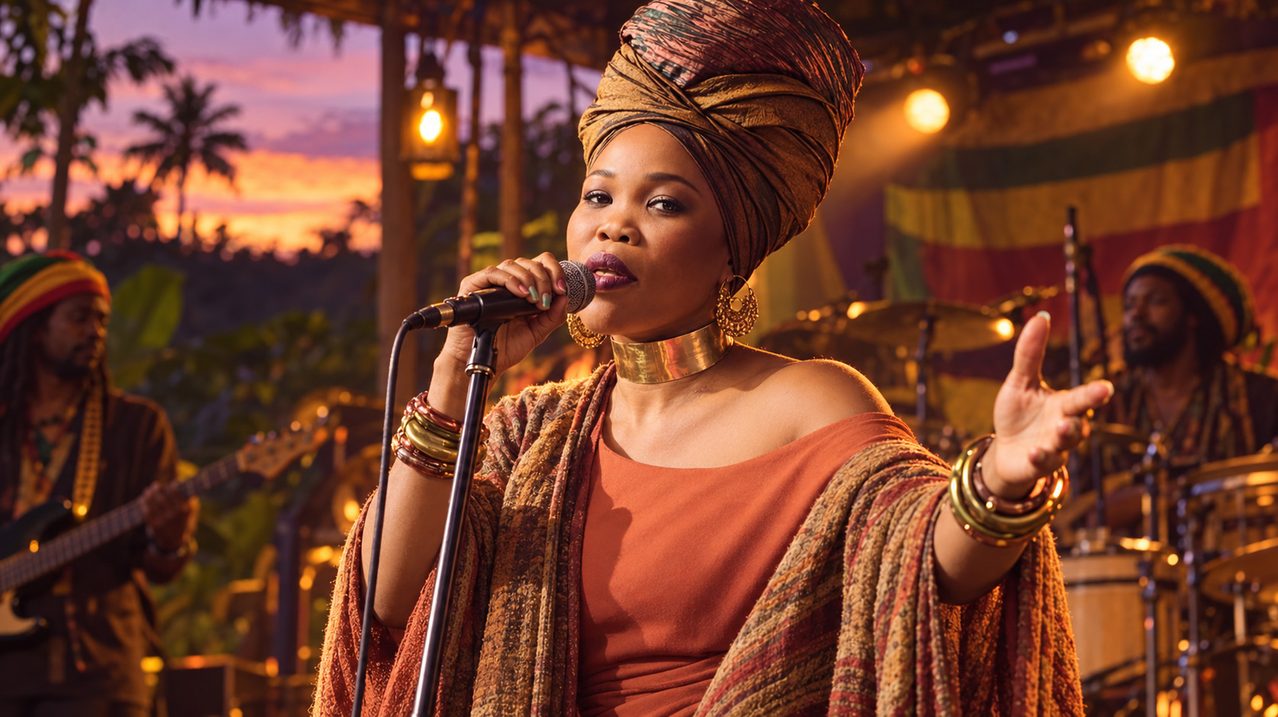
Queen Ifrica’s voice can be tender one moment and commanding the next. The Jamaican reggae artist has built a career singing about love, faith, injustice, and the responsibilities people have to one another. Her music invites listeners to dance, but it also asks them to pay attention.
Born Ventrice Morgan in Montego Bay, Jamaica, she grew up with music in her family. Her father is ska singer Derrick Morgan, though she was raised by her mother and stepfather. Queen Ifrica developed her own artistic identity, drawing on reggae’s tradition of using song to address everyday life and social concerns.
Her career began to take shape after she won a talent competition in Montego Bay in 1995. In 1998, she began working with Tony Rebel’s Flames Productions. The association helped bring her to larger stages, where she learned to hold an audience with both the force of her performance and the clarity of her message.
Often called “Fyah Muma,” Queen Ifrica moves between singing and the rhythmic delivery of a deejay. Her sound carries elements of roots reggae and dancehall, while her lyrics reflect her Rastafarian faith. She has used that range to make songs that can offer comfort, challenge harmful behavior, or speak directly to people facing hardship.
“Daddy” became one of her most widely recognized songs because it confronted child sexual abuse with unusual directness. Its subject is painful, but its purpose is clear: to break silence and affirm that children deserve protection. The song showed how Queen Ifrica could use a popular musical form to raise an issue many people struggled to discuss openly.
Her work is not limited to difficult subjects. Songs such as “Below the Waist” show her warmth and ability to sing about intimacy, while other recordings address community life and social responsibility. That breadth makes her a compelling artist: she gives listeners room for pleasure and reflection within the same body of work.
Her album Montego Bay, released in 2009, introduced a wider audience to the place and perspective that shaped her. Climb, released in 2017, extended her reach and topped Billboard’s reggae albums chart. Across those projects, she continued to make music grounded in personal conviction and an unmistakably Jamaican voice.
Queen Ifrica’s stage career has taken her from Jamaican festivals to international reggae audiences. Live performance gives her songs another dimension: a crowd can respond to the rhythm immediately, then carry the message home. Her continued presence on festival stages speaks to the connection she has built with listeners over many years.
She has described music as a way to help people, an outlook that explains the urgency in many of her songs. For Queen Ifrica, an artist’s platform offers an opportunity to recognize pain, encourage strength, and call for change. Her most affecting performances make those aims feel personal rather than distant.
Queen Ifrica’s place in reggae rests on the courage of her voice as much as its sound. She has made room for subjects that demand care and for songs that celebrate affection and resilience. When she sings, she carries forward a central promise of reggae: that music can move people while giving them something important to consider.