Crafting Silence Into Monumental Form
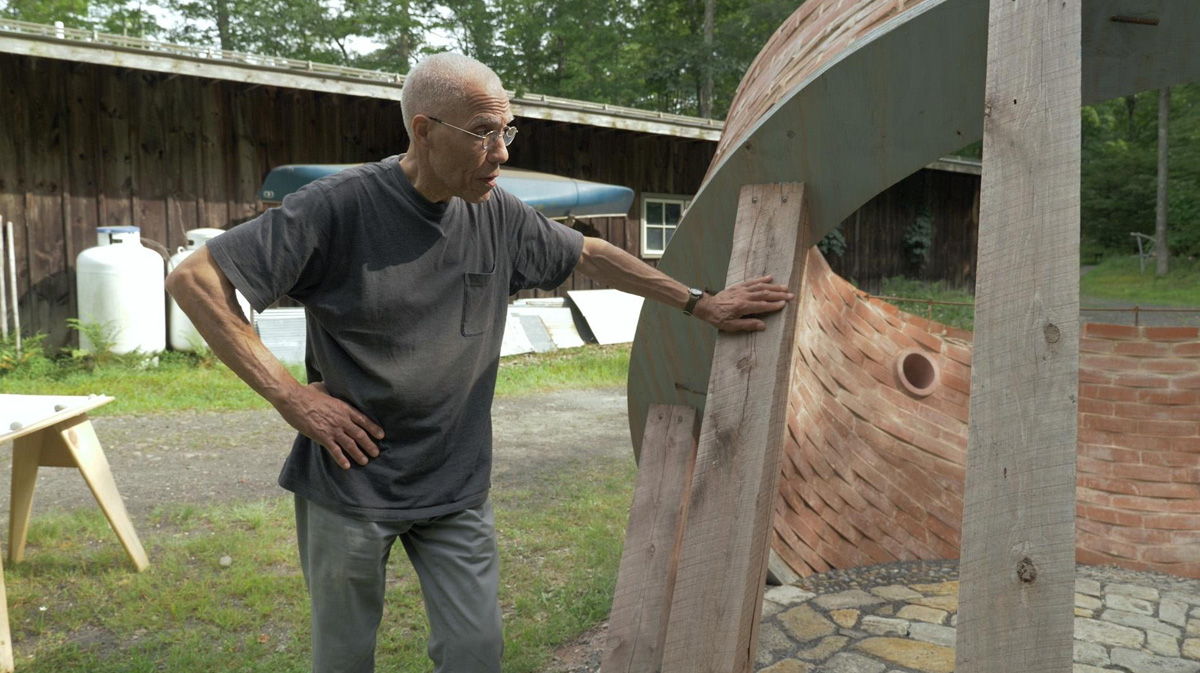
Martin Puryear is widely regarded as one of the most significant contemporary sculptors in the United States. Known for his masterful craftsmanship and quiet, contemplative forms, Puryear has built a career defined by subtlety rather than spectacle. His sculptures resist easy interpretation, inviting viewers to slow down, observe closely, and reflect on shape, space, and material. Through decades of work, he has established a visual language that is both deeply personal and universally resonant.
Born in Washington, D.C., in 1941, Puryear grew up during a period of profound social change in America. From an early age, he showed an interest in building and working with his hands. That early fascination with construction and form would later become central to his artistic practice. His upbringing in the nation’s capital also exposed him to political realities that would subtly inform the themes of identity and structure present in his later work.
Puryear studied at the Catholic University of America and later earned his MFA from Yale University. During his formative years, he traveled extensively, including time spent in West Africa with the Peace Corps. These experiences broadened his understanding of craft traditions and materials, particularly woodworking techniques. The influence of global artisanal practices became an enduring aspect of his approach to sculpture.
Wood has remained one of Puryear’s primary materials throughout his career. He is celebrated for his ability to transform wood into organic, abstract forms that feel both ancient and contemporary. His works often resemble vessels, tools, shelters, or fragments of architecture, yet they rarely replicate any single object. Instead, they exist in a space between abstraction and suggestion, prompting viewers to project their own meanings.
What distinguishes Puryear’s sculptures is their meticulous construction. He approaches each piece with extraordinary patience, often employing traditional joinery methods and hand-finishing techniques. This devotion to craftsmanship reflects his belief that how something is made is inseparable from what it communicates. The labor embedded in the work becomes part of its quiet power.
Although Puryear’s art is not overtly political, themes of identity, race, and history subtly weave through his practice. As an African American artist working in a predominantly white art world, he has navigated expectations and assumptions with care. Rather than producing literal representations of social issues, he embeds layered references within abstract forms, allowing space for contemplation rather than confrontation.
His work has been exhibited in major museums and galleries around the world. Puryear represented the United States at the 2019 Venice Biennale, one of the highest honors in contemporary art. For that exhibition, he presented a series of sculptures that continued his exploration of containment, balance, and symbolic structure. The presentation affirmed his international reputation and longstanding influence.
Scale plays a crucial role in Puryear’s artistic language. Some of his works are intimate and require close viewing, while others are monumental, commanding entire rooms or outdoor spaces. Regardless of size, each piece maintains a sense of quiet presence. Even his largest sculptures avoid theatricality, instead encouraging thoughtful engagement.
Puryear’s forms often suggest tension between stability and fragility. Curved lines balance on narrow bases; hollow interiors contrast with solid exteriors. This interplay creates a dynamic stillness, as if the sculptures are caught in a moment of poised transformation. Viewers frequently describe a meditative experience when encountering his work.
Throughout his career, Puryear has received numerous awards and honors recognizing both his artistic achievements and his contribution to contemporary sculpture. Yet he remains known for his modesty and dedication to studio practice. He has consistently prioritized the integrity of his work over trends or market pressures.
In addition to wood, Puryear has experimented with materials such as wire mesh, tar, stone, and metal. These materials expand his exploration of surface and structure while maintaining his focus on handcrafted processes. Each new medium becomes another opportunity to investigate form, space, and perception.
Ultimately, Martin Puryear’s legacy lies in his commitment to depth over decoration and contemplation over spectacle. His sculptures ask viewers to engage slowly and thoughtfully, revealing meaning over time. In an era often driven by speed and immediacy, his work stands as a testament to patience, craft, and the enduring power of carefully shaped form.