Journey Beyond Earth’s Distant Horizon
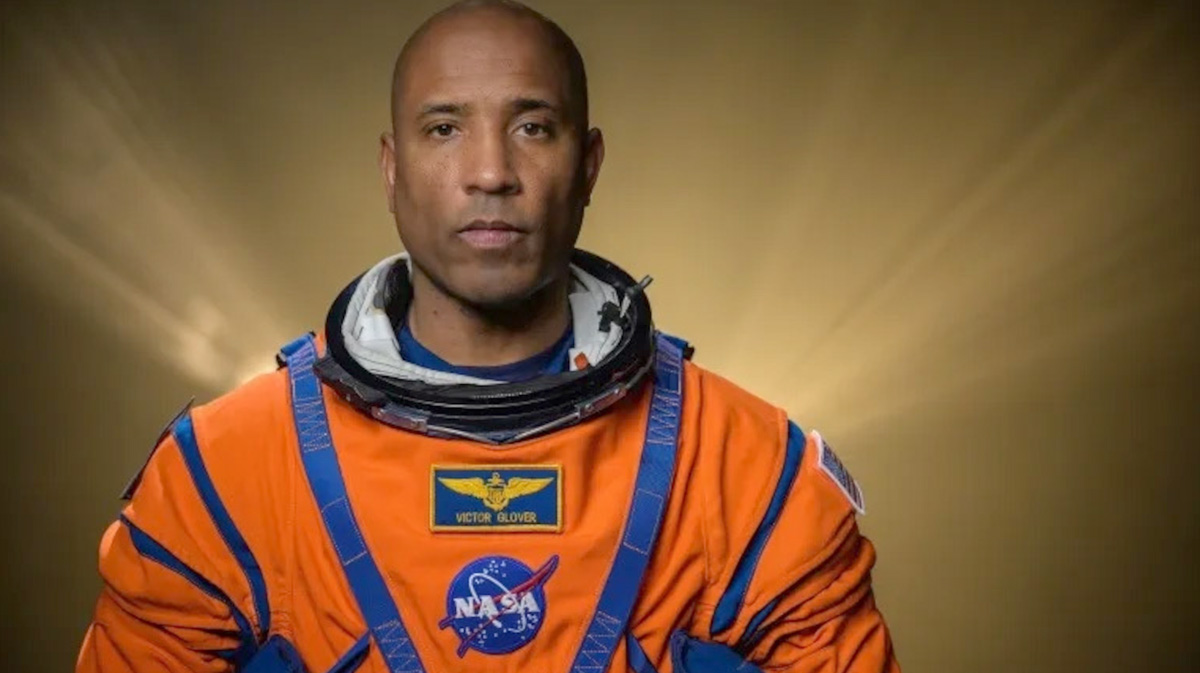
Victor Glover has made history as one of the most significant figures in modern space exploration, particularly through his role in Artemis II. As a naval aviator, engineer, and astronaut, Glover’s journey to the Moon represents not only a technological milestone but also a powerful moment of representation and inspiration for millions around the world.
Born in Pomona, California, and raised with a strong emphasis on discipline and education, Glover built a foundation that would eventually lead him to the highest levels of aerospace achievement. He earned degrees in engineering and went on to serve as a pilot in the U.S. Navy, gaining extensive experience before being selected by NASA as an astronaut in 2013.
Before his historic lunar mission, Glover had already made a name for himself during his time aboard the International Space Station as part of SpaceX Crew-1. That mission demonstrated his technical expertise and leadership under pressure, preparing him for even more ambitious exploration beyond Earth’s orbit.
In April 2026, Glover served as the pilot on Artemis II, the first crewed mission of NASA’s Artemis program to travel beyond low Earth orbit in over 50 years. This mission marked humanity’s return to deep space since the Apollo era, reigniting global interest in lunar exploration.
Launched aboard NASA’s powerful Space Launch System rocket, the Artemis II crew embarked on a roughly 10-day journey around the Moon. The spacecraft, Orion, carried four astronauts—Glover, commander Reid Wiseman, mission specialist Christina Koch, and Canadian astronaut Jeremy Hansen—on a carefully planned trajectory that would take them farther from Earth than any humans before.
During the mission, Glover achieved a historic milestone by becoming the first person of color to travel to and around the Moon. This achievement carried deep cultural and historical significance, especially as representation in space exploration continues to evolve.
The spacecraft performed a lunar flyby rather than landing, looping around the far side of the Moon before using its gravitational pull to slingshot back toward Earth. This type of mission allowed NASA to test critical systems needed for future landings while ensuring crew safety.
At its farthest point, the Artemis II crew traveled more than 250,000 miles from Earth, setting a new record for human spaceflight distance. The vastness of space, combined with the isolation of deep space travel, presented both technical and psychological challenges that the crew successfully navigated.
Throughout the journey, Glover and his fellow astronauts conducted tests on life support systems, radiation exposure, and spacecraft performance. These experiments were essential for preparing future missions, including planned lunar landings and eventual missions to Mars.
Beyond the scientific objectives, the mission carried emotional and symbolic weight. Glover described moments of awe and reflection while viewing Earth from deep space, experiences that reinforced the unity and fragility of life on our planet.
Upon returning to Earth, the crew safely splashed down in the Pacific Ocean, completing a successful mission that demonstrated NASA’s renewed capability for human deep space travel. Their return marked the beginning of a new era in space exploration.
The impact of Glover’s journey extends far beyond the mission itself. His presence on Artemis II has inspired a new generation of scientists, engineers, and dreamers, particularly within communities that have historically been underrepresented in aerospace fields.
As NASA continues its Artemis program, Victor Glover’s role in this historic mission will remain a defining moment in space exploration. His journey around the Moon not only pushed the boundaries of human achievement but also expanded the vision of who belongs among the stars.