Langston Hughes and Democratic Artistic Resistance
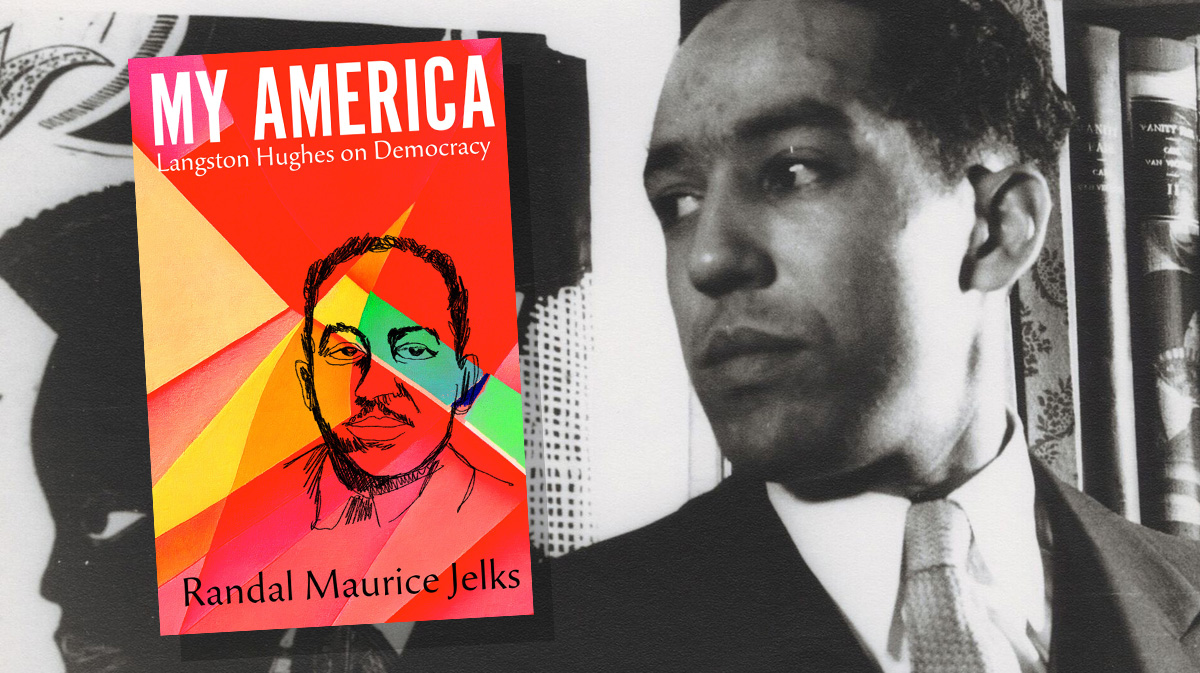
Langston Hughes is remembered as one of the most important leaders of the Harlem Renaissance, a cultural movement that celebrated African American creativity and identity. Through his poetry, essays, and stories, Hughes used art as a form of resistance against racism, inequality, and injustice. His works continue to inspire readers because they emphasize the importance of democracy, hope, and human dignity. Today, many people can still learn from Hughes’s belief that art should challenge oppression and encourage social change.
In My America: Langston Hughes on Democracy, author Randal M. Jelks explores Hughes’s life and ideas in depth. Jelks traces Hughes’s journey from his childhood in Kansas City to his travels across cities such as Paris, New York, Mexico City, and Madrid. These experiences allowed Hughes to witness different cultures, political struggles, and forms of artistic expression. As a result, his writing reflected both the beauty and the hardships of modern life. Hughes’s travels shaped his understanding of democracy and inspired him to speak for marginalized communities.
Hughes’s early life played an important role in developing his creativity and awareness of social issues. As a child, he was fascinated by the world around him and curious about the experiences of others. Growing up during a time of racial discrimination in America, Hughes saw how African Americans were often denied equal rights and opportunities. These experiences motivated him to use writing as a way to express the struggles and dreams of Black Americans. His work became a voice for people who were often ignored by society.
One of the most powerful aspects of Hughes’s writing was his joyful perspective on democracy. While many writers focused only on the failures of democracy, Hughes believed that democracy could still offer hope and possibility. He celebrated ordinary people and believed everyone deserved dignity and respect. Through poems such as “I, Too,” Hughes expressed confidence that equality would eventually prevail. His optimism encouraged readers to believe that change was possible even during difficult times.
Another important theme in Hughes’s work was creative expression. Hughes believed art was not just entertainment but a powerful tool for social transformation. He encouraged artists to speak honestly about their communities and experiences rather than trying to fit into society’s expectations. During the Harlem Renaissance, Hughes helped inspire Black writers, musicians, and artists to embrace their identities proudly. His commitment to authentic expression influenced generations of creators who followed him.
Communal dignity was also central to Hughes’s writing. He often focused on the lives of working-class African Americans and celebrated their strength, resilience, and humanity. Hughes understood that many people struggled with poverty and discrimination, yet he portrayed them with compassion and respect. By doing this, he challenged stereotypes and reminded readers that every person deserves recognition and value. His writing created a sense of solidarity among people facing hardship.
Class struggle appeared frequently in Hughes’s works as well. Hughes was aware that economic inequality affected millions of people, especially minorities and workers. He criticized systems that allowed wealth and power to remain concentrated in the hands of a few. Rather than ignoring these issues, Hughes used poetry and storytelling to expose injustice. His writings encouraged readers to think critically about inequality and the need for social reform.
Human suffering was another major theme Hughes explored. He witnessed pain caused by racism, war, and economic hardship throughout his life. However, Hughes did not simply describe suffering; he also highlighted the endurance and courage of those who faced adversity. His works reminded readers that even in moments of despair, people can find hope and strength. This message remains meaningful today as societies continue to struggle with conflict and injustice.
Randal M. Jelks explains that Hughes’s political ideas were often more radical than many people realized. Hughes openly sided with oppressed communities and believed writers should take a stand against injustice. In a world threatened by fascism and inequality, Hughes felt that silence was not an option. His writing was direct and fearless because he believed art should serve justice. This commitment to activism made Hughes an influential figure not only in literature but also in social movements.
Hughes’s belief that democracy can be practiced with joy is especially important today. Modern societies continue to experience political division, discrimination, and fear. Many people feel discouraged about the future of democracy. Hughes’s work offers a different perspective by showing that hope, creativity, and unity can strengthen democratic values. He believed people should celebrate freedom and human connection rather than surrendering to hatred and despair.
The lessons from Hughes’s works remain relevant because they encourage people to use their voices for positive change. Writers, artists, musicians, and activists today continue to follow Hughes’s example by addressing issues such as racial injustice, inequality, and human rights. His legacy demonstrates that art has the power to inspire empathy and motivate action. Hughes proved that creativity can become a form of resistance against oppression.
In conclusion, Langston Hughes remains one of America’s most influential literary figures because of his dedication to democracy, justice, and artistic expression. Through his writing, he gave a voice to the oppressed and encouraged people to believe in a more equal society. Randal M. Jelks’s My America reveals how Hughes’s life experiences shaped his political and artistic vision. Even today, Hughes’s works continue to teach valuable lessons about hope, courage, and the power of art to create social change.