Shadows Over Atlanta’s Burning Streets
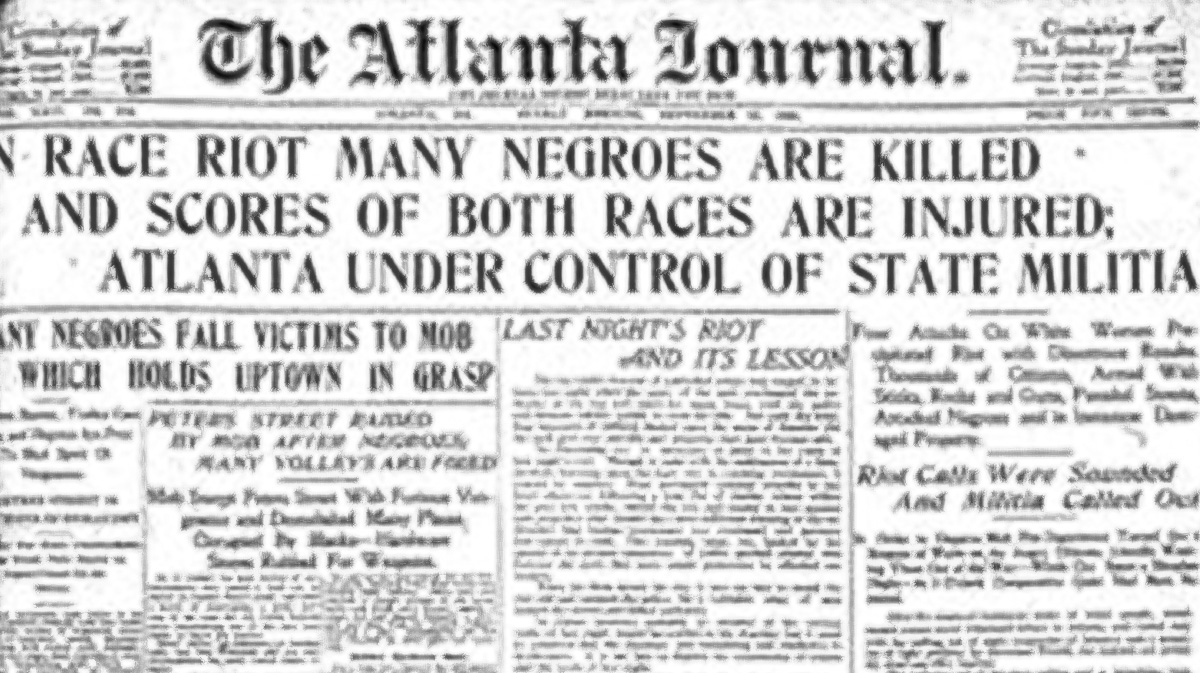
The Atlanta Race Massacre of 1906 stands as one of the most violent and defining episodes of racial conflict in early twentieth-century America. Occurring over several days in September 1906, the violence revealed the deep fractures within a rapidly modernizing Southern city struggling with race, power, and identity. Atlanta, often celebrated as a symbol of the “New South,” became the stage for a brutal eruption of white mob violence against Black citizens.
At the turn of the century, Atlanta was experiencing rapid growth. Railroads, industry, and commerce were transforming the city into a regional hub. Black Atlantans, many of them descendants of formerly enslaved people, were also building institutions, businesses, and communities that reflected ambition and resilience. This progress, however, stirred resentment among many white residents who viewed Black advancement as a threat to social hierarchy.
The political climate leading up to the massacre was deeply charged. Georgia’s gubernatorial race in 1906 intensified racial tensions, as candidates openly appealed to white supremacy to gain support. Campaign rhetoric frequently invoked fear of Black political power and social equality, reinforcing divisions that had been simmering since Reconstruction.
Local newspapers played a critical role in inflaming these tensions. Sensationalized and often fabricated reports of assaults by Black men against white women were published repeatedly in the days before the violence. These stories, designed to provoke outrage, spread rapidly among white readers and helped create a climate of fear and anger that would soon erupt.
On the evening of September 22, 1906, mobs of white men began gathering in downtown Atlanta. Fueled by rumors and alcohol, they attacked Black individuals indiscriminately. Streetcars were stopped, and Black passengers were beaten or dragged into the streets. The violence spread quickly through the city’s central districts.
As the mob grew, the brutality intensified. Black-owned businesses were looted and destroyed, and entire neighborhoods were targeted. The attackers, often numbering in the thousands, operated with little immediate resistance. Law enforcement was either overwhelmed or complicit, failing to protect Black residents.
Black Atlantans fought back where they could. In some neighborhoods, armed resistance emerged as individuals and groups attempted to defend their homes and families. These acts of self-defense, though courageous, were met with even greater retaliation from white mobs and authorities.
The violence continued for several days, spreading beyond the downtown area into other parts of the city. Reports of beatings, shootings, and killings multiplied. Black residents were forced into hiding, seeking refuge wherever they could find safety.
The official death toll was reported as around two dozen people, though historians widely believe the true number was much higher. Many deaths went unrecorded, particularly those of Black victims. Injuries numbered in the hundreds, and countless families were left traumatized and displaced.
Economic devastation followed the physical violence. Black businesses that had taken years to build were destroyed overnight. Property damage was extensive, and many Black Atlantans lost their livelihoods in the aftermath.
The response from city officials was slow and inadequate. Eventually, the state militia was deployed to restore order, but by that time much of the damage had already been done. The delay in intervention raised serious questions about the willingness of authorities to protect Black citizens.
In the aftermath, Atlanta’s Black community faced increased restrictions and segregation. Rather than addressing the root causes of the violence, many white leaders doubled down on policies that reinforced racial inequality. Jim Crow laws became more entrenched in daily life.
The massacre also had a profound psychological impact. Fear and mistrust deepened between Black and white communities. For many Black Atlantans, the events of 1906 underscored the precariousness of their safety and rights, even in a city that prided itself on progress.
Despite the trauma, Black leaders and communities began to reorganize and rebuild. Institutions such as churches, schools, and civic organizations played a crucial role in restoring a sense of stability and purpose. These spaces became centers of resilience and resistance.
Prominent figures like W. E. B. Du Bois, who had ties to Atlanta, used the massacre as evidence of the urgent need for civil rights advocacy. The violence reinforced arguments that systemic racism was deeply embedded in American society and required organized resistance.
The massacre also influenced the broader trajectory of the civil rights movement. It highlighted the dangers of unchecked racism and the consequences of political leaders exploiting racial fears. These lessons would resonate in the decades to come.
Nationally, the events in Atlanta drew attention to racial violence across the United States. The massacre was not an isolated incident but part of a larger pattern of attacks on Black communities during this period. Similar outbreaks occurred in other cities, reflecting widespread racial tensions.
Media coverage outside the South varied, with some outlets condemning the violence while others echoed the racial biases of the time. The lack of a unified national response revealed the depth of division within the country over issues of race and justice.
Over time, the memory of the massacre faded from mainstream historical narratives. For many years, it was overshadowed by other events and omitted from textbooks. However, scholars and community leaders have worked to bring renewed attention to this critical moment in history.
In recent decades, efforts have been made to acknowledge and commemorate the victims. Historical markers, public discussions, and academic research have helped ensure that the events of 1906 are not forgotten. These efforts are part of a broader movement to confront difficult aspects of the past.
Understanding the Atlanta Race Massacre requires examining the intersection of race, politics, media, and economics. It was not a spontaneous घटना but the result of deliberate actions and systemic inequalities that created a volatile environment.
The legacy of the massacre continues to shape conversations about race and justice in America. It serves as a reminder of the consequences of hatred and the importance of vigilance in protecting civil rights.
Today, Atlanta is often seen as a center of Black culture, business, and political power. This transformation reflects the resilience of its Black community, which endured and overcame immense adversity in the wake of events like the 1906 massacre.
The story of the Atlanta Race Massacre of 1906 is ultimately one of both tragedy and resilience. While it exposes the darkest aspects of American history, it also highlights the strength and determination of those who survived and rebuilt.