Digital H.B.C.U. Lessons Online
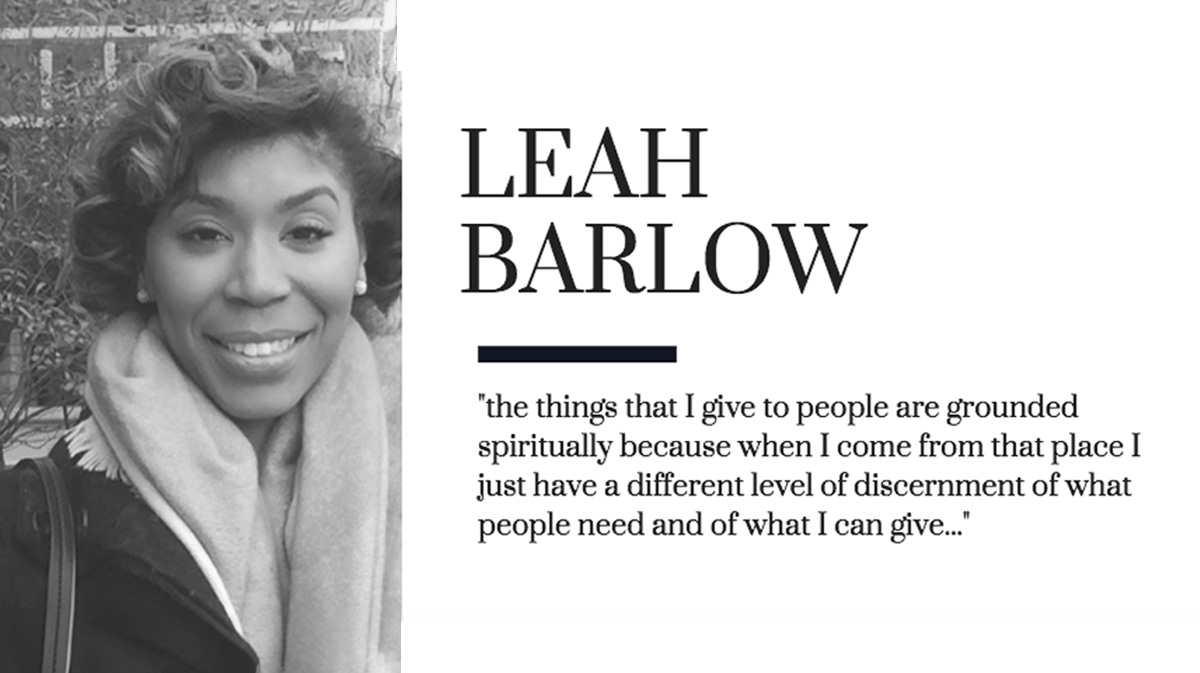
When Leah Barlow, a liberal studies professor at North Carolina A&T, decided to welcome her Intro to African American Studies students on TikTok, she imagined the app as a supplement to her classroom, not a replacement for it. She recorded a short greeting in January, posted it for the 35 students on her roster, and went to bed expecting modest engagement. By the next morning, TikTok’s algorithm had pushed her video across the platform, and hundreds of thousands of people had effectively “walked into” her classroom overnight, revealing just how many users were hungry for Black studies content that felt approachable, contemporary, and free.
Out of that viral moment grew something more ambitious than one course with an unexpectedly large audience. Barlow’s video inspired a loosely organized collective of Black educators, experts, and creators to imagine what a historically Black college or university might look like if it existed entirely on TikTok. They began to craft a shared project: a digital institution with no tuition, no dorms, and no accreditation, but with a sense of mission rooted in the traditions of H.B.C.U.s and the realities of social media culture. The result was Hillmantok, a virtual campus where anyone with a phone could enroll in live lectures, short lessons, and community discussions led by Black instructors.
Hillmantok’s rise is inseparable from the political atmosphere in which it emerged. Barlow posted her welcome message just hours after Donald Trump’s second inauguration, a moment the article describes as charged with renewed attacks on diversity, equity, and inclusion initiatives at the federal level. Against that backdrop, she saw TikTok as a way to peel back the walls of the “ivory tower” and invite in people who had long been kept at its gates. In her view, the platform does not simply broadcast classroom content; it redistributes who gets to teach and who gets to be heard, which felt urgent at a time when conventional diversity programs were being rolled back.
The name Hillmantok itself reveals how deeply this experiment draws from Black cultural memory. Former math teacher Cierra Hinton, watching Barlow’s video and similar posts, joked to herself that she must have woken up at Hillman College, the fictional H.B.C.U. from “The Cosby Show” spinoff “A Different World.” That reference stuck: the collective christened their project Hillmantok, signaling both a playful nod to a beloved television universe and a serious attempt to actualize its spirit online. Alongside Hinton, Tampa-based publicist and D.J. Kennddrick Pringley stepped in to help organize the effort, eventually taking on the role of student union president for a fast-growing virtual student body.
From the start, the creators of Hillmantok treated the project as more than a loose hashtag or trend. They built infrastructure that mimicked the bones of a university: a website with a course catalog, registration forms for would-be students, and an official TikTok account to share announcements. Volunteers formed a board of trustees as well as a student governing body, and organizers spent long nights on Zoom clarifying their mission and structure. They framed Hillmantok as a place where a “free and fair education” could flourish, designed specifically for people who might never set foot on a traditional campus or who felt alienated by the cost and culture of higher education.
For Pringley and others, Hillmantok also functions as a rebuttal to a broader crisis of information. He worried aloud about how much schooling has become “limited, covered up, muted and silenced,” echoing concerns about book bans, curriculum restrictions, and the spread of misinformation online. Hillmantok, as they imagine it, is a platform where users can encounter rigorous lessons without gatekeepers, a place where knowledge about history, science, and politics is not filtered through institutions they believe have often minimized or distorted Black experiences. In that sense, the digital university is both an educational experiment and a quiet act of resistance toward efforts to narrow what can be taught and learned.
The article shows that the desire to learn did not stop at Barlow’s classroom door, even when access remained technically closed. Her TikTok page made clear that her African American studies course at North Carolina A&T was limited to enrolled students, leaving many viewers disappointed. One of them, artist Brandi Smith, decided to treat Barlow’s posted syllabus as an open invitation anyway. Smith organized her own TikTok-based study sessions, guiding followers through the course’s readings and viewings, including the documentary “13th,” the protest anthem “This Is America,” “The Revolution Will Not Be Televised,” an episode of “Atlanta,” and W.E.B. Du Bois’s essay “Why I Won’t Vote,” effectively turning herself into a peer instructor for strangers who wanted to learn alongside her.
Hillmantok also became a stage for disciplines that often intimidate students, like organic chemistry. André Isaacs, an organic chemistry professor at College of the Holy Cross, had already built a large social media audience by making chemistry fun and accessible. The emergence of Hillmantok gave him an umbrella under which to offer a more organized, open course. His first Hillmantok lecture drew about 1,000 participants through Zoom and TikTok Live, and eventually around 3,000 people registered via his website to access his recorded lectures, lesson plans, assignments, quizzes, an open-source textbook, and a Discord community where they could ask questions and study together.
For Isaacs, the stakes are both financial and psychological. He points out that college tuition remains “prohibitively expensive,” especially for Black and brown students, and that subjects like organic chemistry carry an aura of exclusivity that discourages many from even trying. By breaking the subject down into short, engaging videos and linking it to everyday objects—such as the molecules in skin-care products or the chemical meaning of “acid”—he hopes to demystify the field and give students a head start before they enter a formal classroom. In his view, if more people can see themselves as capable of understanding complex science through free online content, they may feel better equipped to pursue STEM degrees or careers later.
Hillmantok’s course offerings extend beyond academic core subjects into areas like gardening, which the article treats as another point of entry into empowerment. Dominique Kinsler, an Orlando-based pharmacist known online as Pharmunique, fell in love with gardening during the pandemic and shared her journey with hundreds of thousands of viewers through instructional videos. When she joined Hillmantok, she launched a Gardening 101 class that quickly proved there was huge interest in learning how to grow food and plants at home. Her first Hillmantok video garnered roughly 1,000 views in half an hour and passed 1 million views by the next day, motivating her to start writing a textbook aimed at teaching people how to garden in whatever environment they have, from backyards to patios.
Kinsler situates this gardening course and the broader Hillmantok project within a moment of anxiety about control over digital platforms themselves. The federal government briefly enforced a TikTok ban before Trump delayed it through an executive order, a whiplash-inducing episode that made many users feel a crucial outlet for learning and expression could be taken away at any time. She describes this shift as a “pivotal turning point,” one that pushed people to approach Hillmantok more deliberately, arriving with notebooks—or in her case, pots and soil—ready to treat the app as a serious classroom rather than a distraction. The very threat of losing TikTok, she suggests, reminded users how much power they had begun to exercise on the platform.
The way Kinsler structures her gardening course captures the broader pedagogical philosophy running through Hillmantok. Instead of a written exam, her students will complete a final project by posting TikTok videos of their finished gardens, using the app’s visual grammar as proof of what they have learned. That model, mirrored across various Hillmantok courses, turns the platform’s emphasis on performance into a tool for assessment and community building. Ultimately, the article portrays Hillmantok as an evolving ecosystem rather than a fixed institution: a living experiment in what it means to build a digital H.B.C.U.–inspired university in an era of political backlash, economic strain, and algorithmic possibility, all sparked by one professor’s decision to say “welcome” on camera.