Power Unapologetically Defined
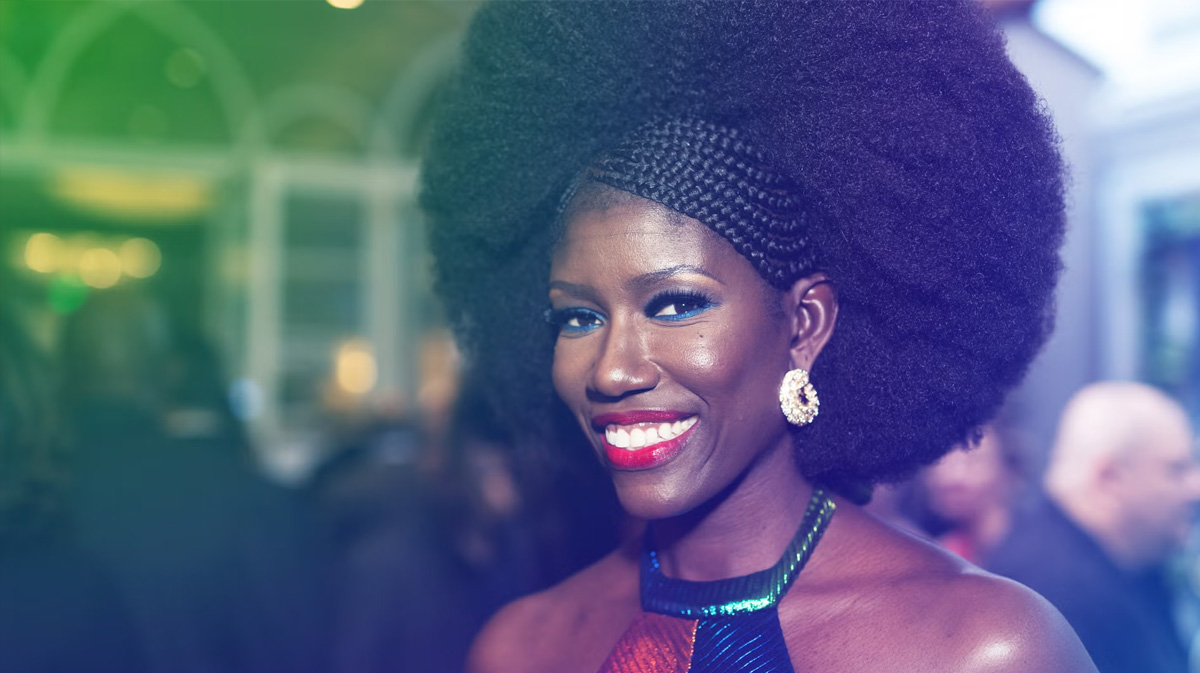
Bozoma “Boz” Saint John has built a career around a principle that many Black professionals have struggled to embrace in corporate America: success should not require the erasure of identity. Bold, stylish, outspoken, and culturally grounded, Saint John has risen through some of the world’s most powerful companies while refusing to make herself smaller for the comfort of others. Her journey is not simply a story about marketing. It is a story about presence, cultural intelligence, personal loss, reinvention, and the power of occupying spaces that were rarely designed with Black women in mind.
Born in the United States and shaped by her Ghanaian heritage, Saint John experienced life across cultures from an early age. Her family’s journey included time in Ghana and other parts of the world before settling in the United States. That multicultural perspective would eventually become one of her greatest professional strengths. She learned to recognize the ways music, fashion, language, and popular culture create emotional connections between people—an understanding that would later define her approach to marketing.
Saint John graduated from Wesleyan University, where she studied English and African American Studies. Her education gave her an intellectual foundation for understanding storytelling, history, race, and identity. But her real gift was her ability to translate cultural understanding into business strategy. She understood something that corporations increasingly needed to learn: consumers are not simply numbers on a spreadsheet. They are people with memories, traditions, aspirations, and emotional relationships with the brands they invite into their lives.
Her early career included work at Spike Lee’s advertising agency, SpikeDDB, placing her in an environment where Black culture and creative storytelling were treated as valuable assets rather than corporate afterthoughts. From there, Saint John moved into increasingly influential marketing positions. Her career eventually took her to PepsiCo, where she became a major force in music and entertainment marketing. Her work connected brands with popular culture and helped demonstrate how music could become a powerful bridge between corporations and consumers. (American Advertising Federation)
Music would remain an important part of Saint John’s professional journey. She joined Beats Music and later became a prominent marketing executive at Apple following its acquisition of Beats. At Apple Music and iTunes, she gained widespread attention for her energetic presentations and unmistakable personal style. In an industry often dominated by carefully controlled corporate personalities, Saint John appeared before audiences with confidence, enthusiasm, and cultural fluency. She did not look or sound like the traditional image of a Silicon Valley executive—and that was precisely her power. (American Advertising Federation)
Saint John’s career later took her to Uber, where she served as Chief Brand Officer during a difficult period in the company’s history. She subsequently became Chief Marketing Officer at Endeavor and later Global Chief Marketing Officer at Netflix. Few marketing executives have moved through such a remarkable collection of influential companies and industries. Pepsi, Apple Music, Uber, Endeavor, and Netflix represent very different corporate cultures, yet Saint John’s ability to understand brand identity and cultural conversation made her a highly visible figure across each environment.
Her professional philosophy has often centered on authenticity. Saint John has challenged the traditional corporate expectation that employees must separate their cultural identities from their professional lives. For Black women in particular, this message carries enormous significance. Corporate success has historically been associated with assimilation—changing one’s hair, speech, clothing, or personality to appear less threatening or more acceptable. Saint John’s public image has offered a radically different argument: excellence and cultural identity do not have to exist in opposition.
Yet her story also contains profound personal tragedy. Saint John’s husband, Peter Saint John, died of cancer in 2013. She has spoken and written about grief, love, motherhood, and the difficult process of continuing life after devastating loss. These experiences became central to her memoir, The Urgent Life. The book moves beyond corporate achievement and explores a deeper question: What happens when life reminds us that time is not guaranteed? Her answer is found in the title itself—the belief that living fully cannot always be postponed until circumstances are perfect.
That philosophy helps explain the intensity associated with Saint John’s personality. Her bold clothing, emotional openness, and willingness to take risks are not simply elements of a carefully constructed personal brand. They are connected to a woman who has confronted mortality at close range. Grief changed her understanding of time. Rather than waiting for permission to speak, move, love, or reinvent herself, Saint John has increasingly embraced urgency as a way of life.
In recent years, Saint John has expanded her public identity beyond the corporate boardroom. She became an entrepreneur and entered the beauty industry with Eve by Boz, a hair-extension business developed with Black women and women of color prominently in mind. She has also entered reality television through The Real Housewives of Beverly Hills and brought her marketing experience to television audiences in On Brand with Jimmy Fallon. These moves demonstrate her willingness to challenge conventional ideas about what a former global chief marketing officer is supposed to do next.
Saint John’s achievements have earned significant recognition within the advertising and marketing industries. She has been inducted into the American Advertising Federation’s Hall of Achievement and the American Marketing Association Hall of Fame, and Forbes named her the world’s most influential CMO in 2021. These honors reflect more than visibility. They acknowledge the growing importance of cultural understanding in modern business and Saint John’s role in pushing marketers to recognize that culture is not a side project—it is often at the center of how people experience brands.
The importance of Bozoma Saint John may ultimately extend beyond the companies listed on her résumé. Her larger legacy is the example she presents of a Black woman entering powerful corporate spaces without publicly surrendering the cultural characteristics that make her distinctive. She has made boldness part of her professional language and vulnerability part of her leadership story. Whether in a boardroom, on a stage, in a memoir, or before television cameras, Bozoma Saint John continues to make the same declaration through her life: take up space, understand your value, and do not wait forever to live the life you know is calling you.