Voices Challenging America’s Silent Structures
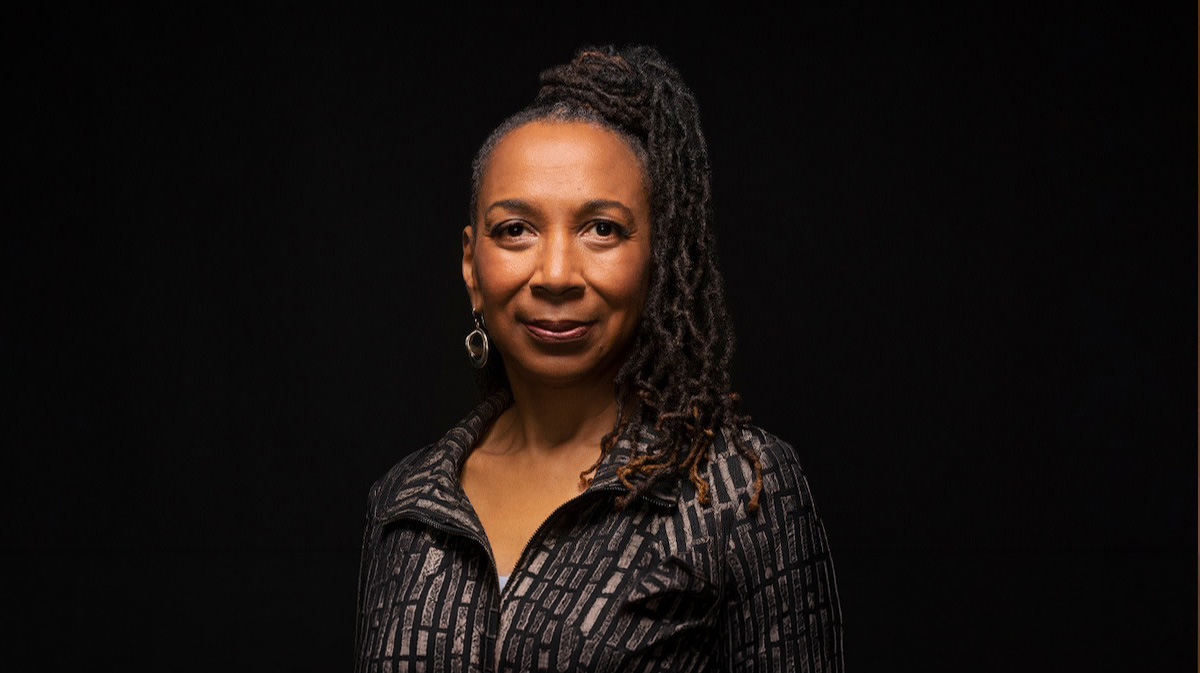
Backtalker is a deeply personal and political memoir by Kimberlé Williams Crenshaw that explores the origins of her groundbreaking ideas about race, gender, law, and power. Published in 2026, the book combines autobiography, legal history, and cultural criticism to explain how Crenshaw’s experiences as a Black woman in America shaped her intellectual work and activism. The memoir also examines the backlash against concepts like intersectionality and critical race theory, ideas that Crenshaw helped bring into public conversation.
The title Backtalker reflects Crenshaw’s lifelong willingness to challenge authority and speak against injustice. As a child growing up in Canton, Ohio during the civil rights era, she learned from her parents that silence could allow discrimination to continue unchecked. The memoir describes how even small childhood experiences taught her that racism and sexism often worked together in ways society refused to recognize. Crenshaw presents “backtalk” not as disrespect, but as moral courage and intellectual resistance.
One of the most important themes in the book is intersectionality, the concept Crenshaw introduced to explain how people can experience overlapping forms of discrimination. She argues that Black women, for example, often face challenges that cannot be understood by looking only at race or only at gender. Instead, these experiences exist at the intersection of both identities. Her work transformed legal studies, feminist thought, and discussions of social justice around the world.
“If you see inequality as a ‘them’ problem or ‘unfortunate other’ problem, that is a problem.”
Crenshaw’s memoir also examines the limitations of American institutions, especially the legal system. Through stories from law school, court cases, and activism, she explains how many laws fail to recognize the complexity of discrimination. She discusses cases where Black women were denied justice because courts insisted on separating race discrimination from gender discrimination, ignoring how both operated simultaneously. These experiences became central to her scholarly work and activism.
Another major aspect of the memoir is its exploration of education and intellectual life. Crenshaw describes attending Cornell University and later Harvard Law School, where she often felt isolated within elite academic spaces. Despite these challenges, she remained committed to questioning assumptions about fairness, equality, and opportunity. Her experiences in predominantly white institutions sharpened her understanding of how power operates socially and legally.
The memoir also reflects on the development of critical race theory, an academic movement that examines how racism can become embedded within legal systems and institutions. Crenshaw explains that critical race theory was never intended to divide Americans, but to examine the realities of inequality more honestly. In recent years, however, the concept became politically controversial, and Backtalker addresses the intense public backlash surrounding her work.
“Intersectionality is a lens through which you can see where power comes and collides, where it interlocks and intersects.”
Crenshaw’s writing is personal as well as intellectual. She openly discusses painful experiences involving violence, exclusion, grief, and public attacks. By sharing these moments, she demonstrates that political ideas are often born from lived experiences rather than abstract theories. The memoir becomes not only a history of legal thought, but also a story about emotional survival and perseverance.
One memorable quote from the memoir states, “the spirit of freedom was nurtured by talking back.” This line captures Crenshaw’s belief that democracy depends on ordinary people challenging injustice instead of quietly accepting it. The quote also explains why she chose the title Backtalker: speaking up can become an act of liberation.
Another important quote associated with Crenshaw’s work is her description of intersectionality as “a lens through which you can see where power comes and collides.” This idea summarizes one of the book’s central lessons: systems of inequality are interconnected and cannot always be separated into simple categories.
A third powerful quote from the memoir says, “You realise that how others see you will shape your experiences.” In this statement, Crenshaw reflects on how identity influences opportunities, treatment, and social expectations. The quote highlights the emotional impact of prejudice and the importance of understanding how society labels different groups of people.
“When feminism does not explicitly oppose racism, and when antiracism does not incorporate opposition to patriarchy, race and gender politics often end up being antagonistic to each other.”
Critics and readers have praised Backtalker for combining intellectual depth with emotional honesty. Many reviewers describe the memoir as accessible even to readers unfamiliar with legal theory. Instead of presenting complicated academic language alone, Crenshaw uses stories from family life, activism, and education to explain how ideas about justice develop over time. The result is both educational and deeply human.
Ultimately, Backtalker is more than a memoir about one scholar’s life. It is a reflection on American democracy, inequality, and the power of speaking truth to authority. Through her experiences, Kimberlé Williams Crenshaw argues that justice requires society to listen to voices that have traditionally been ignored or silenced. The memoir encourages readers to think critically about fairness while also recognizing the courage required to challenge deeply rooted systems of power.