Human Cost of Immigration Uncertainty
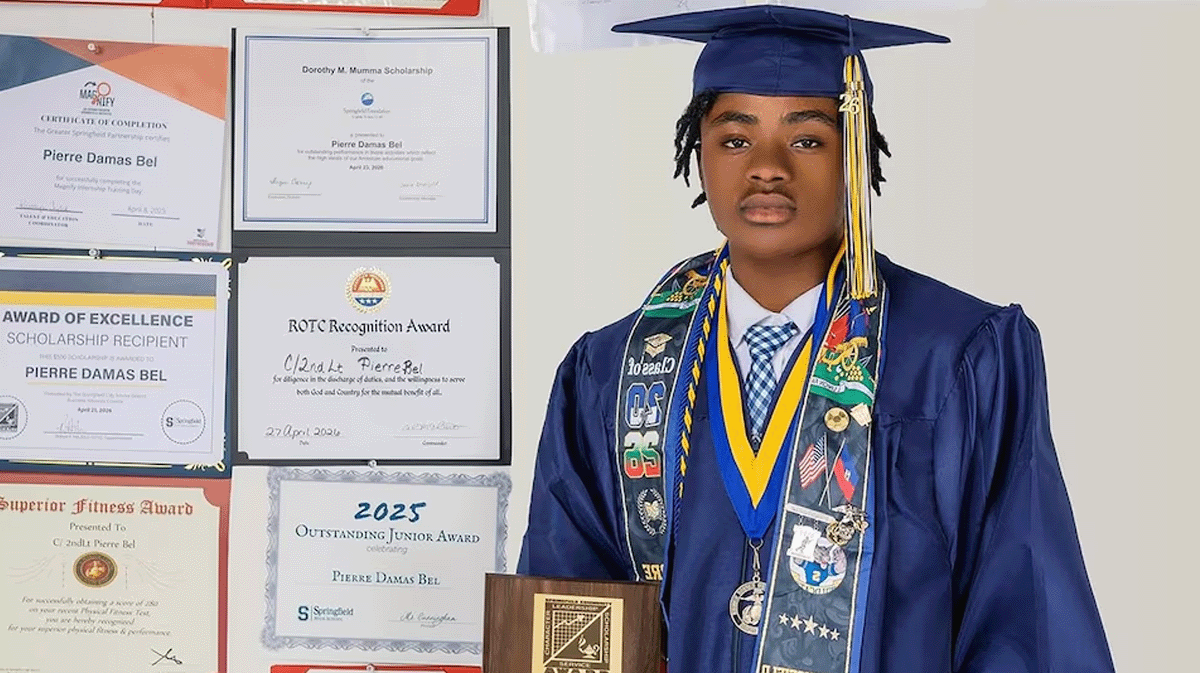
Sometimes the consequences of government policy cannot be understood by looking at statistics alone. They have to be understood through the lives of the people affected. The death of Pierre Damas Bel, a 20-year-old Haitian immigrant in Ohio, has forced many people to look beyond the political debate over immigration and consider what prolonged uncertainty can do to a young person and to an entire community.
Bel had come to the United States in 2024 to reunite with his family and pursue an education. By the time of his death, he had graduated from high school, become involved in JROTC, played soccer and enrolled at Wright State University. His family describes him as a young man with ambitions and a future he was working to build. Those details make his death particularly painful because so much of his life was still ahead of him.
In the weeks before his death, Bel’s immigration circumstances changed dramatically. He was placed under immigration supervision and required to wear an electronic monitoring device. According to his family, the monitor became a source of shame, unwanted attention and ridicule. His father has said that Bel was struggling emotionally and had spoken about bullying connected to the device shortly before his death.
Bel died after entering traffic on an Ohio highway. His family has described his death as a suicide, while authorities have been investigating the circumstances. His family and immigration advocates believe the pressure surrounding his immigration situation contributed to his emotional crisis. Suicide, however, is complex and can involve many factors, so it is important not to claim that one circumstance alone caused his death.
The tragedy occurred at the same time that the federal government was ending Temporary Protected Status, commonly known as TPS, for Haitians. The program had provided qualifying Haitians with protection from deportation and authorization to work in the United States. The termination of that protection has created uncertainty for hundreds of thousands of people who had depended on the program while Haiti remained in crisis.
For the people affected, losing TPS is about much more than an immigration document. It can affect whether someone can legally work, remain in a home, support a family or continue building a life in the United States. People who have spent years establishing themselves in American communities can suddenly find themselves questioning whether the future they imagined is still possible.
The uncertainty is made even more serious by the conditions in Haiti. The country continues to experience violence, displacement and significant humanitarian challenges. For Haitians facing the possibility of returning, the question is not simply whether they are being allowed to remain in America. It is also whether the place they are being asked to return to can provide the safety and stability they need.
For Haitian-American families, stories like Bel’s can create a sense of collective fear. A person does not have to be facing immediate deportation to experience anxiety. The possibility of losing employment, being separated from loved ones or being forced to leave a country where one has established a life can weigh heavily on an entire family. Young people can be especially vulnerable when immigration problems begin affecting school, friendships, athletics and their sense of belonging.
This is where the conversation about immigration needs to become more human. Immigration enforcement is a legitimate subject for public debate, and governments have the authority to establish and enforce immigration laws. But enforcing laws does not eliminate the responsibility to consider how those policies affect human beings. A young person wearing an ankle monitor is not merely an immigration case. He is someone’s son, someone’s friend, someone’s classmate and a member of a community.
Pierre Damas Bel’s death should therefore be remembered not simply as another political controversy. It should prompt a larger conversation about dignity, belonging and the emotional consequences of living under prolonged uncertainty. His family has lost a son with dreams and potential. His university has lost a student. His community has lost a young Haitian whose story had barely begun. Whatever conclusions ultimately emerge from the investigation, his death reminds us of something that should never be forgotten: behind every immigration policy is a human life, and behind every legal status is a person hoping for the opportunity to live, work, learn and build a future.