Two Nations, Two School Lunches
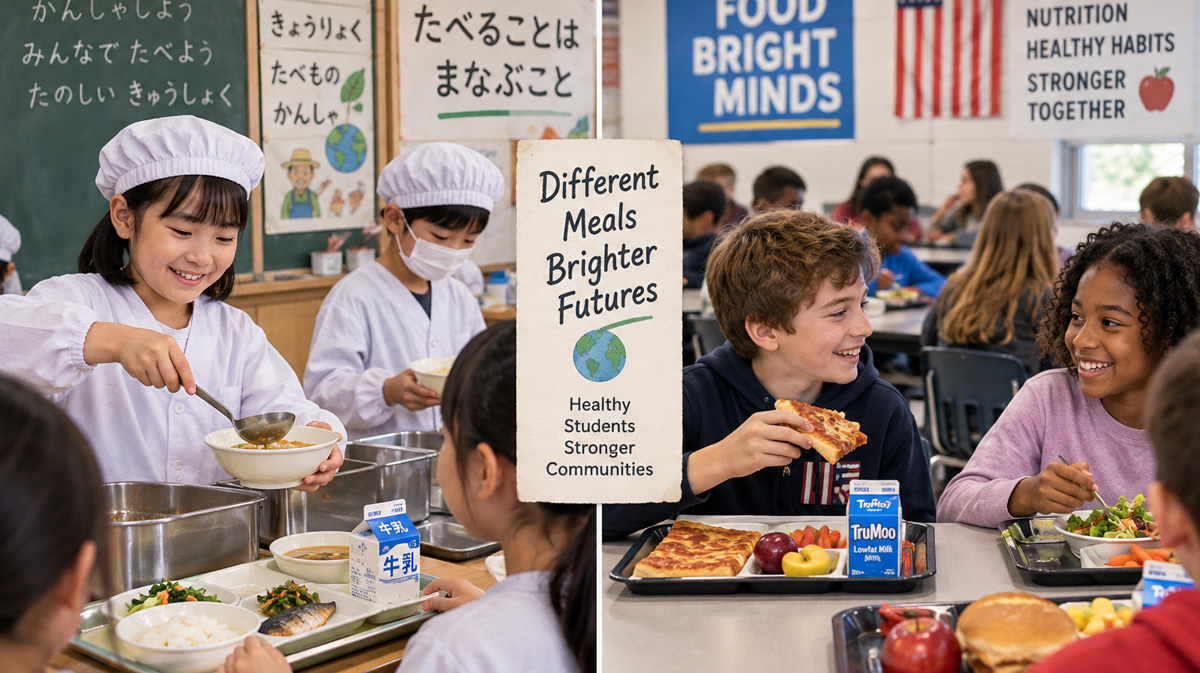
School lunch may seem like a simple part of a child’s day, but it can reveal a great deal about a country’s culture, values and priorities. Japan and the United States provide an interesting comparison because their school lunch programs approach food very differently. While American school lunches have traditionally focused on convenience, cost and meeting nutritional requirements, Japanese school lunches often emphasize nutrition, education, community and respect for food.
In Japan, school lunch, known as kyūshoku, is considered an important part of a child’s education. Students commonly eat the same meal together in their classrooms, and children often participate in serving the food to their classmates. Lunch becomes more than a break between classes. It becomes an opportunity to teach responsibility, cooperation, cleanliness and appreciation for the people who prepared the meal.
Japanese school lunches generally include a balanced combination of foods. A typical meal might contain rice, soup, vegetables, fish or another source of protein, and milk. Menus can also change according to the season and local food traditions. The goal is not simply to fill children’s stomachs but to provide them with a variety of nutrients and introduce them to different foods.
Another important difference is the way Japanese students are taught to think about food. Children may learn where ingredients come from, how food is produced and why a balanced diet matters. Students can also be encouraged to appreciate farmers, cooks and other workers involved in bringing food to the table. This creates a connection between the meal and the larger community.
School lunches in the United States operate under a different system. American schools serve millions of children through federally supported programs designed to provide meals that meet nutritional standards. The food served varies considerably from one school district to another. Some schools offer fresh fruits, vegetables, salads and freshly prepared meals, while others rely more heavily on processed or prepackaged foods.
One noticeable difference is the American emphasis on choice. Students may be able to select from several entrees or sides, depending on the school. Pizza, sandwiches, burgers and other familiar foods are common choices. This approach can make meals appealing to children, but it can also create challenges when students consistently choose foods that are high in calories, sodium or added sugar while avoiding healthier options.
The physical experience of lunch can also be different. In many American schools, students eat in cafeterias and may sit with different groups of friends. Lunch can be a social occasion, but students are not necessarily responsible for serving one another or cleaning the dining area. In Japan, those responsibilities are often incorporated into the school routine, reinforcing the idea that maintaining a community is everyone’s responsibility.
There are, however, important similarities between the two countries. Both recognize that children need nutritious food to learn and grow. Both have programs designed to make school meals available to students, including children whose families may have difficulty affording lunch. Both countries also face the challenge of encouraging children to develop healthy eating habits in a world filled with inexpensive and highly processed foods.
The comparison also raises a larger question about what society expects from a school lunch. Is lunch simply a meal that keeps students going through the afternoon, or can it also be an educational experience? Japan’s approach suggests that eating together can teach lessons about responsibility, culture, nutrition and respect. The American system has the opportunity to incorporate more of those lessons while continuing to address the enormous logistical and financial challenges involved in feeding millions of students.
Ultimately, Japanese and American school lunches reflect two somewhat different approaches to childhood and education. Japan places considerable emphasis on the shared experience of eating, responsibility and appreciation for food. The United States has focused heavily on accessibility, nutritional standards and providing choices. Neither system is perfect, but there is something valuable to learn from the Japanese model: sometimes the most important lessons in school are not taught at a desk. They can happen around a lunch table, one meal at a time.