Carole Hopson: Dreams Take Flight
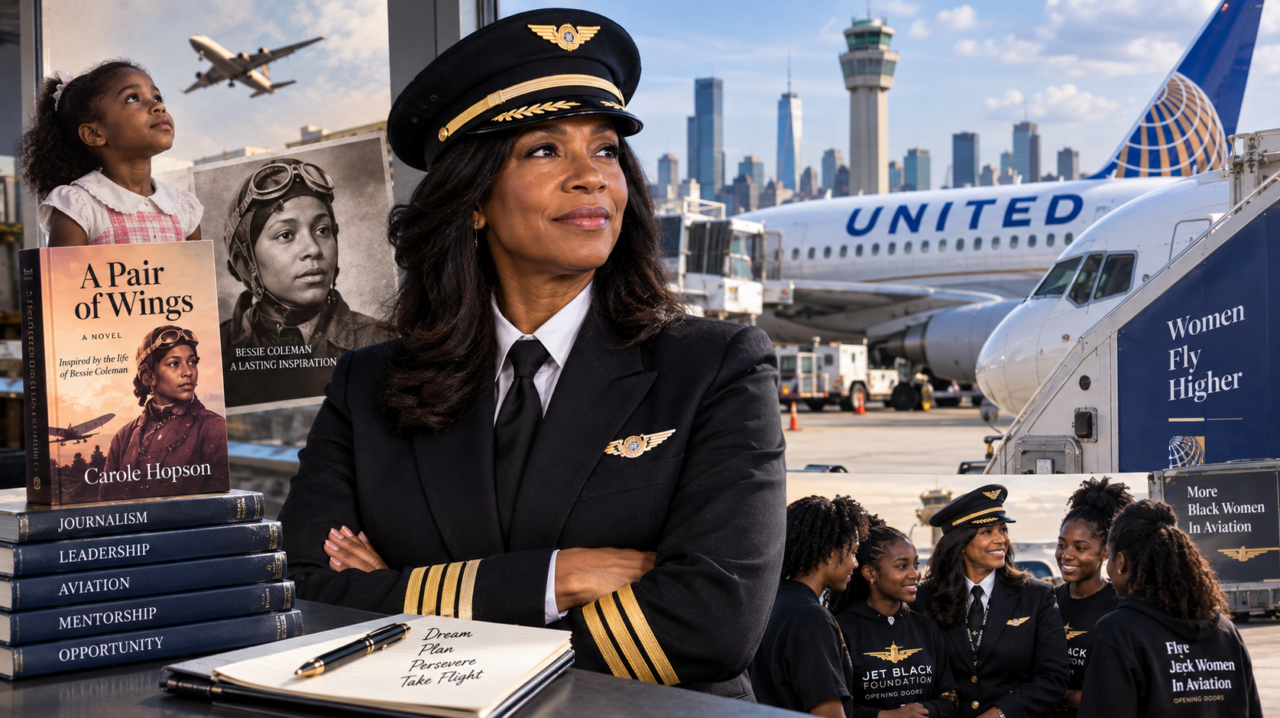
Captain Carole Hopson’s story is a powerful example of what can happen when a childhood dream refuses to disappear. Today, she is a Boeing 737 captain for United Airlines, based in Newark, New Jersey. But her journey to the cockpit was anything but conventional. Before becoming an airline captain, Hopson built a successful career as a journalist and corporate executive. Her story demonstrates that sometimes the dreams we put aside are not really gone; they are simply waiting for the right moment to take flight.
Hopson developed an interest in aviation when she was a young girl growing up in the Philadelphia area. She remembers watching airplanes and wondering where they were going. Flying seemed almost unimaginable for someone like her at the time. As a Black girl growing up in the 1960s and 1970s, she rarely saw women who looked like her in airline cockpits. Yet the absence of role models did not completely extinguish her fascination with aviation.
Her professional life initially took her in a completely different direction. Hopson became a journalist and spent years working in the news business, including seven years as a police reporter. She later moved into corporate America and held positions with major organizations, including the National Football League and Foot Locker. By conventional standards, she had already established a successful career. But beneath that success was an unfinished dream of becoming a professional pilot.
Hopson took her first flight lesson as an adult, around the age of 32. That experience confirmed that aviation was more than a childhood fantasy. She eventually made the extraordinary decision to step away from a successful corporate career and pursue flight training. Her newly earned qualifications came at a difficult time for the airline industry, and the September 11, 2001 attacks created additional challenges for people trying to establish careers in aviation.
The timing created another major obstacle. The airline industry’s hiring slowdown meant that Hopson’s qualifications could not immediately lead to the career she had envisioned. She and her husband also started a family, and Hopson devoted significant attention to raising their two sons. Other economic circumstances added further delays. Her dream of becoming an airline pilot was postponed, but she never abandoned it.
Eventually, Hopson returned to aviation with determination. She became a flight instructor and later joined the regional airline system before moving to United Airlines. Her journey is particularly notable because she entered the major-airline cockpit later in life than many pilots. She became a commercial airline pilot in her 50s and eventually earned her position as a United Airlines captain flying Boeing 737 aircraft.
Hopson’s accomplishments extend beyond aviation. She is also an author. Her novel, A Pair of Wings, is inspired by the life of Bessie Coleman, the pioneering aviatrix who became the first Black American woman to earn an international pilot’s license. Coleman became an important figure in Hopson’s own understanding of what it meant to pursue aviation when society offered few opportunities to Black women. Hopson’s book allows her to connect her own journey with the legacy of an earlier aviation pioneer.
Her commitment to aviation also includes helping create opportunities for other Black women. Through the Jet Black Foundation, Hopson has established a goal of helping 100 Black women attend flight school by 2035. Her work reflects a belief that representation matters and that young people need to see possibilities before they can imagine themselves achieving them. Her message is not simply about becoming a pilot; it is about expanding the number of people who believe that aviation can be part of their future.
What makes Hopson’s story especially meaningful is the timing of her transformation. She did not have to abandon everything she had accomplished in order to pursue her dream; instead, she brought the skills and experiences from journalism, business, leadership and family life into a completely different profession. Her story shows that a career change does not necessarily mean starting from zero. The knowledge acquired along the way can become part of the foundation for a new chapter.
Captain Carole Hopson’s life ultimately offers a message about persistence, purpose and the courage to begin again. From watching airplanes as a child to sitting in the captain’s seat of a Boeing 737, her journey took decades. She became a pilot later than many people might expect, but she demonstrates that dreams do not always have an expiration date. Through flying, writing and mentoring, Hopson has turned her personal dream into an opportunity to encourage others to pursue theirs. Her story reminds us that sometimes the most important destination is the one we were brave enough to finally pursue.