Harlem’s Historic “New Negro”
By Sonja D. Gracy
I’m a teacher and summer’s over for my breed. Since it’s protocol that we “huddle” before students arrive back, teacher discussions around planning for the year and “reflective practice” are inevitable. Teachers being able to assess their own teaching is paramount—especially after teaching events that bomb BIG.
I once facilitated a lesson that bombed big. The catastrophe didn’t revolve around student boredom, errant facts, or poor delivery. The classroom disaster hinged on a white professor’s reference to the word “negro” as she read from literature published during the Harlem Renaissance.
The professor, a kindly instructor who was part of a college connected high school program, visiting via Zoom, read the word “negro” etched in classic text by a famous Harlemite, I believe it was Countee Cullen. She was met with 100% vitriol from senior students who deemed her insensitive.
No amount of assuaging from anyone—not from the school’s principal, the vice principal, myself, or the sincerely apologetic professor helped. The students hyper-construed the white professor’s “negro” reference in their presence as belittling. They made it clear that it was okay for me to say the word but not her. The class—in unsettling unison—told me that if that professor continued co-teaching the class, they’d revolt. The professor subsequently bowed out, and I assumed all of the teaching for the initially co-remote course.
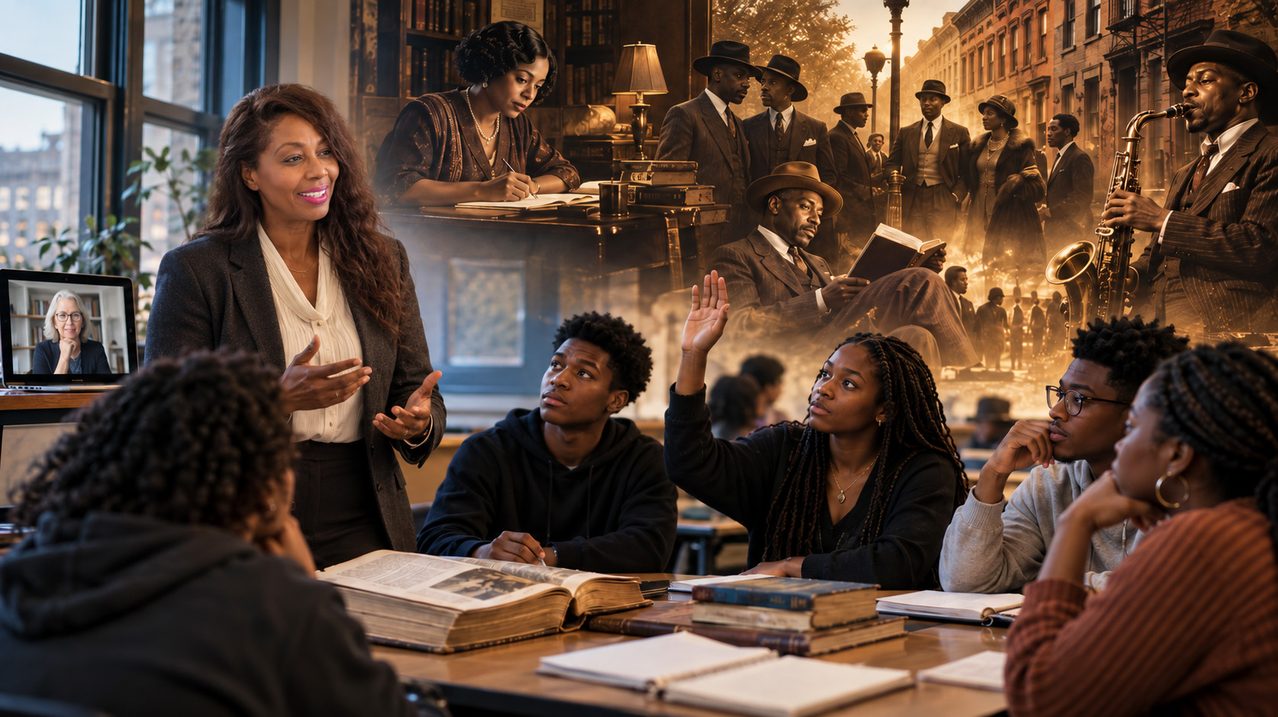
We eventually picked up and moved on, but no recovery was ever made on that episode, and there very well could have been. Had I thought to juxtapose dynamic Harlem Renaissance images of Black intellectual Alain Locke’s elevated “new negroes” against those of formerly enslaved “negroes” prior to the Great Migration, I could have provided cultural salve and insight to that incredibly messy situation.
Because “student voice” was a cherished aspect of culture promoted by the school, those seniors resisted the professor to exercise it. Later reflection on the incident showed me that I could have taught them the very term they despised, “negro,” when paired with the word “new” in the context of the Harlem Renaissance, was African Americans’ “resistance” to the dehumanization that had harangued Blacks in centuries-long servitude.
The Harlem Renaissance’s explosive and ennobling realities of new, Black autonomy and excellence were a blow to a political and social system that cruelly and conveniently promoted ideas that slaves—Black folk—were existentially void of culture, reason, novelty, ingenuity, and influence. Locke’s works like, “Harlem: Mecca of the New Negro” and The New Negro, glorified emancipated, migrating Black people (just decades removed from slavery) as motivated, enterprising, dynamic human beings filled with “renewed self-respect and self-dependence.”
The revolution happening in Harlem at that time typified this. The Harlem Renaissance, with all its seismic displays of Black genius and “new negro” grandeur from literature, art, and jazz, to sculpture, photography, and entrepreneurism, helped pulverize the offensive stereotypes and tropes of “aunties,” “uncles,” “mammies,” “Uncle Toms,” and “Sambos” Locke linked to the “old negro” concept.
A field trip to Harlem to highlight places trod by “historic new negroes” like Madam CJ and A’Lelia Walker, to specifically discuss those millionaires and their legacy in support of other “new negro Harlem Renaissance legends.” Names like W.E.B Du Bois, Langston Hughes, and Zora Neale Hurston, among others, would have been a “mic drop” for a pivotal life lesson on vocabulary that chronicles history, race, self-determinism, and the petri dish Harlem was, that set Black folk ablaze with inspiration as a new kind of people “up from slavery.”