William F. Tate IV and Rutgers: A Vision for Social Mobility, Community Health, and Academic Excellence
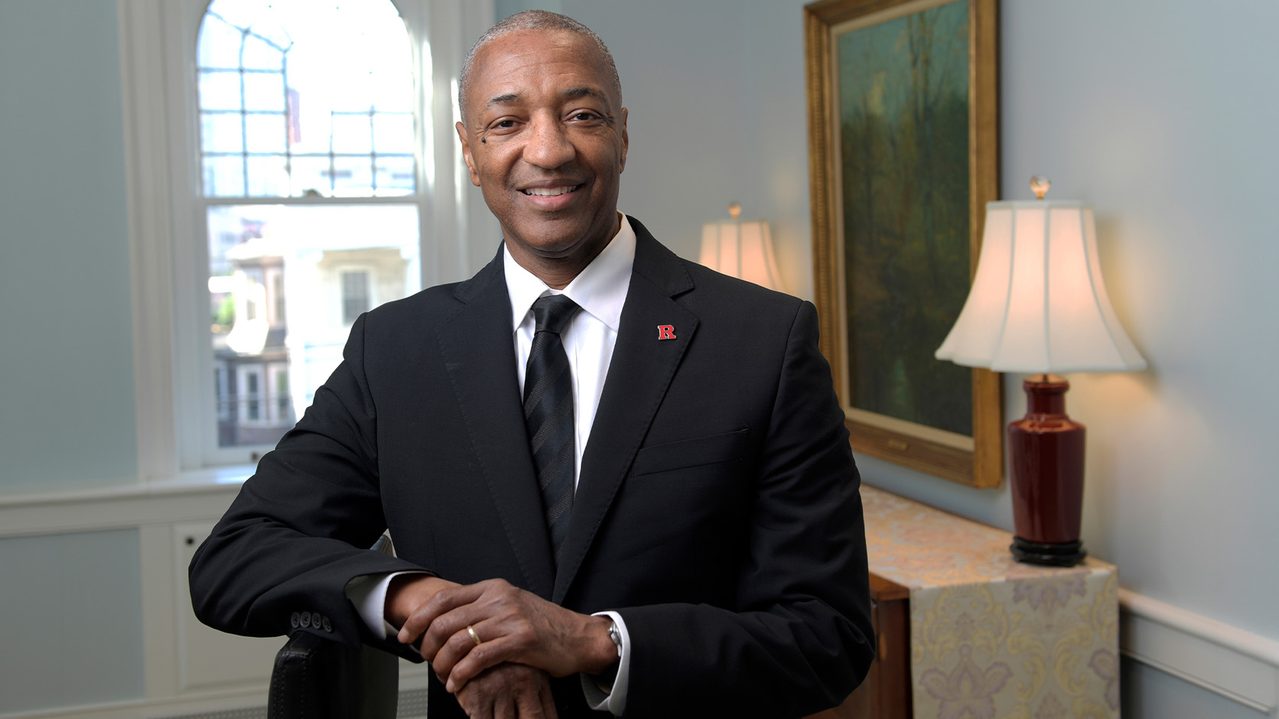
On July 1, 2025, Dr. William F. Tate IV officially assumed office as the 22nd president of Rutgers, The State University of New Jersey. His appointment marked a historic moment for higher education in the state, bringing a distinguished scholar, social scientist, and experienced university executive to lead New Jersey’s flagship land-grant institution. Yet, as President Tate often reflects, his connection to Rutgers began long before his formal selection by the university’s Board of Governors and Board of Trustees.
While serving as president of the Louisiana State University (LSU) system, Dr. Tate tasked his enrollment management and academic affairs teams with a clear mandate: identify the single best university program designed to reach into local middle and high schools, establishing pathways for underserved students to attend a flagship institution. The team returned with a clear, unanimous finding: the gold standard in community pathway programming was the Rutgers Future Scholars Program. Deeply impressed, Dr. Tate studied and modified the Rutgers model to launch the LSU Future Scholars Program.
Around the same time, while working with the LSU Foundation to expand healthcare access and build bridges between higher education and local medical networks, foundation leaders evaluated the nation’s top models for community-engaged health. Once again, the premier example cited was the partnership between the Rutgers Foundation and RWJBarnabas Health.
When a national search firm later contacted Dr. Tate to inquire if he would consider leading Rutgers, the alignment was undeniable. “A lot of things happened that led to me saying I should at least have a conversation because I’m deeply interested in social mobility and I’m deeply interested as an epidemiologist in community engaged health and giving people access to it,” Tate explained. “So that’s really how it all started for me.” Dr. Tate recognized that Rutgers embodied the exact principles he had championed throughout his professional life.
Early Formation: Curiosity, Academic Rigor, and Empirical Foundations
Understanding President Tate’s vision for Rutgers requires looking at the formative experiences that shaped his intellectual journey. Growing up in Chicago, Dr. Tate attended Holy Angels Elementary School—the nation’s largest Black Catholic elementary school at the time—where he served as class co-president, competed as a student-athlete in baseball and track, and demonstrated a relentless academic drive.
His curiosity about the world was nurtured by a family deeply dedicated to education and public service. His grandmother, a schoolteacher living in Hyde Park across from the Museum of Science and Industry, brought him to the museum weekly and fostered his passion for discovery. His mother, a hospital employee, routinely brought home copies of the Journal of the American Medical Association (JAMA), which young Tate read with fascination. Books like Tell Me Why and hands-on engineering model kits filled his childhood, establishing a lifelong passion for scientific inquiry and research.
Although his family initially encouraged him toward a career in medicine, Tate was drawn to broader, systemic questions about how society functions. He pursued degrees in economics, mathematical sciences education, and mathematics education, culminating in postdoctoral research in public policy and psychiatric epidemiology at Washington University in St. Louis.
This rich, interdisciplinary training instilled in Tate a steadfast belief in empirical inquiry. Whether analyzing psychiatric outcomes, evaluating financial structures, or studying learning environments, he applies a rigorous mathematical and statistical framework to identify evidence-based solutions.
Epidemiology, Crisis Leadership, and the Public Purpose
Tate’s specialization in psychiatric epidemiology and public health uniquely prepared him for higher education leadership during times of societal challenge. Earlier in his academic career in New York and St. Louis, he published research on airborne viruses, including the H1N1 outbreak, and investigated interventions to address health disparities impacting African American communities.
This deep public health expertise proved invaluable during his tenure as provost at the University of South Carolina and subsequently as president of LSU during the COVID-19 pandemic. Under his leadership, university safety protocols were anchored in epidemiological science, safeguarding campus communities while maintaining educational continuity. His leadership during the pandemic gained national prominence, leading to invitations to advise federal leaders at the White House on public health and institutional response strategies. For Tate, public health is not merely an academic discipline; it is an active mechanism for fulfilling a university’s duty to the public good.
The Theological Anchor: “Who Is My Neighbor?”
Despite being a scientist, central to Tate’s philosophy of education is a foundational question rooted in his faith and ethical formation. Raised Catholic and now Protestant, Tate frequently references the biblical question from the Gospel of Luke: “Who is my neighbor?”
“The answer to the ‘Who is my neighbor?’ question—how should we treat our neighbors, is answered in medicine; in public health; in agricultural extension with food security; in engineering where we’re trying to create systems to help people have better lives; in public policy where we’re evaluating how different actions are impacting our neighbor; in nursing, social work, law, education—how we are going to prepare our neighbors to go out into the world, compete, and be successful,” he said.
“So for me, the university is the outward growth of the biblical question, ‘Who is my neighbor?’ both in how we describe and how we act upon it. Now, many people may not see it that way, but that’s perfectly fine for me because the way I was prepared and educated, I can actually see the biblical question in its manifestation in the context of a university setting.”
The Rutgers Agenda: Social Mobility and Research Intensity
Tate has articulated an ambitious agenda designed to elevate Rutgers as America’s preeminent public university for social mobility. At his formal inauguration on November 7, 2025, President Tate emphasized that talent exists in every ZIP code and income bracket across New Jersey. To translate this core conviction into concrete action, he unveiled The Edge Fund, a major scholarship initiative targeted at supporting high-potential students whose talents span multiple disciplines—such as coders in the arts, writers in the sciences, and leaders in student athletics.
President Tate’s vision for Rutgers focuses on two reinforcing pillars:
- Unrivaled Social Mobility: Expanding access and affordability so that first-generation, low-income, and underrepresented students can earn degrees that deliver transformational career trajectory and economic security.
- Top-Tier Research Intensity: Driving groundbreaking discoveries in medicine, urban planning, agriculture, technology, humanities, and social sciences that deliver tangible health, economic, and cultural benefits to the state of New Jersey.
Through strategic partnerships—including the ongoing development of the new Rutgers School of Medicine and enhanced collaboration with RWJBarnabas Health—President Tate is reinforcing Rutgers’ role as a healthcare and economic powerhouse.
A Unified Community for New Jersey’s Future
Whether walking the historic Queens Campus in New Brunswick, engaging with faculty and students at Rutgers–Newark, or connecting with regional initiatives in Camden, President Tate views Rutgers’ vibrant diversity as its greatest strength.
He notes that across all backgrounds, cultures, and geographic regions, students and families share fundamental aspirations: access to excellent, affordable education that opens doors to market opportunities and empowers individuals to make meaningful contributions to society.
Under the leadership of Dr. William F. Tate IV, Rutgers University entered a dynamic era—one marked by academic excellence, empirical precision, and an unwavering commitment to serving its students, its state, and its neighbors.