Sorrow Without Apology: Britain’s Reckoning
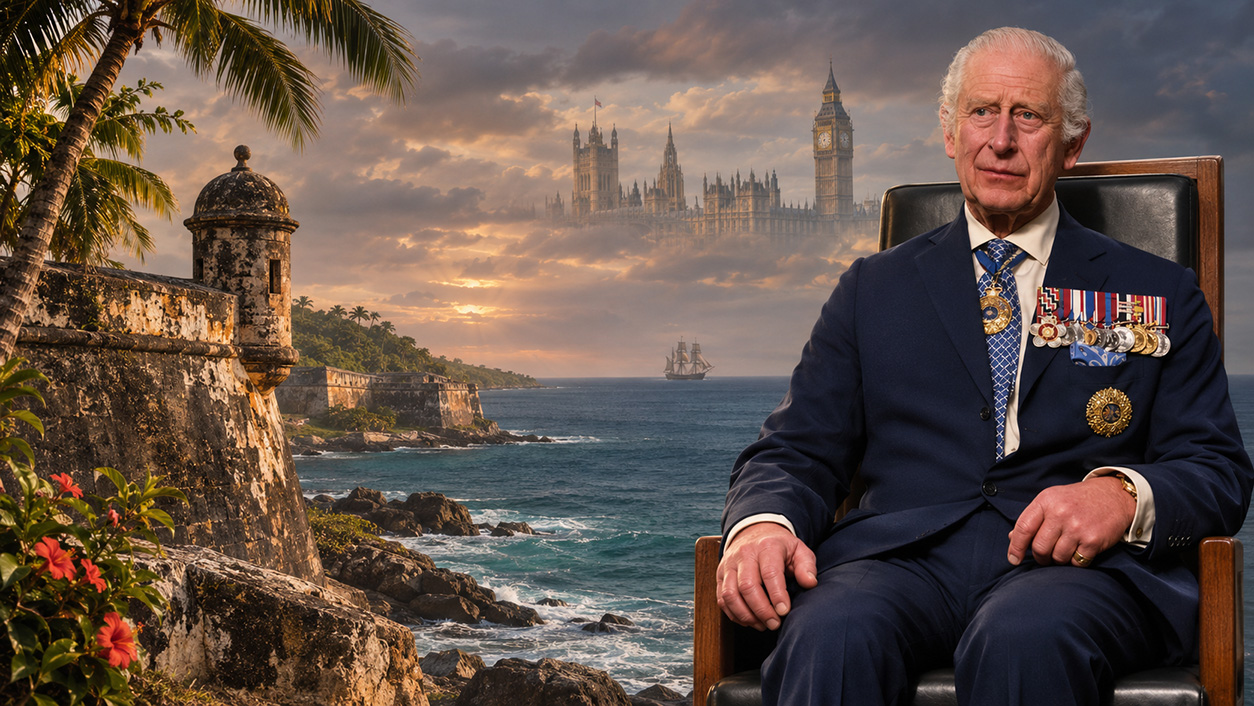
When King Charles III stood before Commonwealth leaders in St. John’s, Antigua, he said what many had hoped to hear and withheld what many had come to expect. He spoke of deep personal grief and horror over Britain’s part in the trans-Atlantic slave trade, and he acknowledged that the consequences of that history still echo in the present. Yet he stopped short of offering a formal national apology. The gap between those two acts, heartfelt sorrow on one side and official contrition on the other, is the story of the moment, and it reveals how difficult it remains for a nation to answer for its past.
The king’s restraint was not a matter of personal reluctance. As ceremonial head of state for several Commonwealth countries, he is bound by constitutional convention and cannot speak for Britain in a formal sense unless the government directs him to do so. His words therefore carried real moral weight but no legal or political force. Observers who expected a decisive break with precedent were reminded that a monarch’s voice, however sincere, is limited by the machinery of the state he represents.
That machinery, meanwhile, appears to be shifting. Prime Minister Andy Burnham signaled in the days before the summit that his government is open to a formal apology, which would mark a notable departure from long-standing British policy. He did not promise one on the spot. Instead, he framed an apology as something that should grow out of structured conversations with the countries most affected, treating it as the product of dialogue rather than a gesture handed down from London.
Mr. Burnham explained his thinking in an essay for The Guardian, where he described the slave trade in blunt terms as a brutal and barbaric violation. He argued that listening to affected nations would be central to the process, and that an apology on behalf of the British state could become an important part of it. This approach asks a great deal of patience, but it also suggests that the government sees an apology as a beginning of a relationship rather than the end of an argument.
The pressure behind these developments has been building for years. Leaders across the Commonwealth have pushed Britain to apologize and to consider reparations, and the week leading up to the summit only sharpened the demand. The king traveled to the Bahamas and Guyana before arriving in Antigua, and on the eve of his meeting with Guyana’s president, Mohammed Irfaan Ali, that leader said publicly that an apology should be the next step. The calendar itself seemed to conspire to make the issue impossible to avoid.
Even so, the government drew a firm line on reparations. Mr. Burnham rejected the idea that people living in Britain today should be held liable for wrongs committed in another era, under different laws, in which they had no personal role. It is a familiar argument, grounded in a view of individual responsibility, and it has real supporters. But it also sits uneasily beside an apology, since saying sorry on behalf of a state implicitly accepts that the state, as a continuing institution, carries some responsibility across generations.
The reaction from the Caribbean reflected that tension. Mia Mottley, the prime minister of Barbados, welcomed Mr. Burnham’s openness to an apology but made clear she was not retreating from demands for reparations. She said plainly that the two sides see the issue differently and promised to say so respectfully. Her response captured a diplomatic reality: a willingness to talk is valued, but it does not erase the substantive disagreement over what justice for the descendants of enslaved people should look like.
Britain also arrived with practical proposals designed to show that engagement would go beyond words. Mr. Burnham was expected to announce an effort to help Commonwealth nations restructure their debts, giving them more time to repay and lower interest costs. He asked Gordon Brown, the former prime minister, to lead that work. The government also plans a task force to encourage development of critical minerals and a pledge of 40 million pounds, roughly 53 million dollars, over three years to speed up infrastructure investment in the Caribbean.
These measures are likely to be welcomed, but they fall short of what some countries are demanding, which is monetary compensation for the descendants of the enslaved. Critics may see debt relief and infrastructure funding as a way to sidestep the hardest question. Supporters will answer that tangible economic help can do more for living people than a debate over liability. Both views have force, and the choice between them may define the next phase of the relationship between Britain and its former colonies.
The path ahead is uncertain but not directionless. Officials suggested that a formal apology could emerge once the structured dialogue Mr. Burnham described has taken place, and the BBC reported that it might come within the next year, possibly when Britain holds the rotating presidency of the G20. Whether that apology arrives, and whether it satisfies leaders who want more, will test the sincerity of the conversation now beginning. For now, the king’s sorrow has opened a door, and the work of walking through it belongs to governments, not to a monarch.