A Turning Point in Politics
The decision of a veteran senator to step down after decades in office has opened the door to a moment of transformation in American politics. Long tenures often bring stability, but they also create inevitable turning points when new leadership must emerge. This transition has energized voters, sparked competition, and set the stage for a race defined by shifting momentum and evolving priorities.
At the forefront of this moment is Juliana Stratton, a public servant whose career reflects both steady experience and a willingness to embrace change. Serving as Illinois’ lieutenant governor, she has spent years navigating state-level leadership while building a reputation as both collaborative and assertive. Her background as an attorney and former state representative has given her a multifaceted understanding of governance.
Stratton’s journey into politics is rooted in personal experience as much as professional ambition. Growing up in Chicago, she witnessed firsthand the challenges families face when dealing with healthcare systems and economic uncertainty. These early influences shaped her commitment to public service, particularly around issues of fairness, access, and community support.
In the early stages of the race, her campaign faced an uphill climb. Polling suggested that other candidates held the advantage, and momentum appeared to favor more established frontrunners. Yet campaigns are fluid, and through persistence and a sharpened message, Stratton gradually reshaped the narrative in her favor.
A major turning point came with the support of J. B. Pritzker, whose endorsement brought both credibility and significant financial backing. With increased resources, the campaign was able to expand its reach, connect with more voters, and present a clearer vision. This infusion of support helped shift the trajectory of the race at a critical moment.
One of the defining elements of Stratton’s campaign was her firm stance on immigration policy. Rather than adopting incremental reforms, she positioned herself as an advocate for sweeping changes, directly challenging existing enforcement structures. This bold approach distinguished her from competitors and resonated with voters seeking decisive action.
Her opponents, by comparison, took a more measured tone. Some argued for revising policies tied to specific administrations rather than dismantling entire systems. This contrast created a clear ideological divide, offering voters a choice between cautious adjustment and more transformative change.
As the campaign unfolded, it became evident that many voters were drawn to clarity and conviction. Stratton’s messaging emphasized urgency and strength, presenting her candidacy as a response to broader national tensions. Her ability to connect policy positions with a larger narrative of purpose played a key role in her growing support.
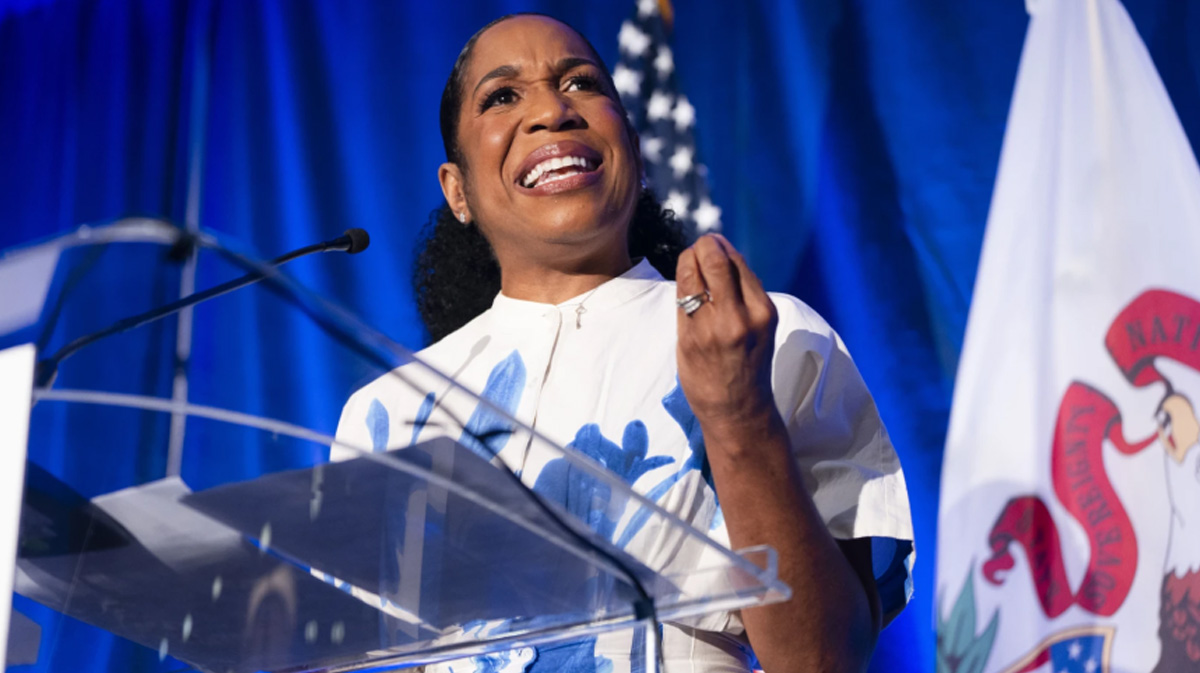
On election night, her victory speech captured the spirit of her campaign. She spoke about courage not as an abstract idea, but as a guiding force behind her decision to run and her determination to lead. The message reinforced her image as someone prepared to confront challenges directly rather than avoid them.
Another striking feature of the race was the unusually high level of voter participation. For an election held outside of a presidential cycle, turnout exceeded expectations, with more than a million ballots cast. This surge signaled a heightened sense of engagement and a desire among voters to shape the direction of leadership.
The level of participation also invited comparisons to historic contests, including the Senate race that launched Barack Obama onto the national stage. Moments like these serve as reminders that certain elections carry broader significance, reflecting not just immediate outcomes but deeper shifts in political energy.
Looking ahead, Stratton’s potential election carries meaningful implications for representation. If successful, she would join a small but growing number of Black women in the Senate, contributing to a body that has historically lacked diversity. Such progress signals gradual change in who holds power and whose voices are heard.
In the end, this race illustrates how leadership evolves through both opportunity and determination. Juliana Stratton’s rise highlights the power of resilience, strategic thinking, and connection with voters. It also reflects a broader truth about democracy: that each new chapter is shaped by those willing to step forward and redefine what leadership can look like.