Night Watchman Of Black Radio
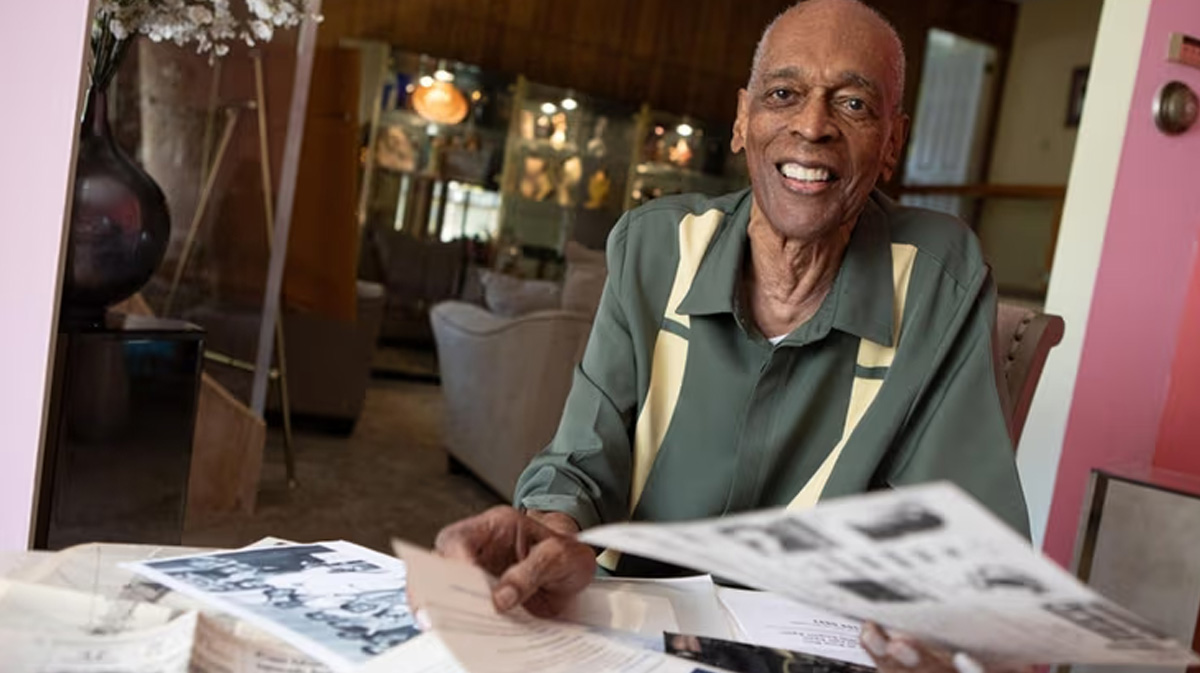
Bob Law moved through the world of Black radio like a guardian posted at the edge of night, using his voice to keep watch over a people under constant pressure. His broadcasts did more than report events; they urged listeners to think critically about why those events mattered and what they should do next. When word spread that he had died at 86, many did not simply recall a celebrity but a familiar presence who had helped them make sense of their lives. The sense of loss was bound up with the feeling that an era of principled, community-rooted radio had lost one of its fiercest defenders.
Law’s on-air style fused curiosity with authority, the cadence of a teacher combined with the persistence of a seasoned organizer. He asked pointed questions not just to draw out guests, but to push listeners toward sharper understanding, refusing to accept shallow answers to deep problems. Whether discussing police brutality, elections, or the dangers of authoritarian politics under Donald Trump, he insisted that Black audiences deserved serious, unfiltered truth. In his world, the mic was not a platform for spectacle but a tool for arming people with knowledge.
Physically, Law’s six-foot-six frame made him impossible to miss, and that sense of presence carried over to the radio dial. Rev. Al Sharpton, who credits Law for giving him his first show as a teenager, remembers “NightTalk” as the central nerve of Black political conversation. The show’s late-night hours gave it a confessional intimacy, a place where callers could wrestle with issues in real time, mediated by a host who had seen movements rise and fall. It felt less like entertainment and more like a nightly town hall transmitted through speakers and headphones.
Colleagues reach instinctively for images of light when describing him, and the metaphor fits. Rennie Bishop, who once ran programming at WWRL, calls Law “a lighthouse, unblinking in the storm,” emphasizing how he offered direction when news cycles felt overwhelming. That image captures his refusal to dim his message to satisfy advertisers, politicians, or station executives. Listeners could count on him to hold a line, even when the wind of public opinion shifted.
Media scholar Todd Steven Burroughs places Law in a small circle of Black communicators—alongside Imhotep Gary Byrd and Gil Noble—who treated broadcasting as a form of political responsibility. They spoke to an audience shaped by the Civil Rights and Black Power eras, people who expected more than gossip or headlines. For that generation, Law’s shows were a continuation of mass meetings and strategy sessions, translated into a format that could reach living rooms and car rides. His earlier work in community organizing meant that his analysis grew out of direct experience, not distant commentary.
One of the clearest examples of his dual role as broadcaster and organizer came with the Million Man March. Working alongside Dr. Ron Daniels as co-chair of New York’s delegation, Law helped turn radio-fueled enthusiasm into disciplined, physical turnout. Daniels remembers him as the tall, deliberate figure who would pose a challenge and then walk through a path forward, never content to let critique stand without proposed solutions. Even as illness and dialysis treatments took a toll, there were efforts to keep him active in media spaces because his strategic mind remained sharp.
Beyond his own shows, Law quietly built opportunities for others and expanded the ecosystem of Black media. In 1981, he enlisted journalist Fern Gillespie to help produce Vy Higginsen’s pioneering morning show and music magazine, a first-of-its-kind Black news-talk wake-up program in New York. Later, he helped move Gillespie into a bigger arena as producer and host of a live, nationally syndicated Black talk show for American Urban Radio Network. Her testimony that “Bob Law changed my life” reflects how he viewed mentorship as part of his obligation to the community.
Law’s public statements reveal a consistent belief that unity and love were not sentimental add-ons but core strategies in the fight against racism. Through the National Black Leadership Alliance, he argued that resisting white supremacy depended on Black people deliberately aligning their efforts and intentions. He urged listeners and leaders alike to link hands and minds, insisting that shared purpose could transform scattered acts into a sustained push for justice. In his framing, love of one another was a political force capable of wearing down entrenched systems.
Political leaders took note of this influence and said so openly once he was gone. New York Attorney General Letitia James praised him as a broadcast pioneer whose impact as an activist and communicator would continue to ripple through future generations. Her remarks acknowledge that his shows helped shape how Black New Yorkers, and many beyond, interpreted events and their own agency. State Sen. Cordell Cleare’s condolences further rooted his legacy in the fabric of New York’s civic life, not just its media history.
The story of Bob Law is also the story of relationships that anchored his work. He was predeceased by his wife, Muntu, whose life intersected deeply with his long public journey. Rev. Sharpton speaks of knowing the couple for more than half a century, hinting at the networks of intimacy and support that made Law’s constant public engagement possible. In mourning him, friends and comrades are also acknowledging a partnership that stood quietly behind the microphone.
Law’s reach extended well beyond studios and control rooms. He spoke from pulpits and community spaces like Harlem’s Abyssinian Baptist Church, where political analysis and spiritual reflection often merged. He ran Namaskar, a health food store that became another kind of community node, where conversations about wellness and liberation flowed together. Across these settings, his message was consistent: a healthy, informed, and organized community is its own best defense.
Taken together, these threads portray Bob Law as more than a “radio personality.” He operated as a modern griot, blending storytelling, analysis, and memory-keeping on behalf of Black communities that mainstream outlets routinely misrepresented or ignored. His broadcasts treated listeners not as a demographic but as a people with a history, a future, and urgent decisions to make in the present. He modeled a kind of media work that refuses to stand apart from struggle.
What remains after his passing are the countless minds he sharpened and the voices he emboldened. People who grew up hearing his shows now host their own programs, lead organizations, and mentor younger activists who may never have tuned in to “NightTalk” but carry its spirit into digital spaces. Each time someone uses a microphone, a livestream, or a meeting room to tell inconvenient truths and link them to action, they draw on the path he helped carve. The man is gone, but the frequency he established—uncompromising, loving, and unafraid—still hums beneath the surface of Black public life.
Remembering radio griot Bob Law, a fearless voice for the people