Relentless Seeker Of Ultimate Sound
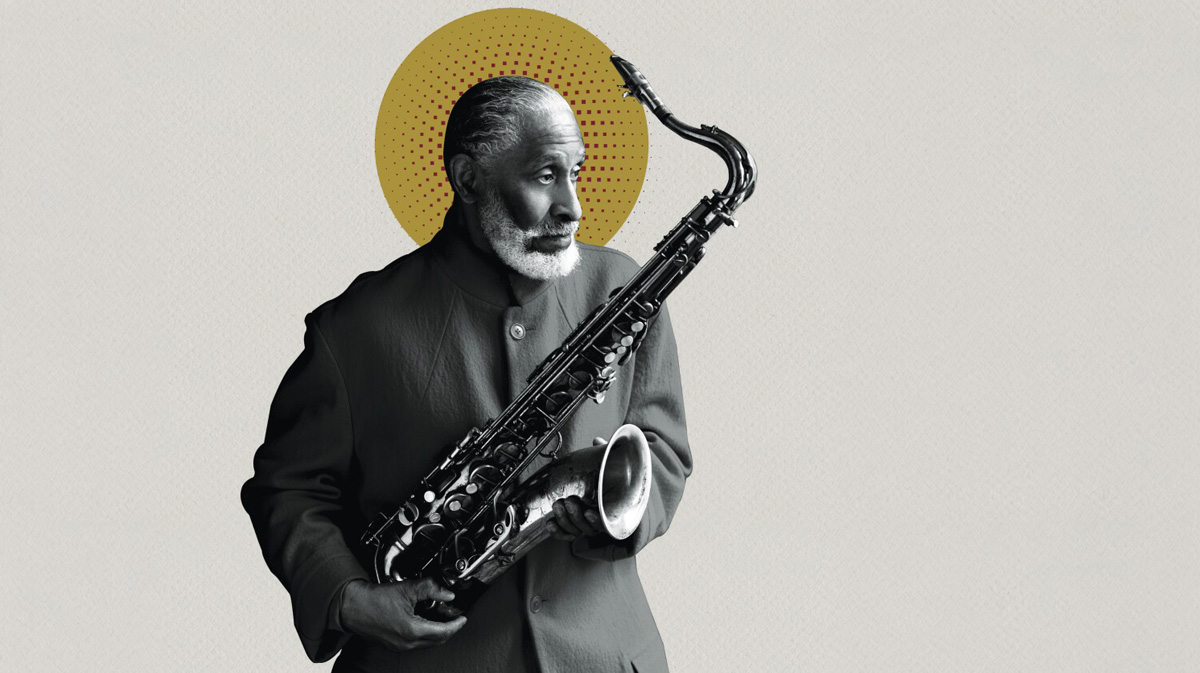
Sonny Rollins, the towering tenor saxophonist whose originality reshaped postwar jazz, has died at his home in Woodstock, New York, at 95, closing the chapter on one of the music’s most searching and unpredictable lives. His publicist announced the death, noting that Rollins had long stood out in a field that already prizes individuality, both for his volcanic sound and his singular personality.
Emerging in the late 1940s, Rollins defied the prevailing fashion for light, vibrato-free saxophone tones by embracing a big, weighty sound that drew on his idol Coleman Hawkins, even as he immersed himself in bebop’s advanced harmonies and off-kilter rhythms. From early on he resisted easy categorization, absorbing bebop while refusing to be tagged as a mere bebopper.
Over the decades, Rollins touched the avant-garde, jazz-rock fusion, calypso-inflected jazz, and more, yet his music remained unmistakably his own, marked by fierce energy, an ear for surprise, and a tone that could switch from biting and ironic to lush and romantic. He once said his music was “too big” for any single style and insisted he wanted to hear something new every time he picked up the horn.
Critics often hailed him as jazz’s greatest living improviser, marveling at how his spontaneity and structural imagination could transform a simple tune into an extended exploration. Rollins himself rarely shared that enthusiasm, emerging from concerts and sessions convinced he could have done better, a perfectionism that fans came to see as the flip side of his risk-taking.
Born Walter Theodore Rollins in Harlem in 1930, he grew up the youngest of three children in a family that had migrated from the Virgin Islands, and he took up music early, even as he briefly considered becoming a painter. Trouble with the law led him to reverse his first and middle names professionally, and by his late teens he was already recording and working with Miles Davis, Thelonious Monk, and Bud Powell on the New York scene.
Heroin addiction briefly derailed his early career, but by 1955 he had cleaned up and joined the celebrated quintet led by drummer Max Roach and trumpeter Clifford Brown, gaining national attention. Between 1956 and 1958, he consolidated his reputation through a run of leader dates that confirmed him as one of the most inventive musicians of his generation.
In 1956 alone, Rollins made history with “Tenor Madness,” which documented his sole recorded meeting with John Coltrane, and “Saxophone Colossus,” whose title captured both his physical presence and his surging artistic stature. Critics singled out the blues meditation “Blue 7,” later analyzed in a famous essay by Gunther Schuller, and “St. Thomas,” a West Indian-inspired calypso that became his signature and helped define jazz-calypso crossover.
Restless with conventional formats, he began performing without a pianist in 1957, stripping his groups down to saxophone, bass, and drums so chords would not “get in the way.” Among the highlights of this phase was “The Freedom Suite” (1958), a 19-minute, multi-movement work that used lean instrumentation to frame a bold musical statement on racial inequality at the dawn of the civil rights era.
At the end of the 1950s, just as acclaim and bookings were peaking, Rollins abruptly stepped away from performing and recording, dissatisfied with his playing. During this celebrated sabbatical he practiced obsessively, often on the Williamsburg Bridge at night, turning the span into a private laboratory and feeding the legend of his monastic dedication.
His 1961 return, sealed by a lucrative deal with RCA Victor and an album pointedly titled “The Bridge,” became a major jazz event and reintroduced a player whose mystique had only grown in absence. Through the 1960s he toured widely, wrote the soundtrack for the British film “Alfie,” and surrounded himself with a shifting cast of collaborators ranging from avant-garde trumpeter Don Cherry to elder hero Coleman Hawkins.
True to form, Rollins withdrew again in the late 1960s, spending much of 1966 to 1972 in Japan and India on what he later described as a spiritual search. His 1972 “Next Album” marked a renewed phase of recording for the Milestone label that would last more than three decades, even as he experimented with electric instruments, backbeats, and a celebrated studio stint with the Rolling Stones on “Tattoo You.”
Critics sometimes bristled at his crowd-pleasing calypsos and fusion touches, accusing him of underselling his genius, even as they continued to rate him among the planet’s most formidable improvisers. Yet audiences made the final judgment: Rollins became one of jazz’s most dependable concert draws, a success he partly credited to his wife and manager Lucille Rollins, who died in 2004.
In later years he explored solo performance, premiered a concerto for tenor saxophone and orchestra, started his own Doxy label, and reluctantly embraced the internet to share live recordings and video. Honors accumulated, including multiple Grammys, the MacDowell Medal, a National Medal of Arts, and a Kennedy Center Honor, even as he kept practicing in pursuit of what he called “the ultimate sound.”
Respiratory problems, including pulmonary fibrosis, eventually forced him from the stage after his final public performance in 2012 and compelled him to stop playing even at home in 2014, a loss he described as initially traumatic but ultimately something he met with gratitude for the life he had led. His archives, acquired by the Schomburg Center in 2017, and ongoing efforts to rename the Williamsburg Bridge after him underscore how deeply his story is entwined with New York and with the broader history of Black American music.