Sumner’s Courage Against Slavery’s Violence
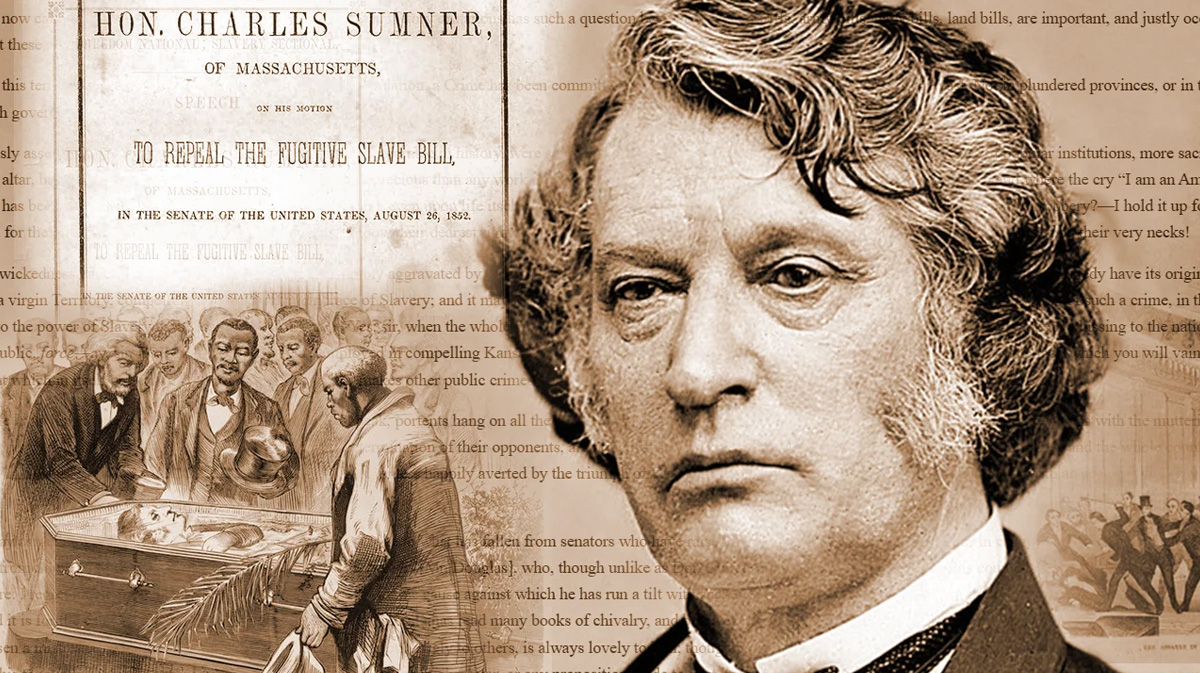
Charles Sumner became one of the most outspoken defenders of civil rights and abolition in the United States during the mid-1800s. In 1856, he stood firmly against the expansion of slavery and used his political influence to advocate for the rights and dignity of African Americans. At a time when many politicians avoided confronting slavery directly, Sumner openly condemned the institution as morally corrupt and harmful to the nation’s future.
Born in Boston, Massachusetts, Sumner was deeply influenced by principles of equality and justice from an early age. He studied law and became known for his intellectual abilities and passionate speeches. By the time he entered the United States Senate, he had already developed a reputation as a strong opponent of slavery and racial injustice. His beliefs placed him at the center of one of the nation’s most explosive political debates.
During the 1850s, tensions between pro-slavery and anti-slavery forces intensified across the country. The passage of the Kansas-Nebraska Act and violence in Kansas fueled national outrage over whether slavery would expand into western territories. Sumner strongly opposed these developments and believed the federal government had a responsibility to protect freedom rather than support slavery’s growth.
In May 1856, Sumner delivered one of the most famous speeches of his career, titled “The Crime Against Kansas.” In the speech, he fiercely criticized pro-slavery politicians and condemned the violence taking place in Kansas Territory. He argued that slavery was not only unjust to African people but also destructive to American democracy and morality. His powerful words attracted national attention and intensified divisions within Congress.
Sumner’s speech specifically attacked Southern political leaders who supported slavery and the spread of slaveholding power. He used sharp language and moral arguments to expose what he saw as the cruelty and hypocrisy of the institution. While abolitionists praised his courage, many Southern politicians viewed the speech as a personal insult and an attack on their way of life.
Only days after the speech, Sumner became the victim of one of the most shocking acts of violence in Senate history. On May 22, 1856, Representative Preston Brooks entered the Senate chamber and brutally attacked Sumner with a cane. The assault left Sumner severely injured and unable to return to the Senate for several years. The incident symbolized the growing violence and hostility surrounding the slavery debate in America.
The attack on Sumner outraged many people in the Northern states. Newspapers, abolitionists, and anti-slavery activists viewed the beating as proof that slavery encouraged brutality and suppressed free speech. For many African Americans and abolition supporters, Sumner became a symbol of resistance against oppression and racial injustice. The event also deepened political divisions between the North and South.
Despite his injuries, Sumner refused to abandon his principles. While recovering, he remained committed to the fight against slavery and continued corresponding with fellow abolitionists and reformers. His determination inspired many activists who believed that the struggle for equality required courage and sacrifice. Sumner’s suffering transformed him into a national figure within the anti-slavery movement.
African American leaders and abolitionists admired Sumner because he consistently argued that Black Americans deserved equal rights and protection under the law. Unlike many politicians of his era, he believed equality should extend beyond the end of slavery itself. He supported education, citizenship, and legal protections for African Americans long before these ideas became widely accepted in national politics.
The events of 1856 helped push the nation closer to the American Civil War. The caning of Sumner demonstrated that political compromise over slavery was becoming increasingly impossible. Many Northerners viewed the attack as evidence that slaveholding interests threatened democratic values and civil liberties throughout the country.
After eventually returning to the Senate, Sumner continued fighting for abolition and civil rights during and after the Civil War. He later became a leading advocate for Reconstruction policies that aimed to secure equal rights for formerly enslaved people. His efforts contributed to important constitutional changes, including support for citizenship and voting protections for African Americans.
Charles Sumner’s actions in 1856 remain an important chapter in American history. His willingness to speak against slavery, despite threats and violence, demonstrated extraordinary moral conviction during one of the nation’s darkest periods. Through his speeches, sacrifices, and advocacy for African Americans, Sumner helped shape the broader struggle for civil rights and human equality in the United States.