Kickin’ It With Baye
A STORY OF TRANSFORMATIVE LEADERSHIP
BY R.L. WITTER
Baye Adofo-Wilson understands building bridges between history and the future. Whether restoring the historic Hinchliffe Stadium, leading economic development initiatives in Newark and Paterson, or investing in youth opportunities through soccer and housing, his work reflects a lifelong commitment to community, perseverance, and purpose. His journey—from a young boy in Paterson, NJ to a military veteran, attorney, developer, and sports team owner—is rooted in discipline, mentorship, and a deep belief in giving back.
Adofo-Wilson spent parts of his childhood in Harlem, NY; Teaneck, NJ; North Carolina; and eventually Paterson, New Jersey. Raised by young parents who came from sharecropping families in the South, he grew up understanding struggle and hard work. His mother worked for decades as a telephone operator with NJ Bell, now known as Verizon NJ; his father was a truck driver. Adofo-Wilson describes them as exceptionally intelligent people who simply lacked opportunity because of the era and circumstances in which they were raised.
“They were smart and industrious but neither one of them were college educated. So, I was the first one to graduate from college in my family.”
As a teenager in Paterson, Adofo-Wilson imagined a different future for himself. At 12 and 13 years old, he was focused on track and field. He dreamed of becoming an athlete and possibly attending college one day.
“I was thinking about trying to run and go to college. The only school I actually knew about back then was Columbia,” he chuckled.
But Baye eventually chose a path that would transform his life: military service. After graduating from Passaic County Technical Institute, he joined the United States Army and was stationed in places including Fort Sill, Oklahoma and Anchorage, Alaska. The experience proved pivotal.
Training in brutal Alaskan winters—temperatures reaching 70° below zero or worse at times—taught him endurance and mental toughness. He recalls running six miles outdoors before dawn and learning how to adapt physically and emotionally to extreme conditions. Those experiences, he says, changed his approach to life and education.
“The transformation happened in the military,” Adofo-Wilson explained.
The Army gave him structure, maturity, and a renewed sense of purpose. It also showed him the economic realities facing many young Black men from cities like Paterson.
“When I came home from my military service, everybody thought I had been in jail, that was the Paterson way of it. They thought I had been in jail for a certain number of years.”
That realization would later shape his life’s mission.
After leaving the military, he encountered mentors who profoundly influenced him, including activist and poet Amiri Baraka, legal scholar Lani Guinier, and activist Chokwe Lumumba. Adofo-Wilson credits these mentors with reinforcing his commitment to public service and social responsibility.
He spent years working alongside Baraka and later became deeply involved in Newark’s economic development efforts. During the first administration of Amiri Baraka’s son, Mayor Ras Baraka, he served as Newark’s deputy mayor and also worked as director of Economic and Housing Development. In those roles, he helped oversee transformative projects including One Theater Square and Mulberry Commons.
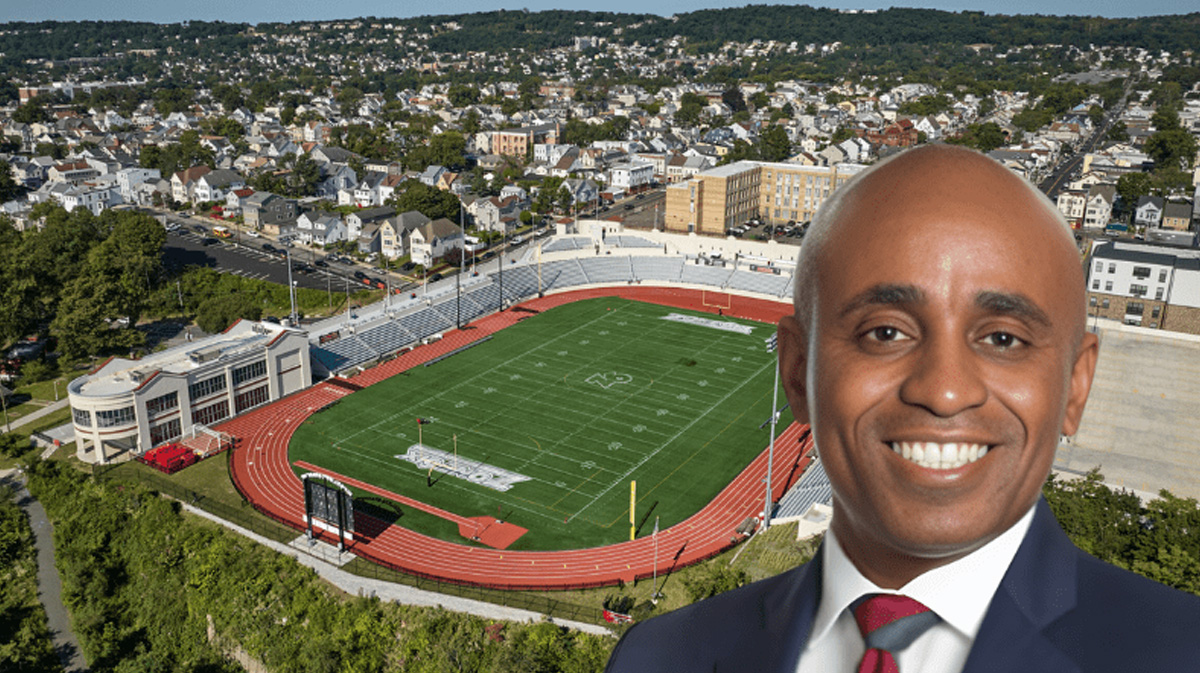
Yet despite his success in Newark, Adofo-Wilson eventually felt called back to Paterson. Encouraged by local elected officials, Adofo-Wilson returned to help revitalize one of the city’s most treasured landmarks, Hinchliffe Stadium.
Closed for decades, it held immense historical significance as one of the few remaining Negro League baseball stadiums in the nation. Rather than replacing the structure, he and his team focused on restoring and reimagining it for the future.
The restored stadium now serves as a multi-use venue hosting soccer, football, baseball, track and field, graduations, concerts, and religious events. It is the home field for the NJ Jackals Frontier League baseball team, also owned by Adofo-Wilson.
He emphasized that the project was never just about sports. It was about restoring pride, creating opportunity, and preserving Black history while also building something economically sustainable for the community.
“We added some things; we added housing and a parking garage, and we designed the building that includes a museum and local sports history exhibitions as an additional space,” he explained.
One of Adofo-Wilson’s most visible ventures today is his role as majority owner of the New York Cosmos soccer team. Although he did not grow up playing soccer, he has embraced the sport as both a cultural and an economic opportunity—especially for Black youth.
He believes soccer remains an underdeveloped pathway for many young African Americans despite the extraordinary athleticism already seen in basketball, football, and track.
With the upcoming 2026 FIFA World Cup set to bring global attention to the region, Baye sees a chance to inspire a new generation of players and fans. He hopes exposure to the World Cup will encourage more children from urban communities to participate in soccer and dream beyond traditional athletic pathways.
“I really want more Black kids to play soccer,” he said. “And I think there’s an opportunity there domestically and internationally. You just don’t see it as much in the US, so what I hope to do is help grow soccer in Black communities.”
Beyond sports and development, he remains focused on mentorship and housing initiatives. His next projects include expanding veteran housing efforts throughout New Jersey, including Paterson and Atlantic City.
Family is central to Adofo-Wilson’s life. He is the father of two daughters—both graduates of Howard University. He is engaged to acclaimed artist Torkwase Dyson.
Spiritually, Adofo-Wilson describes himself as someone guided by faith, meditation, and reflection. Raised in a Holiness church led by his stepfather, he now practices yoga and meditation while remaining deeply grateful for what he calls “The Creator” and the journey he has been given.
At the core of his philosophy is perseverance.
“Perseverance is a thing,” he said. “Determination and discipline. The road is a challenge, so persevere, stay committed, have confidence in yourself and your decisions. Growing into those things is important. Be focused and have the determination to go through obstacles and grow with the journey.”
Those values—forged in Paterson, strengthened in the United States Army, and refined through education and decades of public service—continue to guide his leadership today.