Bridging the Generational Divide in Black America
The generational divide within the Black community is a complicated issue shaped by history, culture, economics, technology, and changing attitudes about identity and success. Older and younger generations share a common heritage, yet they sometimes disagree about values, responsibility, respect, family, and the meaning of progress. These differences can create misunderstandings that weaken relationships between parents and children, elders and young adults, and longtime community leaders and emerging voices. However, beneath these disagreements lies a shared desire for dignity, opportunity, security, and a better future for the next generation.
One of the most significant causes of this divide is the difference in historical experiences. Many older Black Americans grew up during periods when segregation, racial discrimination, and limited economic opportunities shaped nearly every aspect of daily life. Some participated in the Civil Rights Movement, witnessed its struggles firsthand, or were raised by parents who endured the Jim Crow era. Their experiences often taught them that discipline, perseverance, respectability, and collective responsibility were essential tools for survival. Younger generations, while still confronting racism and inequality, have grown up in a different social environment, with greater access to higher education, digital communication, and conversations about race, identity, and personal freedom.
These contrasting experiences influence how generations understand respect and authority. Older adults may believe that younger people have abandoned traditional values because of their clothing, language, music, or willingness to challenge authority. Younger people, meanwhile, may view certain expectations as outdated or unnecessarily restrictive. What an elder considers disrespectful, a younger person might consider honest self-expression. Neither perspective tells the whole story. Respect should not require silence, and independence should not mean dismissing the wisdom of those who came before us. The challenge is to create relationships in which people can disagree without losing their appreciation for one another.
Technology and social media have also widened the cultural gap. Older generations often relied on churches, neighborhood organizations, family gatherings, newspapers, and face-to-face conversations to exchange information and build relationships. Younger generations increasingly use digital platforms to establish communities, discuss social issues, develop careers, and express their identities. These platforms have created opportunities for creativity and connection, but they can also amplify conflict, stereotypes, and public criticism. A disagreement that once might have remained a private family conversation can now become a viral argument. When generations consume different media and communicate through different cultural languages, it becomes easier to misunderstand one another.
Economic changes have added another layer of tension. Many older Black Americans were taught that education, homeownership, steady employment, and financial discipline represented the foundation of a stable life. Yet younger adults face rising housing costs, student debt, changing employment patterns, and economic uncertainty that can make traditional milestones harder to achieve. Some older adults interpret these struggles as a lack of discipline, while younger people may feel that their circumstances are being judged without consideration of today’s realities. At the same time, younger generations may underestimate the sacrifices their elders made to create opportunities that did not previously exist. Meaningful dialogue requires acknowledging both the obstacles facing young adults and the sacrifices that helped expand their possibilities.
Another source of division is the changing conversation about Black identity and collective responsibility. Previous generations often emphasized racial solidarity because discrimination made unity a matter of survival. Younger generations may express their identity through a broader range of political views, cultural influences, gender expectations, entrepreneurial ambitions, and personal philosophies. Some are more willing to question established institutions, including churches, community organizations, and traditional leadership structures. Such questioning can be uncomfortable, particularly for elders who devoted years to building those institutions. Nevertheless, cultural traditions should be strong enough to withstand thoughtful examination. Preserving Black heritage does not require rejecting every new idea, just as embracing change does not require abandoning the past.
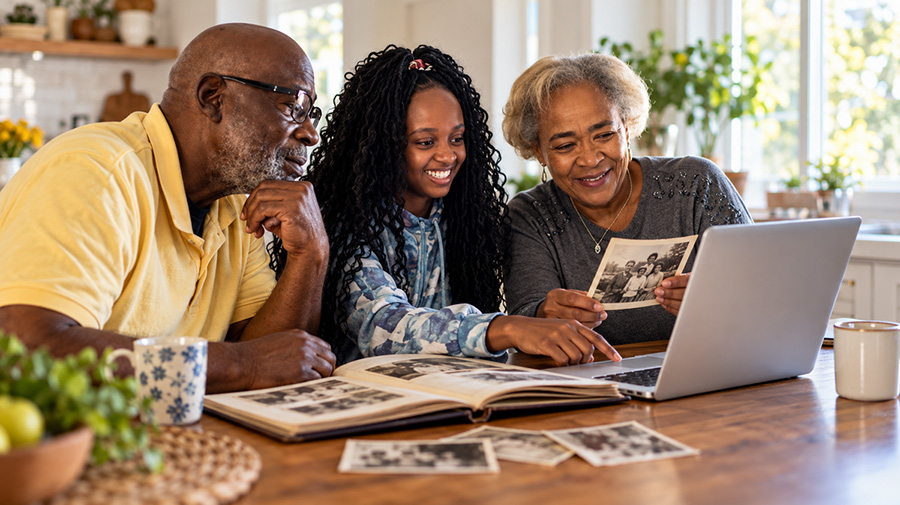
Family structure and the loss of intergenerational relationships also contribute to the problem. In many communities, grandparents, parents, children, aunts, uncles, and cousins once maintained close daily connections that allowed knowledge and traditions to pass naturally from one generation to another. Migration, demanding work schedules, financial pressures, family disagreements, and changing household arrangements have altered these patterns. As a result, some young people grow up without meaningful relationships with elders who could share family history, practical guidance, and lessons learned through adversity. Likewise, some older adults feel isolated or believe their experiences no longer matter. Rebuilding these relationships would help both generations recognize that their lives are connected rather than separate.
The solution begins with creating spaces where generations can speak honestly and listen without immediately becoming defensive. Churches, schools, community centers, cultural organizations, and families can organize intergenerational discussions, mentorship programs, oral-history projects, and collaborative community service. Older adults can share their experiences with civil rights, entrepreneurship, family life, and overcoming discrimination, while younger participants can explain contemporary challenges involving technology, mental health, education, and employment. These conversations should not become lectures in which one generation claims all the wisdom. They should be exchanges in which experience and fresh perspectives are equally welcome. Mutual respect grows when people feel heard rather than judged.
Black media organizations also have an important role to play in bridging this divide. Magazines, newspapers, podcasts, radio programs, and digital platforms can highlight stories that bring different generations together rather than continually portraying them as opponents. Interviews between established community leaders and emerging entrepreneurs, conversations between grandparents and grandchildren, and discussions about changing cultural traditions can reveal common ground. The Positive Community, for example, could use its newsletter and magazine to create a recurring feature in which older and younger Black Americans discuss education, family, money, music, relationships, faith, and community development. Such a feature could remind readers that generational differences are not simply problems to be solved; they are opportunities to learn from one another.
Ultimately, healing the generational divide requires a shared commitment to preserving what is valuable while improving what no longer serves the community. Older generations must be willing to recognize that young people face challenges their own generation may not have encountered in precisely the same way. Younger generations must understand that many of the freedoms and opportunities they enjoy were secured through sacrifices, persistence, and collective struggle. Both groups must resist the temptation to reduce one another to stereotypes. The future of the Black community will not be strengthened by choosing between tradition and progress, but by combining historical wisdom with new ideas, compassion with accountability, and individual achievement with collective responsibility. When elders feel valued and young people feel understood, the generational divide can become a bridge connecting the community’s proud history to its greatest possibilities.