Faith, Leadership, and Positive Change
BY R.L. WITTER
LT. GOV. DALE CALDWELL’S VISION FOR NJ’S WORLD CUP MOMENT
As New Jersey takes center stage during the 2026 FIFA World Cup, Dale Caldwell finds himself uniquely positioned at the intersection of public service, spiritual leadership, and global sports diplomacy. The pastor-turned-politician has emerged as a compelling voice in shaping how the Garden State presents itself to the world during one of the planet’s most-watched sporting events.
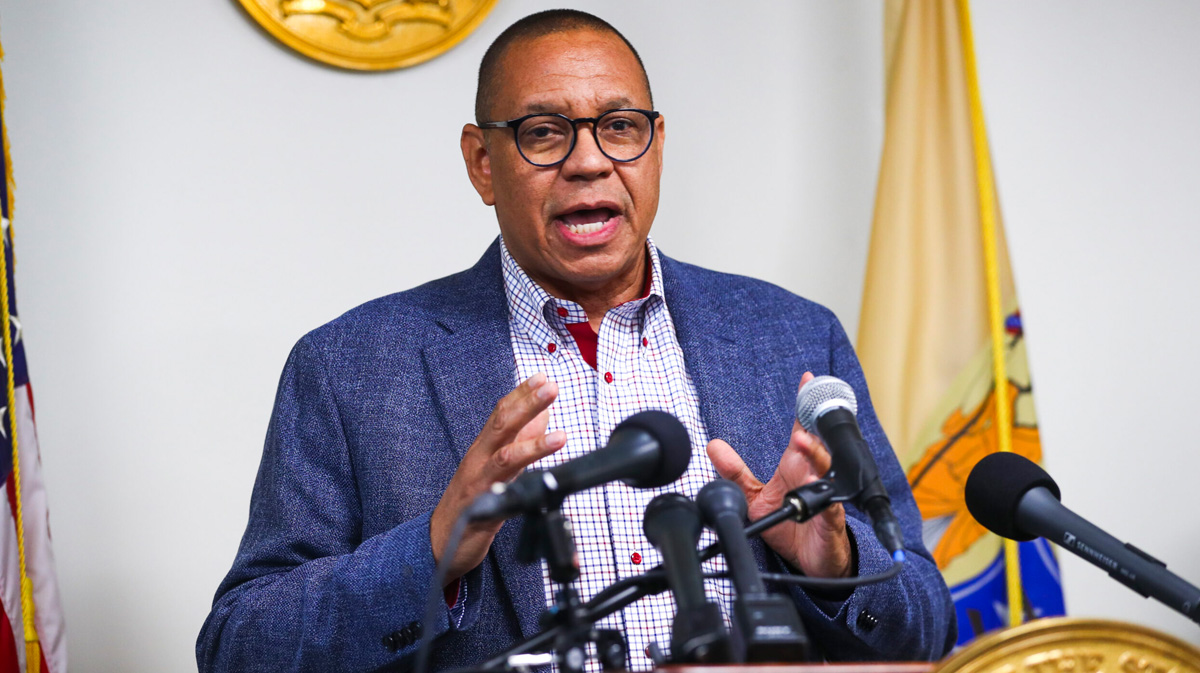
When I caught up with Lt. Gov. Caldwell, he was en route to the stadium to watch a game, proudly sporting his official New Jersey soccer kit. “This isn’t just a big event,” he said, pointing at his jersey. “This will be the largest sporting event in the history of the world and I’m the chief election officer, I’m also the chief tourism officer, and the chief faith officer. As the chief tourism officer, this is an extraordinary opportunity to let the world see the beauty of New Jersey, and we’re doing everything we can to do that.”
Ivy-League educated at Princeton University and The Wharton School, he received a doctorate degree from Seton Hall University, which made him well-prepared to enter the private sector, where he worked for more than 10 years before following his heart into public service. “I always felt a calling,” Caldwell shared. “I’m passionate about doing something for the most vulnerable. Proverbs 31:8-9 has always been what I’ve been about—to be a voice for the voiceless and speak up for those struggling in life. I didn’t know how it was going to manifest itself, but I knew that’s really what I wanted to do.”
In the 362-year history of New Jersey, Caldwell is the first active clergy elected to statewide office. “There’s a responsibility in that, and also an understanding of the role faith plays,” he explained. “There are four sectors in society: the public sector, private sector, nonprofit sector, and the faith sector—which is a powerful independent sector. If I weren’t a pastor I wouldn’t have known about the importance of the faith sector in society, and the role it can play to help the most vulnerable.”
He comes by his pastoral calling honestly, coming from a series of Methodist pastors, either AME or United Methodist. “My dad, Reverend Gilbert Caldwell, marched arm-in-arm with Dr. Martin Luther King Jr.; my grandfather was a pastor; my great-grandfather was a pastor. I became a certified lay minister, then there was an opportunity to lead the church in Plainfield (Covenant United Methodist Church) and I became a licensed local pastor. And it’s been an experience.”
He hired General Baptist Convention President Dr. Semaj Van Zandt to lead the state’s Faith Action Center and within it, the Faith Action Network. “What we’re doing with that is really connecting interfaith groups around the state. But also connecting all groups of faith. I call it a force multiplier, to really help the good work they’re already doing and take it to the next level,” Caldwell explained.
“Everybody doesn’t have to believe in God. They can believe and have faith in people helping other people. Many of the faith institutions have property, so the Governor and I are trying to identify more affordable homes for people, and working with faith institutions around the state could open up thousands of additional homes for people. This affordability that Governor Sherrill and I have talked about is affordability as far as cost, but also making sure people have jobs that help them pay their bills. This faith community is very powerful.”
Another thing in Caldwell’s purview is the “Great by Eight” program. “Every eight-year-old, every third grader should read. You read to learn after third grade, and kids start falling further behind if they’re not reading at grade level. They drop out and often commit crimes; 70% of the people in prison aren’t reading at the level they should be. By focusing on literacy and social-emotional well-being, and helping the faith communities—empowering them to provide additional support—we can transform New Jersey. People should be very, very hopeful about the future of New Jersey, because we’re really focused on issues of everyday people.”
Caldwell’s journey from the pulpit to the statehouse represents a distinctly American narrative of service and community engagement. “My time as a pastor taught me that leadership isn’t about grand pronouncements from on high,” Caldwell explained. “It’s about listening, building consensus, and finding practical solutions that improve people’s daily lives. Those same principles guide my work in government.”
The Lieutenant Governor has taken an active role in coordinating the state’s World Cup preparations, working closely with FIFA officials, local municipalities, and community organizations to ensure the benefits of hosting extend far beyond the stadium gates. His approach reflects the community-organizing skills he honed during his pastoral career, emphasizing inclusive planning processes that give voice to neighborhoods often overlooked in major development projects. For Caldwell, this represents far more than a sporting event—it’s a once-in-a-generation chance to showcase New Jersey’s diversity, resilience, and capacity for excellence on a global stage.
Under Caldwell’s leadership, New Jersey has launched the “Jersey Welcomes the World” initiative, which provides grants and technical assistance to small businesses in communities surrounding MetLife Stadium, helping them prepare for the influx of international visitors. A companion workforce development program has trained thousands of residents for the high demand of hospitality, translation, and event management positions during the tournament.
Perhaps most ambitiously, Caldwell has championed a youth soccer infrastructure investment plan that will use World Cup-related revenue to build and renovate playing fields in underserved communities throughout the state. “Thirty years from now, I want kids in Newark, Camden, and Trenton to look back and say the World Cup changed their neighborhoods for the better,” he said. “That’s the kind of legacy worth fighting for.”
Caldwell’s dual identity as pastor and politician continues to shape his leadership style. He emphasizes humility, accountability, and the recognition that public office is a sacred trust rather than a personal privilege. His approach—grounded in community engagement, inclusive planning, and a genuine belief in sports’ power to unite and inspire—offers a compelling model for how public leaders can leverage major events to create lasting positive change. For a pastor-turned-politician who has spent his career building bridges between different worlds, the World Cup represents the ultimate test of whether faith, leadership, and the World Cup can, indeed, transform communities and create opportunities that endure long after the final whistle blows.