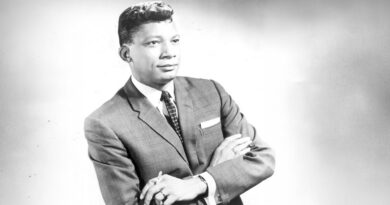
Elvin Jones: Rhythms Beyond Time

Elvin Jones stands among the greatest jazz drummers in history, transforming the role of the drum set from a timekeeping instrument into a powerful voice of musical expression. Born on September 9, 1927, in Pontiac, Michigan, Jones grew up in a remarkably gifted musical family that included saxophonists Thad Jones and Hank Jones. While his brothers became internationally acclaimed musicians, Elvin forged his own revolutionary path, redefining jazz drumming with a style that combined thunderous power, intricate rhythms, and remarkable sensitivity.
Jones developed his musical foundation by listening to the great swing drummers of the 1930s and 1940s while practicing tirelessly. After serving in the U.S. Army, he settled in New York City, where he quickly became one of the most sought-after drummers on the jazz scene. His early performances demonstrated a unique ability to blend technical mastery with emotional intensity, earning the admiration of fellow musicians and audiences alike.
Before achieving worldwide fame, Jones performed with a number of jazz greats, including Charles Mingus, Sonny Rollins, Bud Powell, and Miles Davis. Each collaboration broadened his musical vocabulary and strengthened his reputation as a drummer capable of adapting to virtually any style while maintaining his unmistakable musical identity.
The defining chapter of Jones’s career began in 1960 when he joined the legendary John Coltrane Quartet. Alongside pianist McCoy Tyner and bassist Jimmy Garrison, Jones became an essential part of one of the most influential ensembles in jazz history. His drumming provided not only rhythmic support but also an emotional and spiritual force that helped propel Coltrane’s groundbreaking musical explorations.
One of Jones’s greatest innovations was his approach to rhythm. Rather than maintaining a simple, steady beat, he layered multiple rhythmic patterns simultaneously, creating a rolling, conversational style that seemed to breathe with the music. His cymbal work shimmered with elegance, while his tom-toms produced waves of sound that inspired soloists to reach new creative heights. This approach forever changed how jazz drummers thought about time, texture, and interaction.
Jones’s artistry is perhaps best heard on landmark recordings such as A Love Supreme, My Favorite Things, Crescent, and Live at Birdland. On these recordings, his performances transcend technical brilliance, becoming deeply expressive conversations with the other musicians. His playing reflected the emotional and spiritual intensity that defined Coltrane’s music and helped elevate these albums to classic status.
After leaving Coltrane’s quartet in 1966, Jones continued building an extraordinary career as a bandleader. He formed the Elvin Jones Jazz Machine, an ensemble that toured internationally for decades, introducing new generations of listeners to his powerful style. The Jazz Machine also became a training ground for many younger musicians who would later become respected artists in their own right, ensuring that Jones’s influence continued well into the next century.
Throughout his life, Jones received countless honors recognizing his immense contributions to jazz. He was inducted into the Modern Drummer Hall of Fame and was widely celebrated as one of the most influential percussionists of all time. Critics and fellow musicians consistently praised his creativity, technical command, and ability to inspire those around him. His performances demonstrated that true greatness comes not only from skill but also from imagination and heartfelt expression.
Elvin Jones remained active as a performer almost until his passing on May 18, 2004. Even in his later years, audiences marveled at his boundless energy, commanding presence, and infectious enthusiasm for music. Whether performing in intimate jazz clubs or at major international festivals, he brought the same passion and commitment that had defined his career for more than five decades.
The legacy of Elvin Jones continues to resonate wherever jazz is played. His revolutionary approach to rhythm transformed modern drumming and inspired generations of musicians across jazz, rock, and world music. More than simply keeping time, Jones taught that the drums could sing, converse, and tell stories. His recordings remain essential listening, reminding the world that rhythm is not merely the heartbeat of music—it is one of its most profound forms of expression.