Nehemiah Spring Creek Shapes Brooklyn
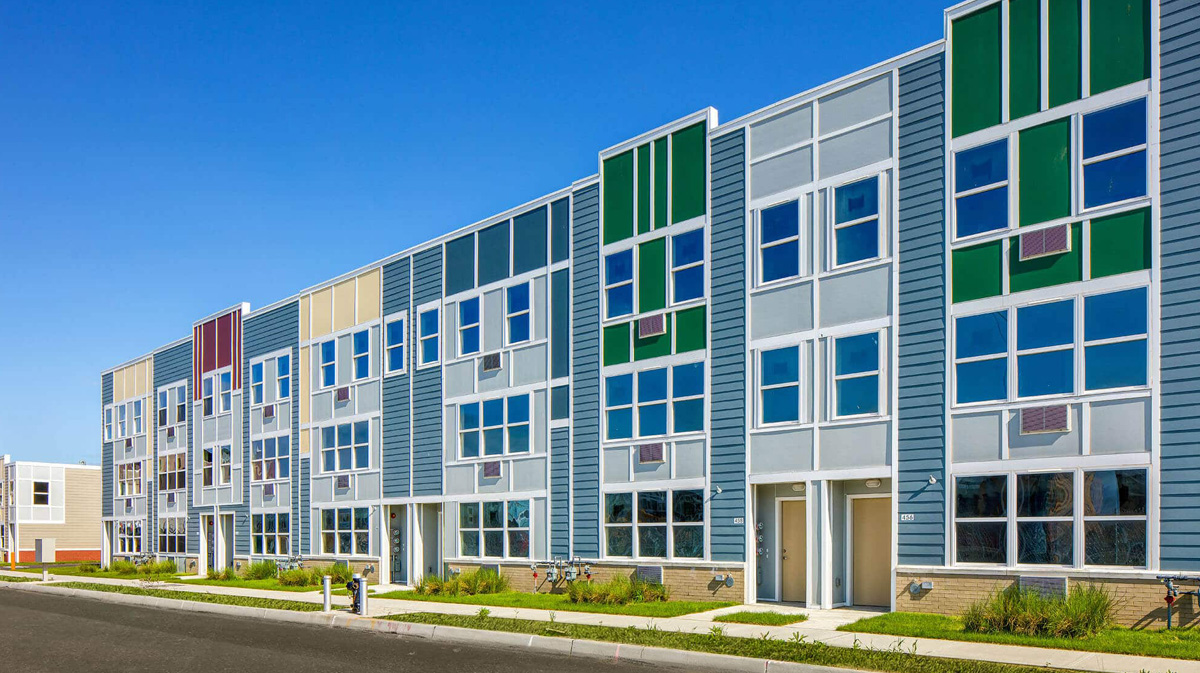
Nehemiah Spring Creek is one of Brooklyn’s significant affordable-housing development stories, located in the Spring Creek section of East New York. The project represents a long-term effort to transform underused land into a residential community where families can find opportunities for both homeownership and affordable rental housing. Its development has also contributed to a broader transformation of southeastern Brooklyn.
The roots of Nehemiah Spring Creek reach back to the 1980s, when East Brooklyn Congregations began organizing around housing and neighborhood revitalization. The faith-based organization became a driving force behind the Nehemiah housing model, working with New York City to create affordable homes for working- and middle-income families. The approach placed community organizing at the center of development rather than treating housing simply as a real-estate project.
The Spring Creek site has a complicated environmental history. Much of the land had once been wetlands before being used as a landfill during the 20th century. Redeveloping the property therefore required substantial environmental and infrastructure work before it could become a residential neighborhood. Over time, public investment helped make it possible to transform this challenging site into a place where people could live.
Construction began in the late 2000s, marking a major turning point for the area. The first phases produced hundreds of single-, two- and three-family homes, many of which were made available through affordable-homeownership programs. Early homeowners were selected through lotteries, giving families an opportunity to purchase homes in a part of Brooklyn where affordable ownership opportunities had historically been difficult to obtain.
One of the most distinctive features of Nehemiah Spring Creek is its emphasis on homeownership. Rather than concentrating exclusively on apartment rentals, the development created townhouse-style and single-family opportunities intended to help families establish long-term roots. Homeownership can provide families with an opportunity to build equity and potentially pass an asset to future generations.
The community has continued expanding beyond its original homeownership phases. Later development has introduced affordable rental apartments, broadening the population that can benefit from the neighborhood. The combination of rental housing and homeownership has allowed Nehemiah Spring Creek to serve families with different financial circumstances and housing needs.
Nehemiah Spring Creek is also part of a much larger transformation of the surrounding Spring Creek area. The development is located near schools, community facilities, retail businesses and recreational amenities. These additions have helped turn an area once dominated by vacant and underused land into a more established residential community with services available nearby.
The development’s physical design is another important part of its identity. Instead of relying entirely on the high-rise apartment towers commonly associated with New York City housing, portions of Nehemiah Spring Creek were designed around lower-rise homes and neighborhood streets. This gives parts of the community a suburban character while remaining within New York City.
The project’s story is also significant because of the role played by community organizations and faith institutions. East Brooklyn Congregations spent decades organizing residents and congregations around issues affecting East New York and Brownsville. The Nehemiah model demonstrated how grassroots organizing could eventually influence land use, housing policy and neighborhood investment.
The transformation has not been limited to housing. Retail, schools, transportation improvements, infrastructure and recreational spaces have all contributed to the changing character of Spring Creek. Commercial development in the surrounding area has also provided residents with greater access to stores and services than were available when much of the land remained undeveloped.
At the same time, Nehemiah Spring Creek should be viewed within the larger debate over affordable housing and neighborhood change in Brooklyn. East New York has experienced substantial investment and development, raising important questions about how new housing can benefit existing residents and how affordability can be maintained as neighborhoods become more attractive to developers and investors.
Ultimately, Nehemiah Spring Creek represents more than a collection of houses and apartment buildings. It is the product of decades of community organizing, public investment and housing development designed to give Brooklyn families greater access to stable housing. Its continuing growth demonstrates both the possibilities and challenges of transforming underused urban land into a functioning neighborhood while keeping affordability at the center of the vision.