Preserving Du Bois’s Living Legacy
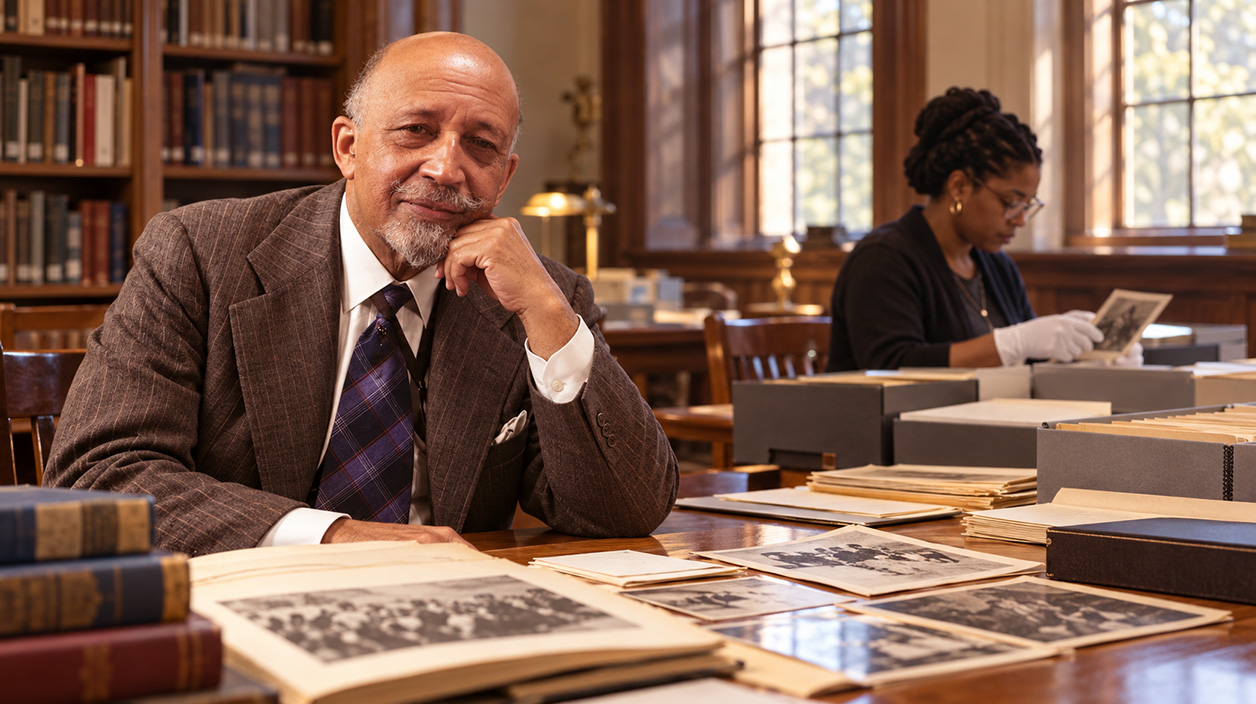
The University of Massachusetts Amherst is home to one of the most important collections documenting the life and work of W. E. B. Du Bois, the pioneering scholar, writer, sociologist, historian, activist, and advocate for racial justice. The collection is housed within the university’s special collections and archives. It contains more than 100,000 items, making it an extraordinary resource for understanding both Du Bois himself and the broader history of Black America and social change.
The story of how the collection came to UMass is significant in its own right. In 1973, UMass Chancellor Randolph Bromery, the university’s first African American chancellor, helped negotiate the acquisition of Du Bois’s papers. Bromery worked with Shirley Graham Du Bois, Du Bois’s wife, historian Herbert Aptheker, and others to bring the papers to Western Massachusetts. The university ultimately acquired the collection for $150,000.
The decision to place the papers at UMass reflected Du Bois’s deep connection to Massachusetts. He was born in Great Barrington, Massachusetts, in 1868 and spent his childhood there. UMass Amherst also became the steward of his boyhood homesite, creating an important connection between his childhood, intellectual development, and historical legacy.
The collection itself is remarkably broad. It includes correspondence, manuscripts, speeches, articles, research materials, photographs, essays, books, newspaper clippings, plays, poetry, pamphlets, petitions, and memorabilia. Together, these materials provide researchers with something that a biography alone cannot provide: direct evidence of how Du Bois thought, communicated, researched, organized, and responded to the major political and social issues of his time.
Du Bois’s correspondence is particularly important. A large portion of the papers consists of correspondence, providing a window into his relationships with scholars, activists, political figures, organizations, and ordinary people. These letters help researchers reconstruct the networks surrounding movements for racial equality, Pan-Africanism, civil rights, education, and democracy. They also reveal the enormous amount of intellectual and organizational work that existed behind Du Bois’s public writings.
The archive also demonstrates that Du Bois cannot easily be placed into a single category. He was a sociologist who conducted groundbreaking research, an author who produced influential literature, a historian who challenged conventional interpretations of Black history, and an activist who participated in international movements for racial justice. He was also one of the founders of the NAACP and an important figure in Pan-African thought. The materials preserved at UMass allow scholars to examine these different dimensions of his life together rather than separately.
An important part of the collection’s history involves Shirley Graham Du Bois. Before and after Du Bois’s death, she played a major role in preserving and organizing his papers. When the couple moved to Ghana in 1961, portions of the collection were divided among different locations. Shirley Graham Du Bois’s efforts were instrumental in determining where many of the papers would ultimately be preserved.
The arrival of the Du Bois Papers helped establish UMass Amherst as an important center for research into African American history and social movements. The papers were eventually opened to researchers after years of processing and organization. Since then, generations of scholars have used the collection to investigate Du Bois’s ideas and the movements with which he was involved.
The university’s decision to name its main library after Du Bois further strengthened that relationship. In the 1990s, the university formally dedicated its main library as the W. E. B. Du Bois Library. The building now houses resources connected to the Du Bois Center and the university’s special collections, placing the legacy of Du Bois at the center of the institution’s intellectual life.
Today, the UMass Du Bois collection represents much more than an archive of one extraordinary individual. It is a record of ideas, relationships, struggles, movements, and historical change. By preserving his letters, photographs, manuscripts, speeches, research, and other materials, UMass gives future generations the opportunity to encounter Du Bois through his own work and words. The collection ensures that his intellectual legacy remains available not simply as history, but as a continuing resource for understanding race, democracy, education, inequality, and social change in America and around the world.