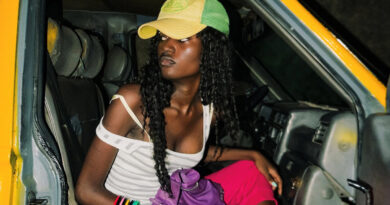
Flatbush Central Caribbean Marketplace

Flatbush Central Caribbean Marketplace x Mangrove FC manifests as a vibrant locus of culture, commerce, and community convergence in Brooklyn, anchoring itself firmly in Caribbean identity while simultaneously reaching outward to engage broader audiences. At its core, it is not merely a market or a food hall, but a cultural ecosystem: a space where Caribbean heritage is lived, performed, and transacted. The collaboration between Flatbush Central and Mangrove FC evokes a sense of rootedness, where commerce and art, food and activism, entrepreneurship and celebration, all intertwine.
Walking into the marketplace, one is struck by the vivid colors, pulsating rhythms, and immediacy of sensory experience. Stalls brim with handcrafted goods—clothing, haircare, body products, artisanal soaps, and prints—and the air is redolent of spices, tropical fruits, and simmering sauces. The food hall operates alongside vendor stalls, offering tastes of Caribbean cuisine: jerk-seasoned proteins, roti, ackee and saltfish, and roasted breadfruit, interwoven with contemporary culinary riffs and cold, specialty teas. The result is an immersive journey through taste and texture, one rooted in diasporic memory yet always innovating.
Mangrove FC, woven into the fabric of Flatbush Central, acts as the community arm, the cultural incubator, and the connective tissue. Its programming includes live music, dance, poetry, educational workshops, and public dialogues—amplifying voices from Caribbean diasporas, especially Haitian, Jamaican, Trinidadian, and others. Through this lens, the marketplace transcends transactional activity, becoming a site for cultural exchange, collective imagination, and communal dialogue.
One of the striking features of Flatbush Central × Mangrove FC is this intentional layering of functions. By day, it is a marketplace bustling with commerce; by evening, it becomes a performance stage, a meeting ground, a gallery. The merchant stalls and food hall remain open into the night on weekends, allowing rhythms of daily life to segue into those of festivity. In effect, the space encourages the seamless integration of livelihood and celebration—the mundane and the ceremonial coexisting.
Community wealth building is an integral ethos here. Flatbush Central hosts a “Mangrove Business Academy,” shared kitchens, design labs, studios for natural products, and cooperative initiatives intended to nurture Black and Caribbean entrepreneurship. In doing so, the project aims to redistribute economic agency, allowing local makers and small business owners to scale, to connect, and to retain ownership. It isn’t a passive market but an infrastructure for agency and sustainability.
At the same time, Flatbush Central’s curatorial approach insists on aesthetics, quality, and intentional representation. Vendors are not simply random; there is a coherence in showcasing craftsmanship, storytelling, heritage, and local narratives. The marketplace resists superficial commodification by focusing on authenticity, community-rooted vendors, and experimentation. This helps prevent the dilution that too often afflicts cultural markets when they become tourist traps.
It is precisely in this tension—between the local and the global, the rooted and the expansive—that the marketplace’s vitality emerges. On one hand, it is deeply embedded in Caribbean diasporic life in Brooklyn; on the other, it invites outsiders, tourism, and cross-cultural exchange. It becomes a site of encounter, where people unfamiliar with certain Caribbean traditions can enter, learn, taste, and perhaps leave with a new sense of connection or curiosity.
The marketplace also cultivates a sense of belonging and identity, especially for youth of Caribbean descent. For many second- and third-generation immigrants, Flatbush Central × Mangrove FC offers a homecoming of sorts: a place where languages (Creole, Patois), foods, rhythms, and aesthetics are normalized, respected, and uplifted. It affirms diasporic identity and reduces cultural erasure. In a city where assimilation pressure is strong, such assertion becomes an act of resistance.
Artistic curation plays a strong role in the marketplace’s everyday life. Murals, installations, live sound systems, mini pop-ups, and rotating exhibitions lend visual and sonic texture. The audio-visual infrastructure supports local DJs, spoken-word artists, and musical fusion acts, so that the marketplace itself becomes an evolving work of public art. Visitors are not merely consumers but participants in an unfolding cultural narrative.
Another dimension is the marketplace’s temporal flexibility. As seen in their calendar programming, there are seasonal festivals (e.g. Labor Day carnival vibes), special events, markets with extended hours, and collaborations with local artists and institutions. These temporal inflections keep the place from becoming static. Rather, from week to week, one might discover new vendors, new performances, and new voices.
Spatially, the architecture and design of the space matter. The floor plan is organized to balance circulation, visibility, and gathering nodes. Seating areas, open courtyards, flexible tents or pavilion arrangements—these allow people to linger, interact, and pause. The design invites strolling, discovery, and spontaneous encounters rather than rigid “shop-to-check-out” patterns. In that sense, the marketplace is breathing, human-scaled, and relational.
There is also a political dimension to the marketplace. Caribbean diasporic life in New York is shaped by histories of migration, inequality, undercapitalization, and cultural invisibility. By asserting a visible cultural, economic, and social presence, Flatbush Central × Mangrove FC intervenes into urban spatial politics—claiming space, elevating marginalized voices, and building alternative nodes of power. It becomes an instrument of placemaking and cultural sovereignty in Brooklyn.
Yet challenges likely abound. Balancing commercial viability with mission-driven goals is never easy. Ensuring vendor diversity without compromising quality, managing noise (some reviews mention louder music interfering with shopping) and foot traffic tensions, sustaining funding, and scaling the model sustainably are real tasks. In addition, navigating city regulations, rent pressures, and infrastructural maintenance challenges are inevitable for any urban marketplace.
The marketplace also invites layering partnerships—museums, cultural institutions, schools, immigrant resource groups, arts funders, and local government. These synergies can help broaden reach, provide capacity building, co-programming, and mutual reinforcement. Strategic alliances allow the marketplace to remain locally rooted while also tapping structural support.
Ultimately, what Flatbush Central Caribbean Marketplace × Mangrove FC offers is a vision: one where commerce, culture, community, and creativity are not siloed but interwoven. It reveals how markets can be sites of joy, memory, value, and transformation—not merely transactions. Visitors leave not just with goods or meals, but with renewed senses of connection, pride, and possibility.