Great Wall of Benin’s Enduring Legacy
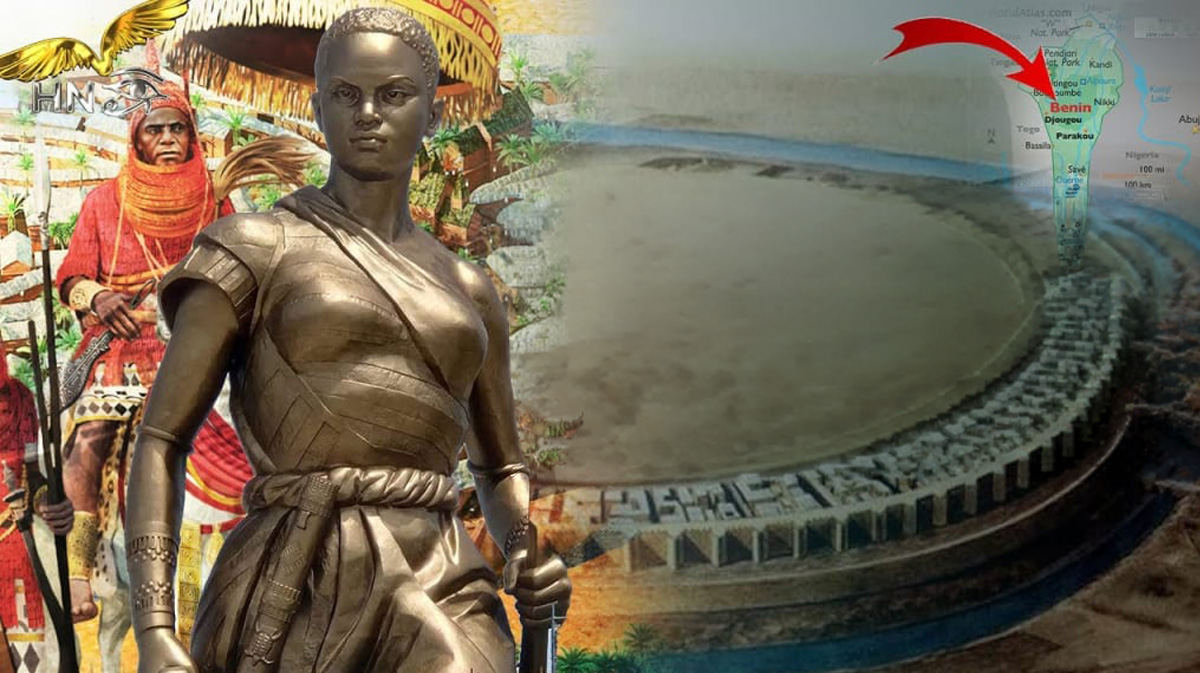
The Great Wall of Benin was one of the most remarkable engineering achievements in African history. Built by the people of the ancient Kingdom of Benin, the massive system of earthworks surrounded the capital city and extended across the surrounding region. Although less widely known than the Great Wall of China, the Great Wall of Benin was among the largest man-made structures ever constructed before the modern era.
Located in what is now Nigeria, the wall was created to protect the powerful Benin Kingdom from outside threats. The kingdom emerged as a major political and economic center in West Africa, known for its sophisticated government, skilled artisans, and extensive trade networks. Defensive barriers became essential as the kingdom expanded its influence.
Construction of the walls began many centuries ago and continued over generations. Rather than being built from stone, the Great Wall of Benin consisted mainly of enormous earthworks. Workers dug deep moats and piled the excavated soil into towering embankments, creating a formidable defensive system around settlements and important routes.
The scale of the project was extraordinary. Historians estimate that the network of walls and ditches stretched for thousands of miles when all sections are considered together. The effort required immense planning, labor, and coordination, demonstrating the organizational strength of the Benin Kingdom and its rulers.
The walls served several important purposes. Their primary role was defense, helping protect the capital and nearby communities from invasion. The barriers also controlled movement into the kingdom, allowing leaders to monitor trade, collect taxes, and maintain security throughout their territory.
The construction of the Great Wall of Benin reflected the kingdom’s advanced understanding of engineering and land management. Builders carefully adapted the earthworks to the local landscape, incorporating forests, rivers, and natural terrain into their defensive strategy. This combination of human ingenuity and environmental knowledge enhanced the wall’s effectiveness.
At the center of this fortified network stood Benin City, one of the most important urban centers in pre-colonial Africa. European visitors who arrived centuries later described broad streets, impressive architecture, and a well-organized city that rivaled many contemporary cities elsewhere in the world.
The Great Wall of Benin also symbolized political authority. The walls represented the power of the Oba, or king, whose leadership united the kingdom. Maintaining such a vast infrastructure required cooperation among communities and reinforced a shared sense of identity among the people of Benin.
Trade played a significant role in the kingdom’s prosperity. Merchants exchanged goods such as ivory, pepper, textiles, and the famous Benin bronzes. The defensive walls helped safeguard commercial activities and contributed to the stability that allowed the kingdom’s economy and culture to flourish.
The history of the walls is closely connected to the broader history of the kingdom itself. In 1897, a British military expedition attacked and occupied Benin City, leading to the decline of the independent kingdom. During the colonial period and subsequent urban development, many sections of the ancient earthworks were damaged or destroyed.
Despite these losses, archaeologists and historians continue to study the remaining portions of the walls. Their research has revealed valuable information about the social organization, engineering skills, and cultural achievements of the people who built them. The surviving sections remain important historical landmarks.
Today, the Great Wall of Benin stands as a powerful reminder of Africa’s rich and complex past. It challenges outdated assumptions about pre-colonial African societies and highlights the ingenuity, determination, and vision of the Benin people. As interest in African history grows, the Great Wall of Benin continues to be celebrated as one of humanity’s greatest architectural and engineering accomplishments.