What It Means to Be A Shepherd
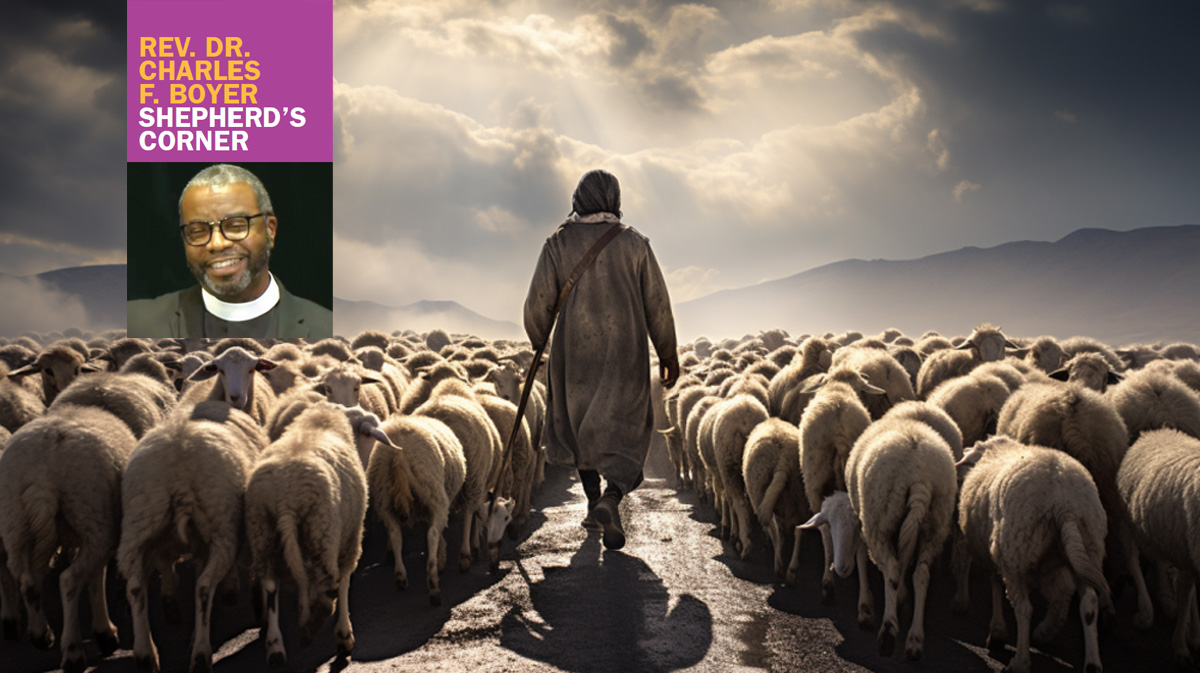
I receive the title of this column with a deep sense of honor and a holy weight. To follow the voice and witness of Bishop Reginald T. Jackson is no small assignment. He was a shepherd in the truest sense, one who guided, challenged, protected, and spoke with clarity in the public square. I carry gratitude for his mentorship and a sober awareness that to step into this space is not to replace him, but to continue work he helped shape with courage and conviction
Scripture gives us a rich and demanding portrait of what it means to be a shepherd. In Ezekiel 34, God indicts leaders who feed themselves but not the flock; who fail to strengthen the weak, heal the sick, bind up the injured, or bring back those who have strayed. It is a critique of leadership that consumes rather than cultivates. By contrast, Psalm 23 gives us the image of a shepherd who leads beside still waters, restores the soul, and walks with the flock even through the valley of the shadow of death.
In John 10, Jesus makes the distinction plain. The good shepherd lays down their life for the sheep, while the hired hand runs when danger comes. The shepherd is not defined by title but by responsibility. The shepherd is accountable for the well-being of the community, not only spiritually in some abstract sense, but in the real conditions of people’s lives. Bodies, dignity, safety, and future all fall within the scope of faithful care.
The shepherd pays attention to systems that wound the flock and refuses to pretend that harm is harmless. The shepherd is called to proximity, to risk, and to truth.
That framing matters for the times we are living in. Too often, leadership in our society mirrors the shepherds condemned in Ezekiel. We see systems that extract from the many to benefit the few and policies that leave the most vulnerable exposed. When wages stagnate, when access to healthcare and safe housing is uneven, when preventable crises like disparities in Black maternal health persist, and when violence becomes normalized in both our streets and our structures, it reveals a failure of shepherding.
The gospel offers another vision. In Acts, the early church organized life together so there was not a needy person among them. This was not simply charity. It was a reordering of community rooted in shared responsibility, where resources were aligned with human need and dignity was protected. It was a refusal to allow anyone to be invisible or disposable.
That same vision continues to call us forward. Whenever communities come together to support those returning home from incarceration; whenever people organize to address healthcare inequities; whenever neighbors build structures of mutual care around food, housing, and safety—that is shepherding work. Whenever people raise their voices for policies that reflect justice rather than neglect, that too is an expression of the shepherd’s call.
The shepherd’s work is not confined to the sanctuary. It shows up in policy decisions, in budgets, in neighborhoods, and in the ordinary choices that determine whether people can live with dignity.
It requires us to ask clear questions. Who is being protected? Who is being sacrificed? Who is being heard? Who is being ignored?
And if we are honest, shepherding is not the burden of one leader alone. The picture painted in Acts was sustained by a community committed to one another. It calls all of us to take responsibility for the well-being of our neighbors and to resist the pull of individualism when collective care is required.
This column will be a space to wrestle with these realities; to reflect on faith, justice, and public life through the lens of shepherding. We will name what is broken, lift up what is possible, and point toward what the gospel demands of us in this moment.
Because the question before us is not simply who our shepherds are, but whether we are willing to become the kind of community that reflects the heart of the Good Shepherd. A community that refuses to abandon the vulnerable, refuses to normalize injustice, and refuses to believe that the way things are is the way they must be.