B. Doyle Mitchell Jr. and the Continuing Legacy of Industrial Bank
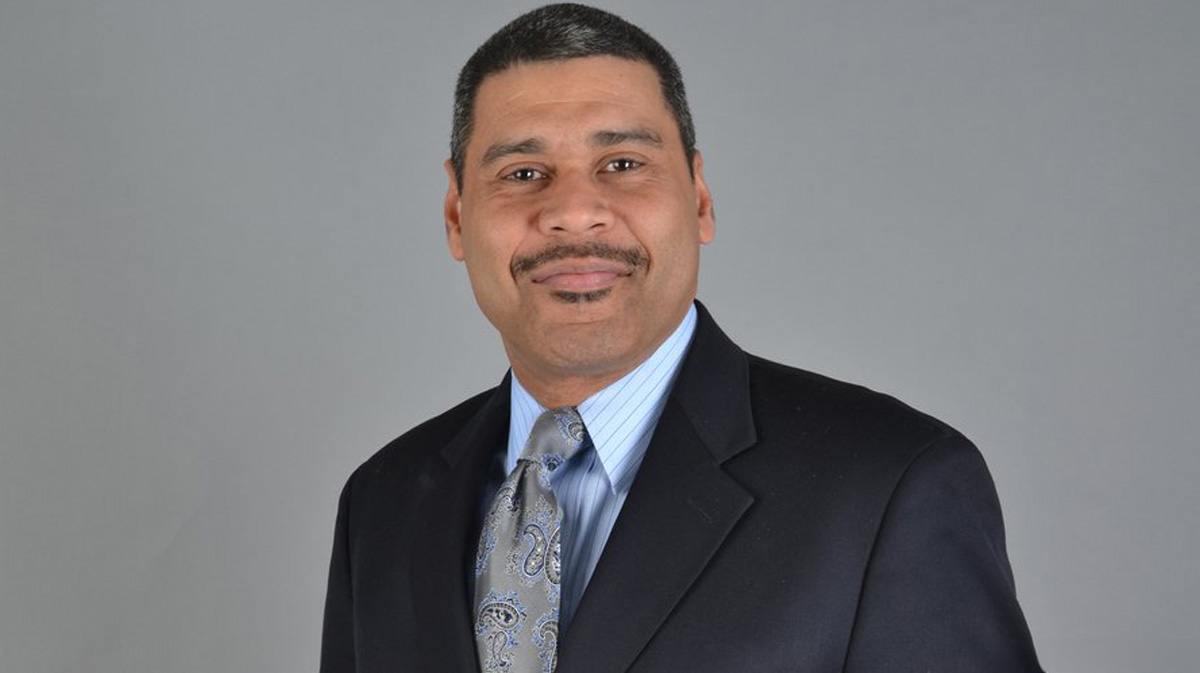
By RL Witter
B. Doyle Mitchell Jr. leads Industrial Bank with a vision rooted in economic empowerment, community investment, and a family legacy spanning more than 90 years.
For B. Doyle Mitchell Jr., banking is about more than money. As the third-generation chief executive officer of Industrial Bank—the Washington, D.C.-based institution founded by his grandfather in 1934—Mitchell has spent more than three decades balancing the responsibilities of running a federally regulated financial institution with a deeply personal commitment to community development, economic opportunity, and generational wealth.
Mitchell did not always know that banking would be his career. His mother was a music teacher, and he entered college as an undecided major. Although he had worked summers at the bank since he was 16, he was still searching for a direction.
“I knew I wanted to do something that helped people, assisted our community.”
Prior to his junior year at Rutgers University, he realized banking offered a way to combine those goals with a successful career. “I saw how we could make money in banking and help people as well,” he said.
That decision ultimately brought him back to the family business. Mitchell joined Industrial Bank’s board in 1990 at age 28 and became CEO at 31. Shortly after taking the helm, he led the bank’s first expansion outside Washington, D.C., entering Maryland after the institution had spent six decades operating exclusively in the District.
Under Mitchell’s leadership, Industrial Bank has grown by nearly 400 percent, with nine branch locations and access to 15 ATMs in three states and the District of Columbia. The bank remains one of a small number of Black-owned banks in the United States, making its survival and growth particularly significant in a financial industry dominated by much larger institutions.
BANKING WITH A PURPOSE
Mitchell sees the role of Industrial Bank through the lens of community impact. The bank became a certified Community Development Financial Institution (CDFI), an institution committed to investing in underserved communities. The designation has helped Industrial secure more than $3.3 million in grants for lending efforts in some of the most economically distressed communities in the Washington metropolitan area.
However, for B. Doyle Mitchell, the mission is not simply institutional. It is personal.
“We’re a community bank. Our focus is on our community.”
He points to generations of customers who have relied on Industrial Bank to finance homes, start businesses, and send their children to college. “We have customers two and three generations,” he said, recalling customers who have told him that his grandfather or father helped their families achieve those milestones.
That philosophy also shapes his views on Black economic empowerment. Few topics, he says, are more important to him than encouraging Black Americans to support Black-owned businesses and financial institutions. Mitchell opined that Black Americans possess enormous collective economic power but too often fail to circulate enough of that money within our own communities.
“It’s absolutely necessary, critically necessary, that we do a better job spending money in our community,” he said.
THE POWER OF BLACK DEPOSITS
Mitchell sees banking as an especially powerful part of that equation because deposits can be leveraged into loans that support businesses, homeownership, and economic development.
“When we take your deposits, we’re able to leverage your deposits 10 to one.”
“So if you give me $10,000 deposits, I can leverage that into a $100,000 loan,” Mitchell explained.
That is why Mitchell encourages people who may not be ready to move their entire banking relationship to a Black-owned bank to start somewhere. “We don’t have to have your entire bank relationship,” he said. “But just give me a piece of it.”
Money deposited in a local institution can become capital for another person in that same community.
FINANCIAL EDUCATION BEHIND BARS
Industrial Bank’s commitment extends beyond traditional banking. One of its most distinctive programs grew out of employee volunteer work with incarcerated people. In 2016, three female employees began providing financial-literacy education at the Baltimore City Jail. Mitchell learned about their efforts roughly two years later and joined the program himself.
The initiative, Justice Exposed Empowerment Program (JEEP), has since expanded to include programs at the D.C. Jail; in Prince George’s County, Maryland; and through virtual sessions reaching participants in other states.
Participants complete a structured financial-literacy curriculum covering subjects such as savings, debt, investing, credit, and homeownership. Mitchell participates in graduation ceremonies, where participants receive certificates of completion.
Industrial Bank has even taken the unusual step of opening savings accounts for currently incarcerated individuals. Mitchell estimates that the bank has opened roughly 400 such accounts, allowing participants to begin building savings before their release.
“It’s the most fulfilling thing we’ve ever done in our careers.”
Financial education is also offered to people outside the corrections system. Industrial provides programs for children, seniors, small-business owners, and others.
A FAMILY TRADITION OF SERVICE
Mitchell’s commitment to community service is rooted in a family legacy that extends beyond banking. Born and raised in Washington, D.C., his mother spent 30 years teaching music in the city’s public schools and his grandfather pursued classical singing. Mitchell inherited that love of music and remains an avid fan of live performances. He also enjoys golf, nature, and hiking, but says his church is another important part of his life.
At Industrial Bank, family remains central. Mitchell’s sister, Patricia, has worked with the bank for many years and serves on its board. All four of Mitchell’s children—a son and three daughters—have worked at the bank at some point, although he does not assume that a fourth generation will ultimately run the institution.
“There will be a fourth generation of ownership,” he said, but he is less certain that the next generation will actually manage the bank—and that is perfectly acceptable.
A family legacy does not have to mean following a predetermined career path. It means preserving the values that made the institution matter in the first place.
BUILDING THE NEXT GENERATION
Those values also keep Mitchell looking toward the future. What motivates him is the possibility of making Industrial Bank better.
“I want the bank to be better than we are,” he said.
He believes technology can improve efficiency, customer experience, lending, and profitability while allowing the bank to deepen its impact.
“I’m excited. I want to do that. I want to go to that next level of awesome.”
He is also open to another acquisition as Industrial Bank continues to grow. The institution has completed three acquisitions, expanding its reach from Washington, D.C., and Maryland to Newark and Harlem. For Mitchell, the goal is to become more effective at doing what Industrial Bank has done for generations: turning financial resources into opportunity.
More than 90 years after his grandfather founded the institution, Mitchell can summarize Industrial Bank’s philosophy in four words:
“Money made here stays here.”
For a Black-owned bank that has survived economic downturns, dramatic changes in the banking industry, and generations of social change, that simple phrase captures both the institution’s history and Mitchell’s vision for its future.