Polar Bears Preserve Vineyard Tradition
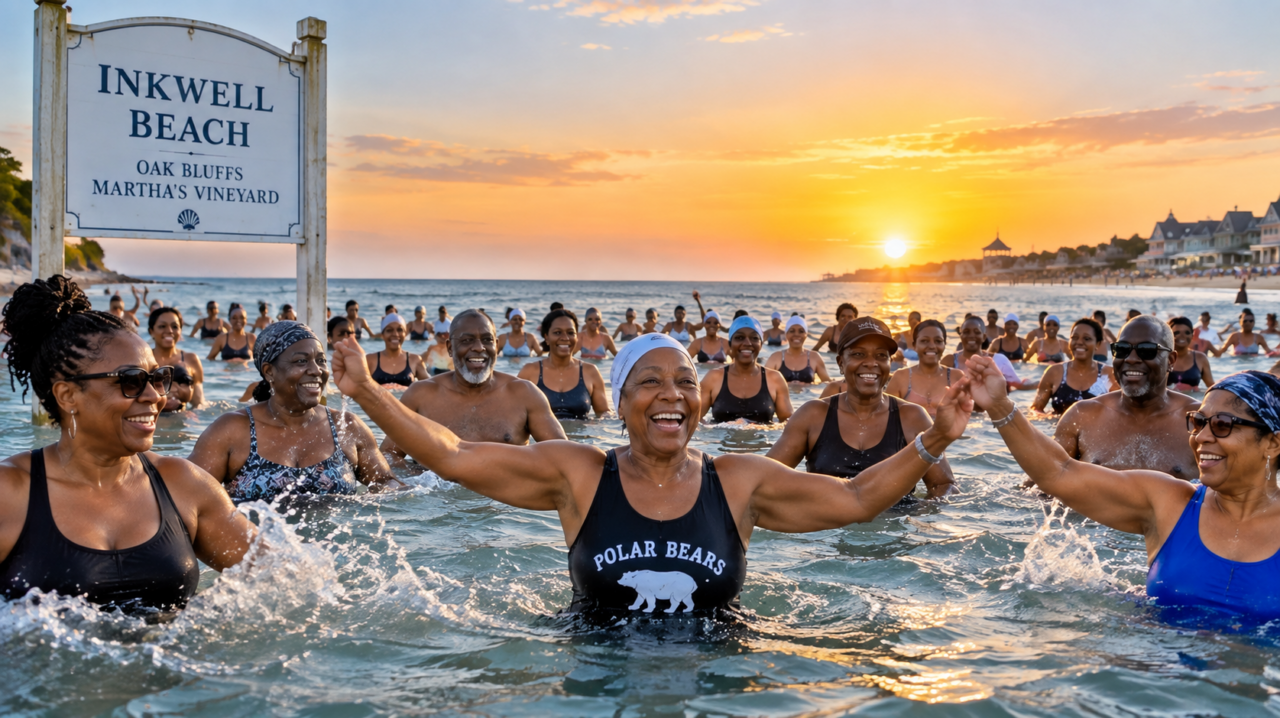
For 80 years, a unique morning tradition has brought generations of Black visitors together on Martha’s Vineyard. Known as the Polar Bears, the group gathers at Inkwell Beach in Oak Bluffs to enter the cool waters of Nantucket Sound, exercise, socialize and begin the day surrounded by fellowship. What began as a small gathering has developed into one of the island’s most meaningful traditions, connecting history, wellness, spirituality and community.
Each morning from the Fourth of July through Labor Day, hundreds of people gather at the beach before many vacationers have even begun their day. Participants arrive early and, regardless of the temperature, slowly make their way into the ocean. Under the guidance of longtime leader Caroline Hunter, the group performs water exercises designed to get the body moving and the blood circulating.
Hunter has been leading the Polar Bears for decades and has become an important part of the tradition. Her instructions encourage participants to enter the water, move their bodies and focus on the experience. For many people, however, the gathering represents much more than exercise. The morning ritual provides an opportunity to reconnect with friends, meet new people and experience the strength of community.
The Polar Bears tradition began in 1946, during a period when segregation severely limited where Black Americans could comfortably gather and enjoy recreational activities. Black seasonal workers staying in Oak Bluffs sought a place where they could exercise, swim and build relationships. Inkwell Beach became that place, creating a tradition that would continue for generations.
The historical importance of the location remains central to the experience. Oak Bluffs has long been recognized as an important center of Black life and culture on Martha’s Vineyard. For generations, Black families have returned to the island each summer, creating a sense of belonging that is deeply connected to history, family and community.
Over the years, the Polar Bears have grown dramatically. What may have once been a relatively small group now attracts hundreds of participants during the summer. On some mornings, more than 500 people have gathered to take part. Despite its growth, the experience continues to maintain the intimacy and fellowship of a family gathering.
For longtime members, entering the water is also connected to health and healing. Participants describe the experience as physically invigorating and emotionally uplifting. The combination of exercise, fresh ocean water and the support of others creates a powerful sense of well-being. For some, the daily ritual has become an important part of maintaining their physical and emotional health.
The Polar Bears also welcome newcomers who may initially be nervous about entering the cold water. First-time participants often discover that the encouragement of others helps them overcome their fears. Once they enter the ocean and become part of the group, many experience an unexpected emotional connection to the people around them and the history of the gathering.
For some participants, the experience has become spiritual as well as social. Quiet moments in the water allow people to reflect, appreciate their surroundings and feel connected to something larger than themselves. The sound of the water, the early morning atmosphere and the presence of hundreds of people sharing the same experience create a sense of peace that many carry with them throughout the day.
Perhaps the greatest strength of the Polar Bears tradition is the fact that people continue to return year after year. Friends reunite, families grow and new generations become part of the experience. At Inkwell Beach, a morning swim has become much more than a way to exercise. It is a celebration of Black history, health, resilience and fellowship, proving that some traditions become even more meaningful as they are passed from one generation to the next.Polar Bears Preserve Vineyard Tradition
For 80 years, a unique morning tradition has brought generations of Black visitors together on Martha’s Vineyard. Known as the Polar Bears, the group gathers at Inkwell Beach in Oak Bluffs to enter the cool waters of Nantucket Sound, exercise, socialize and begin the day surrounded by fellowship. What began as a small gathering has developed into one of the island’s most meaningful traditions, connecting history, wellness, spirituality and community.
Each morning from the Fourth of July through Labor Day, hundreds of people gather at the beach before many vacationers have even begun their day. Participants arrive early and, regardless of the temperature, slowly make their way into the ocean. Under the guidance of longtime leader Caroline Hunter, the group performs water exercises designed to get the body moving and the blood circulating.
Hunter has been leading the Polar Bears for decades and has become an important part of the tradition. Her instructions encourage participants to enter the water, move their bodies and focus on the experience. For many people, however, the gathering represents much more than exercise. The morning ritual provides an opportunity to reconnect with friends, meet new people and experience the strength of community.
The Polar Bears tradition began in 1946, during a period when segregation severely limited where Black Americans could comfortably gather and enjoy recreational activities. Black seasonal workers staying in Oak Bluffs sought a place where they could exercise, swim and build relationships. Inkwell Beach became that place, creating a tradition that would continue for generations.
The historical importance of the location remains central to the experience. Oak Bluffs has long been recognized as an important center of Black life and culture on Martha’s Vineyard. For generations, Black families have returned to the island each summer, creating a sense of belonging that is deeply connected to history, family and community.
Over the years, the Polar Bears have grown dramatically. What may have once been a relatively small group now attracts hundreds of participants during the summer. On some mornings, more than 500 people have gathered to take part. Despite its growth, the experience continues to maintain the intimacy and fellowship of a family gathering.
For longtime members, entering the water is also connected to health and healing. Participants describe the experience as physically invigorating and emotionally uplifting. The combination of exercise, fresh ocean water and the support of others creates a powerful sense of well-being. For some, the daily ritual has become an important part of maintaining their physical and emotional health.
The Polar Bears also welcome newcomers who may initially be nervous about entering the cold water. First-time participants often discover that the encouragement of others helps them overcome their fears. Once they enter the ocean and become part of the group, many experience an unexpected emotional connection to the people around them and the history of the gathering.
For some participants, the experience has become spiritual as well as social. Quiet moments in the water allow people to reflect, appreciate their surroundings and feel connected to something larger than themselves. The sound of the water, the early morning atmosphere and the presence of hundreds of people sharing the same experience create a sense of peace that many carry with them throughout the day.
Perhaps the greatest strength of the Polar Bears tradition is the fact that people continue to return year after year. Friends reunite, families grow and new generations become part of the experience. At Inkwell Beach, a morning swim has become much more than a way to exercise. It is a celebration of Black history, health, resilience and fellowship, proving that some traditions become even more meaningful as they are passed from one generation to the next.