Race, Motherhood, Mental Illness, Justice
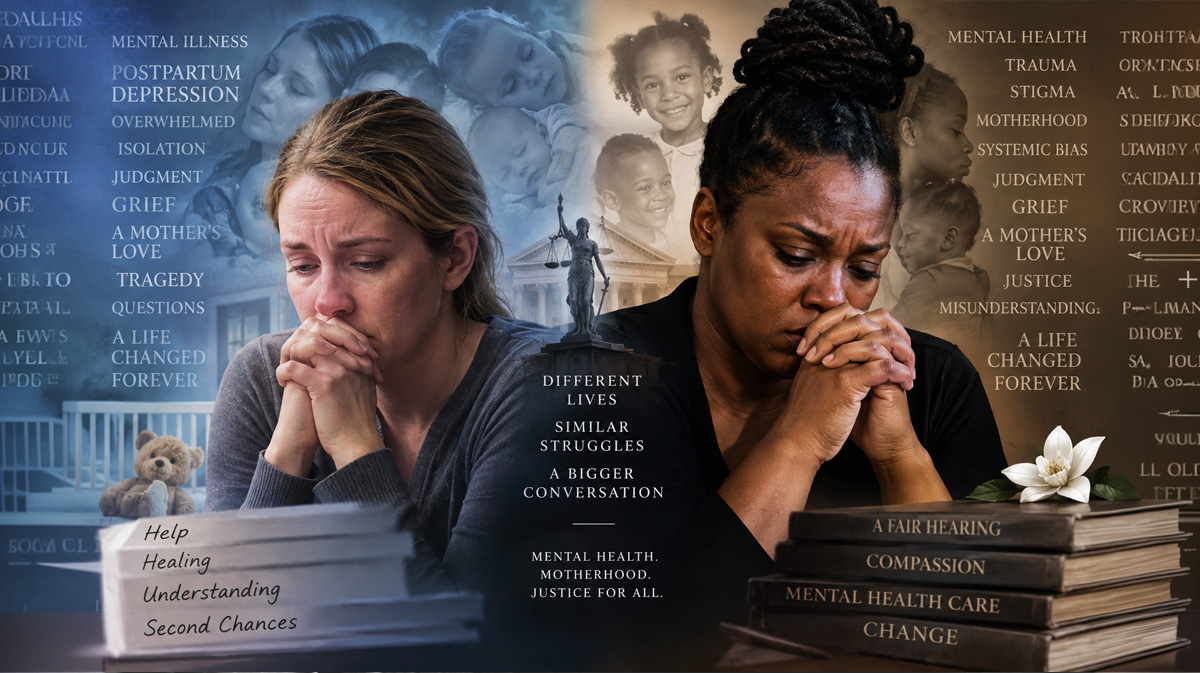
The cases of Lindsay Clancy and Latarsha Sanders raise difficult and uncomfortable questions about race, motherhood, mental illness and justice in America. Both women were mothers accused of killing their children. Both had serious questions surrounding their mental health. Both cases involved claims that psychiatric illness affected their understanding of reality and their criminal responsibility. Yet the public response to the two women has been dramatically different, raising an important question: Does America extend the same compassion to a Black mother experiencing mental illness that it extends to a white mother?
Lindsay Clancy, a white former nurse from Duxbury, Massachusetts, became the focus of enormous national attention after she was accused of killing her three young children in 2023. From the beginning, much of the public conversation focused on postpartum depression, postpartum psychosis, medication and whether the mental-health system had failed her. Her case encouraged Americans to ask how a loving and apparently successful mother could experience such a devastating psychiatric crisis. The discussion often centered on understanding what had happened to Lindsay Clancy and whether she should be viewed as a mentally ill woman rather than simply as a criminal.
Latarsha Sanders, a Black mother from Brockton, Massachusetts, faced a similarly tragic accusation after the deaths of her two young sons. Her attorneys argued that she suffered from serious psychiatric illness and psychosis. However, her case did not receive the same level of national attention, public sympathy or widespread discussion about whether the mental-health system had failed her. Sanders was convicted and sentenced to life in prison, even though important psychiatric evidence supporting her defense was excluded from her trial. Her convictions were later overturned and she was granted a new trial because the excluded medical evidence was considered important to her defense.
The racial contrast between the two cases is impossible to ignore. Clancy became the subject of a national conversation about postpartum mental illness, medication and compassion for mothers in crisis. Sanders became far less visible outside Massachusetts, despite her own claims of severe psychosis. This difference does not prove that every individual who expressed sympathy for Clancy was motivated by race. However, it raises a legitimate question about whether American society is more willing to see a white woman in crisis as sick while being more likely to see a Black woman in crisis as dangerous, irresponsible or criminal.
The language used to describe a defendant can shape public opinion long before a jury reaches a verdict. In Clancy’s case, the public frequently heard descriptions of her as a nurse, a mother and a woman who had sought medical treatment. Her story was often connected to the larger issue of maternal mental health. These details encouraged people to see the tragedy through the lens of illness and personal suffering. Sanders, however, did not receive the same sustained national discussion about her psychiatric condition or the possibility that her behavior was connected to a serious mental-health crisis.
This difference reflects a larger historical problem involving Black women and the American health-care and criminal-justice systems. Black women have often faced stereotypes portraying them as unusually strong, emotionally resilient or less vulnerable than white women. These stereotypes can make it more difficult for society to recognize when a Black woman is experiencing depression, psychosis, trauma or another serious psychiatric condition. When vulnerability is not recognized, compassion may be replaced by punishment.
The justice system also treated Sanders’ psychiatric evidence in a way that became central to the later reversal of her conviction. Important medical records were excluded from her original trial, limiting her ability to present evidence supporting her mental-health defense. Her later legal victory demonstrated how critical access to psychiatric evidence can be when a person’s criminal responsibility depends upon their mental condition at the time of an alleged crime.
Clancy’s case, by comparison, gave jurors extensive exposure to arguments about her psychiatric condition. Her trial became a major public examination of postpartum psychosis and criminal responsibility, with mental-health experts and attorneys debating whether she understood the wrongfulness of her actions. The jury ultimately could not reach a unanimous decision, and the case generated widespread discussion about whether a woman experiencing severe postpartum psychiatric illness should be held criminally responsible in the same manner as someone who was not suffering from such an illness.
The difference between the two cases raises a troubling question about whose pain America considers believable. When a white mother experiences an unimaginable act of violence, the public may be more inclined to search for an explanation involving medicine, trauma or mental illness. When a Black mother is accused of a similar tragedy, the public may be quicker to accept a narrative centered on criminality and punishment. These are not rules that apply in every case, but they are patterns worth examining because racial stereotypes can influence journalists, prosecutors, jurors, doctors and the general public.
Class may also be connected to the racial differences in public response. Clancy was a health-care professional living in an affluent community and had access to extensive medical records, expert witnesses and national attention. Sanders was a Black mother from Brockton whose case received far less national scrutiny during her original trial. The combination of race and class can affect who is viewed as relatable, who is considered sympathetic and whose suffering is considered worthy of a national conversation.
None of this comparison should minimize the deaths of the children involved. Five children lost their lives, and the grief experienced by their families cannot be measured by a legal argument about race or mental illness. Justice requires acknowledging the humanity of the children while also recognizing that a defendant’s mental state may be essential to determining criminal responsibility. Compassion for the victims and fairness for the accused do not have to be opposing values.
The most important lesson from comparing Lindsay Clancy and Latarsha Sanders may be that justice must be equally capable of recognizing vulnerability. If severe mental illness deserves serious consideration when the defendant is white, educated and widely viewed as sympathetic, then the same consideration must be available when the defendant is Black, poor or less familiar to the national media. The question is not whether Lindsay Clancy deserves compassion. The more important question is whether Latarsha Sanders—and every other Black mother experiencing a psychiatric crisis—deserves the same willingness from society to ask what happened to her before deciding that the only answer is punishment. True justice cannot depend upon race, wealth, appearance or whose suffering the public finds easiest to understand.