Black Media Empowerment
BOMESI & Black Media Evolution
BY GLENN TOWNES
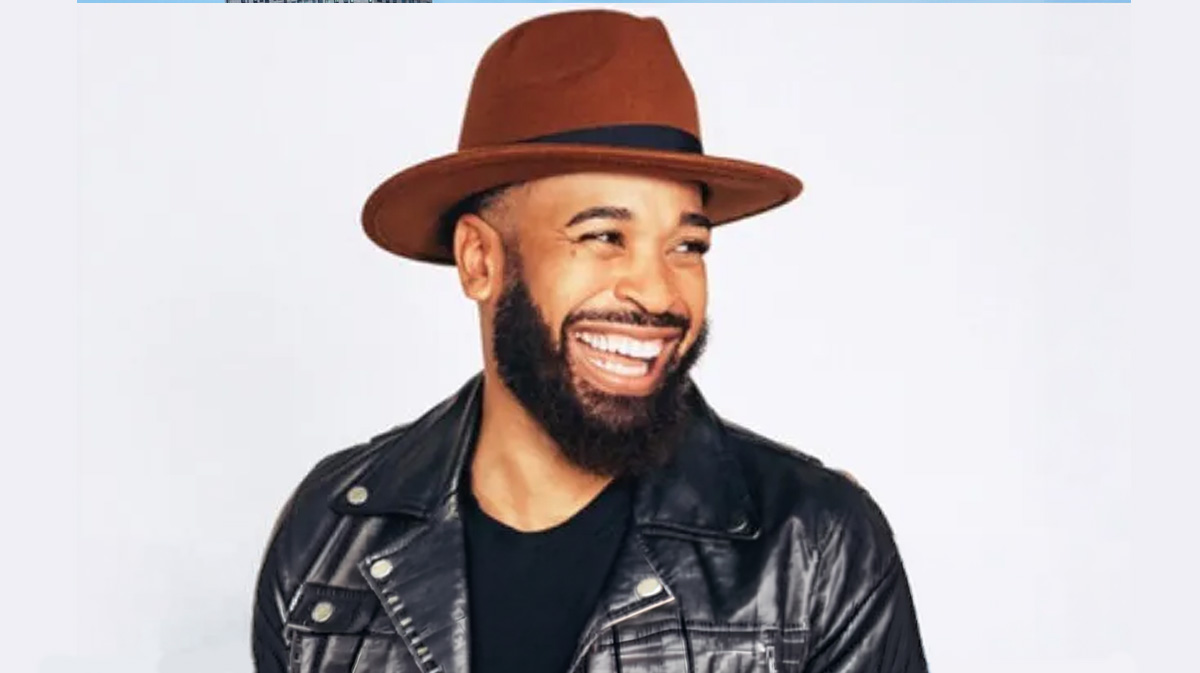
The Positive Community (TPC) contributing writer Glenn Townes recently interviewed Devon Christopher Johnson, co-founder of BOMESI and founder/CEO of BleuLife Media Group in New York. Johnson, along with his partner, Rhonesha Byng, is at the forefront of the Black Media landscape at the local, regional, and national levels.
TPC—What was the impetus for BOMESI in 2020, and how did it form a partnership with BleuLife? How successful have you been six years later?
Johnson: Both BleuLife Media Group and BOMESI celebrate anniversaries this upcoming June. Twenty years for Bleu and six for BOMESI. Though almost two decades apart, both share the same ethos of driving out antiquated tropes and stereotypes of the Black American experience. At the core of who we are and what we do are the stories that we tell. But it’s not just the stories we write for an audience; it’s also the stories we tell ourselves. In some respects, BOMESI was born out of the frustration of fighting for crumbs, as Bleu and so many of my peers had at that time.
TPC—Has the database grown or shrunk, and how do you verify outlets?
Johnson: What’s important here is that the database started with just three platforms and BOMESI Cofounder Rhonesha Byng’s platform. We are now 350 Black-owned media platforms listed, vetted, and verified. We personally verify each platform. The goal isn’t to have the largest list; it is to have the highest-quality, dealflow-ready platforms as part of the community. What’s also important is to understand Black audiences don’t always have to be subjected to doom and gloom. We love fun stories, travel pieces, and news and politics. The audience is not a monolith. Happiness is also an act of resistance. We want to ensure we support platforms that resonate with the full spectrum of Black and African-American audiences: Bleumag.com, Bombshellbybleu.com, Heragenda.com
TPC—How do you respond to the perception that minorityowned businesses or publications are less qualified?
Johnson: That perception is as old as it is wrong—and it’s expensive. When brands or agencies discount Black-owned media based on assumptions rather than data, they are literally leaving money on the table. Black consumers represent over $1.6 trillion in buying power. We are early adopers, brand loyalists, and cultural tastemakers. The publishers in our network reach Black people authentically, not transactionally. The parallel you draw to MWBEs is apt. The “less-than” narrative isn’t based in truth—it’s rooted in bias institutionalized over decades. What we do at BOMESI is remove that objection structurally. We aggregate, we verify, we package our publishers with the same rigor and professionalism that any major media network demands. We don’t ask brands to take a leap of faith—we give them a data-backed, brand-safe, audience-verified path to communities they’ve been failing to reach effectively. The perception changes when the receipts are visible. Our job is to make those receipts undeniable.
TPC—The Washington Post just laid off more than 300 employees—mostly reporters—some of whom are of color, and the Richmond (VA) Free Press—a Black weekly—announced it will cease operations. Add to the mix DEI initiatives at all levels being cut back or completely eliminated—are journalism and Black media in trouble?
Johnson: I won’t sugarcoat it—the headwinds are real. The Post layoffs are a symptom of a larger, structural collapse in the advertising-supported and Black media models. Black media have always operated with thinner margins and less institutional cushion to absorb those shocks. When the Richmond Free Press folds after decades of serving that community, that’s not just a business closing—that’s an institution, a voice, a record of history gone. That matters. What’s dying is a mode. Publishers who have diversified revenue streams, built direct audience relationships, and organized collectively rather than competing in isolation are surviving—and in some cases thriving. That’s exactly why BOMESI exists.
On DEI: the rollbacks are real and politically motivated, but consumer behavior data doesn’t lie. Black spending power is growing. Black audiences are engaged. Brands that abandon these communities aren’t just taking a moral stance—they’re making a poor business decision. The smart money will figure that out. Our job is to ensure the infrastructure is ready when they return to the table—or when new entrants take their place.
TPC—In August, BOMESI received a $750,000 grant from Press Forward for the Accelerator Program. Please share some of the details about the Accelerator Program and how the grant has enhanced the initiative.
Johnson: The Press Forward grant has been transformational. It gave us the capitalization to do what we’d been doing on goodwill and grit—at scale. A meaningful portion has gone directly into strengthening the infrastructure of BOMESI Scale and 1Accord: publisher onboarding, technology, and the verification processes that give advertisers confidence in our network. Another portion has gone into expanding the Accelerator Program, which is really the heart of our sustainability work. The Accelerator is designed not just to give publishers a check, but to give them a business. We work with participants on revenue diversification, editorial strategy, audience development, and advertiser relationships. One example that captures what this means in practice is the incredible growth and impact. The team participated in Cohort 4 of the BOMESI Accelerator. We helped them structure their editorial scope to complement their existing live events business. Not just survival—growth: https://www.cxmmunitymedia.co/
TPC—Final comments, and what does the future hold for BOMESI?
Johnson: The through line between 20 years of BleuLife and six years of BOMESI is this: we never waited for permission. Black media has always had to build its own table, set its own place, and then invite the industry to sit down with us. That hasn’t changed. What has changed is our leverage. We are more organized, more data-driven, and more connected than ever.
What I want readers to take away is that supporting Black media isn’t charity—it’s commerce. It’s smart business. And the publishers in our network, the founders, the journalists, the editors —they are doing some of the most important cultural work happening in America right now. They deserve to be resourced accordingly.