
Poetry At The Cosmic Edge
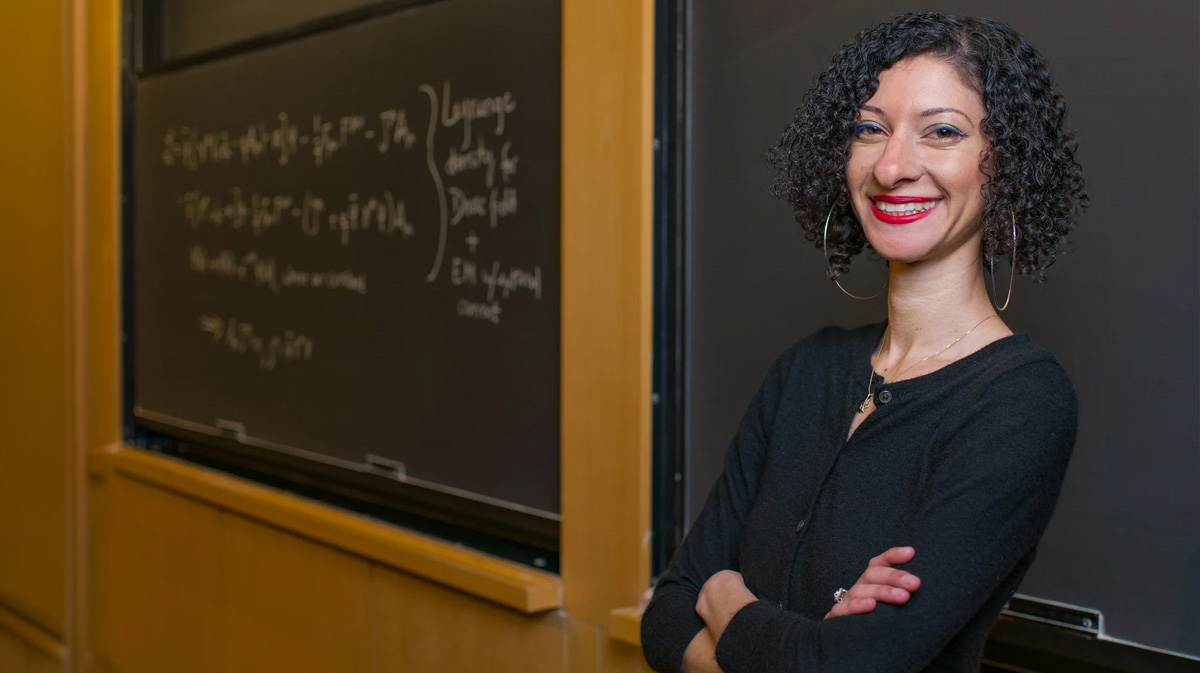
The article profiles theoretical cosmologist Chanda Prescod-Weinstein as she launches her second popular science book, “The Edge of Space-Time: Particles, Poetry, and the Cosmic Dream Boogie,” a work that shifts away from the pain and injustice foregrounded in her first book toward a more playful exploration of why she fell in love with physics. It frames the new book as both a return to her original dream for her writing and a declaration that understanding the universe is a human cultural project, not just a technical one.
Her acclaimed debut, “The Disordered Cosmos,” intertwined dark matter and spacetime with stories of racism, marginalization and “dreams deferred” in the scientific community. In public remarks, she has since described that first book itself as a deferred dream, saying it was not the book she initially imagined writing, even as it chronicled the ways her scientific ambitions were delayed by structural inequities.
The new book, by contrast, is described as a reclamation: less about harm and more about joy, curiosity and wonder. She positions it as a cosmic pilgrimage back to the big questions that drew her into physics as a child, insisting that telling the universe’s story is a responsibility we share as humans, not a privilege reserved for experts in lab coats.
Prescod-Weinstein foregrounds poetry as a central influence, noting that verse shaped her imagination before equations did. She cites children’s rhymes and nonsense limericks alongside Adrienne Rich and Langston Hughes, explaining that these writers helped her see equations themselves as a kind of sentence and physics as an ongoing act of storytelling in specialized language.
For her, poetry is not an ornament but an operating principle: it is how she links new scientific ideas to lived experience. She argues that if cosmologists stop justifying their work in terms of practical payoffs and instead embrace curiosity as a cultural value, their vocation begins to look much closer to that of poets than of engineers selling products.
Throughout the book she leans on Alice’s adventures in Wonderland as another key metaphorical through-line. Serving as a science adviser on a fantasy series helped her rediscover a playful sensibility she says physics often squeezes out of Black queer scientists, and she wanted her text to feel whimsical in the same way that quantum ideas — like particles having “spin” without literally spinning — already sound like nonsense until you accept that this is, in fact, how reality behaves.
Prescod-Weinstein also scrutinizes the metaphors that physicists themselves take for granted, such as calling spacetime a “fabric” or talking about electromagnetic “fields.” Instead of beginning with the usual historical anecdotes, she invites readers to pause over those words and ask what we really mean by “space” and “space-time,” allowing questions that are usually shuffled off to philosophy to re-enter physics as legitimate lines of inquiry.
A recurring motif is the “edge”: the edge of the observable universe, the edge of scientific knowledge and the experience of living at the edge of dominant cultural identities. In contrast to her earlier focus on looking from the margins toward the center, she says this new work centers the margin itself, weaving in her fandoms — the Dodgers, “Alice in Wonderland,” “Star Trek” — as constitutive elements of her physics rather than distractions from it.
She illustrates how culturally specific metaphors can both welcome and exclude, offering an example where she likens black holes to “the best laid edges in the universe,” a phrase that doubles as a nod to Black hairstyling. She is clear that the sentence must still make sense to readers who miss the reference, but she relishes the small in-group recognition it offers to those for whom “laying edges” is a familiar practice, insisting that they too deserve to see themselves reflected in a physics text.
The interview also confronts how Black students are taught to contort themselves to fit a narrow image of who counts as a physicist. She notes that science is widely coded as white and that Black physicists are expected to assimilate to the culture of physics, rather than expecting the discipline to expand to include their cultural references, tastes and ways of speaking.
To push back, she reads a rap track, Big K.R.I.T.’s “My Sub Pt. 3 (Big Bang),” as a physics parable in which miswired subwoofers and fried cables become an impromptu lesson in grounding and cosmology. She argues that such stories show how people who wire cars and build sound systems are already engaging in scientific thinking, and that scientific meaning can coexist with, rather than overwrite, the song’s cultural significance.
Prescod-Weinstein is careful to lower the bar that many readers set for themselves when approaching popular physics books. She stresses that her aim is not to turn anyone into an expert but to invite them to wander through physics, treat its oddities as “tidbits” to savor and feel entitled to dwell with the math even if it scares them.
In one of the interview’s most pointed links between science and politics, she highlights neutrinos, which in the standard model shift among three “flavors,” as a natural example of what she calls “non-trinary” behavior. She suggests that this aspect of fundamental physics stands as a quiet rebuke to contemporary anti-trans rhetoric that insists people must always remain one fixed thing, offering her book as a modest source of hope and a reminder, echoing her mother, that the universe’s vastness dwarfs the harms people inflict on one another.


