David Blackwell Transformed Possibilities
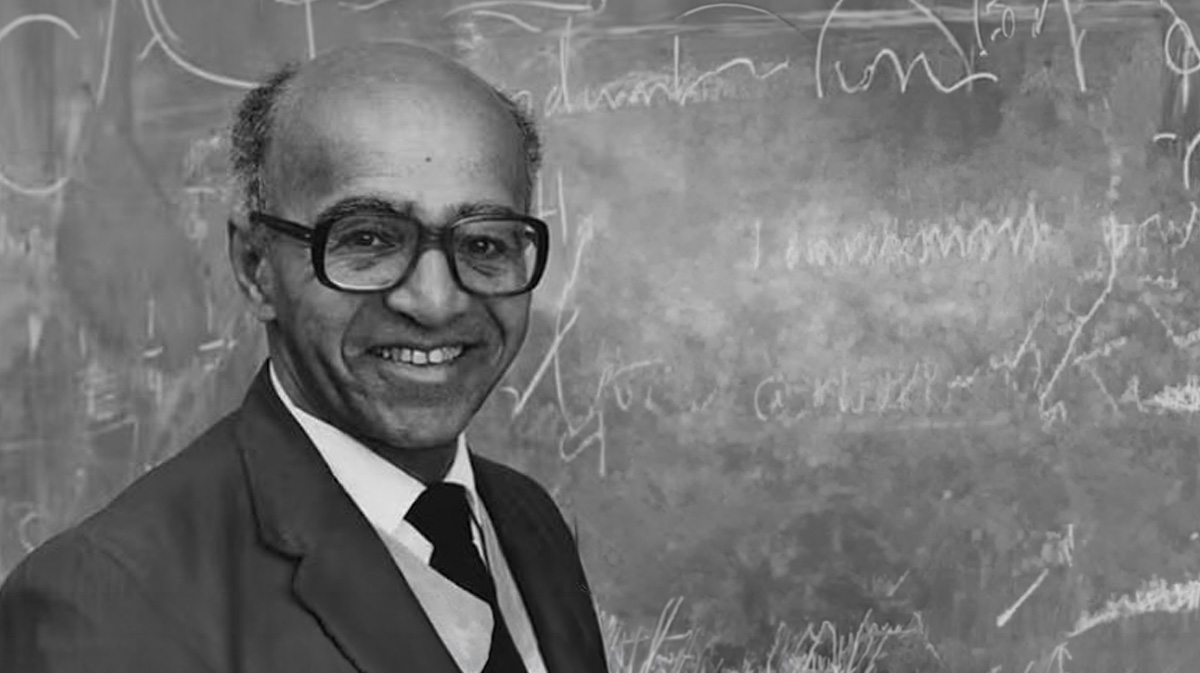
David Blackwell was one of the most influential mathematicians of the twentieth century, and his career reshaped the fields of statistics, probability theory, and game theory. Born in Centralia, Illinois, in 1919, Blackwell displayed extraordinary intellectual ability from a young age. He grew up during a period when racial segregation limited opportunities for Black Americans, yet his brilliance allowed him to rise above barriers that might have stopped others. His work not only transformed mathematics but also opened doors for future generations of scholars.
Blackwell attended the University of Illinois Urbana-Champaign, where he earned bachelor’s, master’s, and doctoral degrees in mathematics before the age of twenty-two. At a time when very few African Americans were admitted into advanced academic programs, his achievements were remarkable. He quickly became known for his calm intellect, precision, and ability to solve difficult mathematical problems with elegance. Professors recognized that he possessed rare talent, and he soon began building a reputation as a groundbreaking thinker.
Although Blackwell was highly qualified, racial discrimination initially prevented him from obtaining faculty positions at many major universities. Despite these obstacles, he secured teaching positions at historically Black institutions and later at Howard University. At Howard University, he developed into one of the leading mathematical minds in the nation. His years there were important not only for his own research but also for mentoring Black students who rarely had access to world-class scientific education.
One of Blackwell’s greatest contributions was in probability theory, the mathematical study of uncertainty and chance. Probability influences fields ranging from economics and medicine to engineering and computer science. Blackwell’s research helped scientists better understand how predictions can be made in uncertain situations. His ideas became especially useful in decision-making processes where people must act without complete information. Today, many systems used in finance, artificial intelligence, and data science still rely on principles connected to his work.
Blackwell also made major advances in game theory, which examines strategic decision-making between competing individuals or groups. During the mid-twentieth century, game theory became increasingly important because of its applications in economics, politics, and military strategy. Blackwell’s insights helped clarify how rational decisions can be made in complex competitive situations. His mathematical approaches provided tools that scholars continue to use when analyzing negotiations, markets, and conflict resolution.
One of his most celebrated achievements is known as the Rao-Blackwell Theorem, developed alongside Indian mathematician Calyampudi Radhakrishna Rao. This theorem became foundational in modern statistics because it showed how estimators could be improved to produce more accurate results. The theorem remains central in statistical education today and is taught in graduate mathematics and statistics courses throughout the world. Its importance demonstrates how Blackwell’s work became permanently embedded within scientific practice.
In 1955, Blackwell achieved another historic milestone when he became the first African American tenured professor at University of California, Berkeley. Berkeley was already recognized as one of the world’s premier centers for mathematical research, and Blackwell’s appointment represented a breakthrough in American higher education. His presence challenged long-standing racial barriers in academia and proved that excellence could not be limited by discrimination. Students and colleagues admired not only his intelligence but also his humility and kindness.
Blackwell’s teaching style was legendary. He was known for explaining difficult mathematical ideas with clarity and patience. Many students described him as approachable and generous, qualities that made him especially effective as a mentor. He believed deeply in education and often encouraged young scholars to pursue mathematics even when they doubted themselves. His influence extended beyond published research because he inspired countless students to enter scientific careers.
Another remarkable aspect of Blackwell’s career was the breadth of his intellectual curiosity. He worked across multiple branches of mathematics rather than limiting himself to a single specialty. His ability to connect ideas from statistics, probability, information theory, and decision science reflected an unusually creative mind. This interdisciplinary approach anticipated modern scientific research, where collaboration between fields has become increasingly important.
Blackwell earned many honors during his lifetime. He became the first African American elected to the National Academy of Sciences, one of the highest distinctions for American scientists. He also served as president of the Institute of Mathematical Statistics and received numerous awards recognizing both his scholarship and leadership. These achievements were especially meaningful because they occurred during decades when racial inequality remained deeply entrenched in American society.
Beyond mathematics, Blackwell represented perseverance, dignity, and quiet excellence. He rarely sought public attention, yet his accomplishments carried enormous symbolic importance. Young Black scientists often looked to him as proof that they too could succeed in fields where representation had historically been limited. His life demonstrated how intellectual achievement can become a force for social progress as well as scientific discovery.
David Blackwell passed away in 2010, but his legacy continues to shape mathematics and statistics around the world. Universities, scholarships, and academic lectures have been named in his honor, ensuring that future generations remember his contributions. More importantly, the ideas he developed remain active within modern science and technology. David Blackwell transformed not only the study of mathematics but also the possibilities available to those who followed after him.