Freedpeople Created Memorial Day
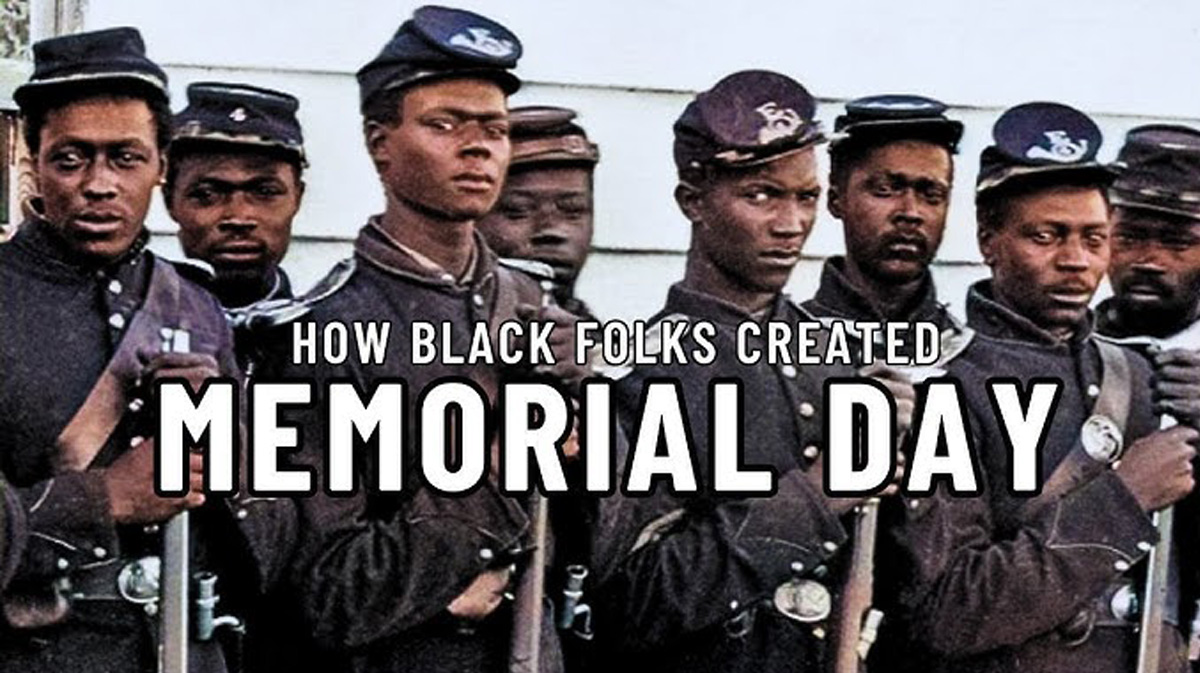
In the years immediately following the American Civil War, newly freed Black Americans played a major role in shaping the traditions that later became Memorial Day. One of the most important early commemorations took place in Charleston, South Carolina, in 1865. Historians widely recognize this event as one of the first large public observances honoring fallen Union soldiers. Although Memorial Day developed through several traditions across the United States, the Charleston ceremony demonstrated how formerly enslaved people helped establish the spirit and purpose of the holiday.
During the Civil War, Charleston had been a center of slavery and Confederate power. Thousands of Union soldiers died while imprisoned at the Washington Race Course, which Confederates had turned into a prison camp. Many of these soldiers were buried in a mass grave without proper recognition. After the war ended, freed Black residents of Charleston decided the soldiers deserved a respectful burial and public honor for their sacrifice.
In April 1865, a group of Black laborers and community members began repairing the burial site. They reburied the Union dead in individual graves and built a fence around the cemetery. An archway was reportedly erected with the words “Martyrs of the Race Course.” Their efforts transformed a neglected mass grave into a dignified resting place for soldiers who had fought, in part, for the destruction of slavery.
On May 1, 1865, thousands of people gathered at the cemetery for a large remembrance ceremony. Most of the participants were formerly enslaved African Americans, joined by Union troops, teachers, missionaries, and local children. The crowd carried flowers, sang patriotic songs, and listened to prayers and speeches honoring the dead soldiers. Many historians consider this gathering one of the earliest Memorial Day observances in American history.
The ceremony reflected the deep gratitude many freedpeople felt toward the Union Army. Union victory had brought emancipation and the possibility of citizenship and civil rights. By honoring fallen Union soldiers, Black Americans publicly connected freedom with sacrifice. The event showed that remembrance was not only about mourning the dead but also about celebrating the ideals for which they fought.
Children played an important role during the Charleston commemoration. Black schoolchildren marched around the cemetery carrying flowers and singing songs such as “John Brown’s Body.” Their participation symbolized hope for a new future after slavery. Education, freedom, and citizenship were closely linked in the minds of many freed African Americans during Reconstruction.
Although the Charleston event was remarkable, Memorial Day did not emerge from a single origin. After the Civil War, communities across the country began holding ceremonies to decorate soldiers’ graves. Women’s groups in both the North and South organized local tributes. Over time, these separate traditions blended into a national holiday known first as Decoration Day and later as Memorial Day.
In 1868, General John A. Logan officially called for a national day of remembrance for Union soldiers. His order helped spread the observance throughout the nation. However, the earlier Charleston ceremony remains historically significant because it demonstrated that Black Americans were among the first groups to organize a large public tribute to war dead after the Civil War ended.
For many years, the contributions of Black Americans to Memorial Day’s origins received little attention in textbooks and public memory. Historians later rediscovered newspaper reports and documents describing the Charleston event. Scholars such as helped bring wider recognition to the role freedpeople played in creating early remembrance traditions.
The story of Charleston also reveals the broader importance of Reconstruction-era Black activism. Newly freed African Americans were not passive observers after emancipation. They built schools, churches, political organizations, and commemorative traditions. Their Memorial Day ceremony reflected a determination to claim space in American public life and shape the nation’s memory of the Civil War.
Today, Memorial Day honors all American military personnel who died in service to the country. Parades, cemetery ceremonies, and moments of remembrance take place nationwide. Yet the roots of the holiday still connect to the aftermath of the Civil War and to the efforts of formerly enslaved people who believed fallen soldiers deserved honor and gratitude.
The Charleston commemoration stands as a powerful reminder that Black Americans helped define the meaning of national remembrance after the Civil War. While historians continue debating the exact “first” Memorial Day, there is strong evidence that freed African Americans organized one of the earliest and most influential ceremonies. Their actions helped create a tradition of honoring sacrifice, freedom, and national unity that continues to this day.