Cassandra Wilson’s Voice Lives Forever
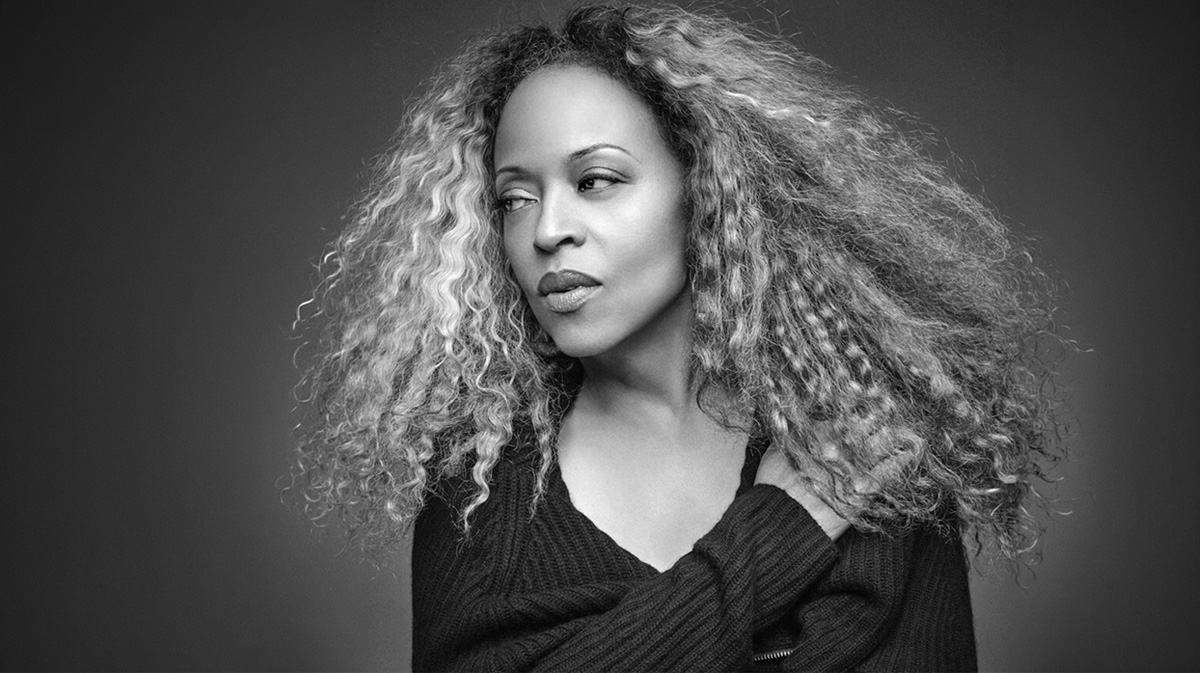
The jazz world is mourning the loss of Cassandra Wilson, the Grammy Award-winning singer, songwriter, producer, and musical visionary whose unmistakable contralto transformed the possibilities of the jazz voice. Wilson died at her home in her native Jackson, Mississippi, at the age of 70, surrounded by family, close friends, and her longtime manager. Her death was confirmed this week, and no cause has been publicly announced. With her passing, American music has lost an artist who refused to be confined by genre and whose haunting voice carried the sounds of jazz, blues, folk, gospel, soul, country, and the American South.
Born December 4, 1955, in Jackson, Wilson grew up in a household where music and education were deeply valued. Her father, Herman B. Fowlkes, was a music teacher, guitarist, and bassist with a love for jazz, while her mother, Mary Fowlkes, was an educator whose musical interests included Motown. Wilson began studying piano at six and later played clarinet and guitar. Long before international audiences knew her name, Mississippi had already given her the musical foundation that would remain audible throughout her life.
Wilson’s journey eventually carried her from Mississippi to New Orleans and then to New York City, where she became part of one of jazz’s most innovative movements. During the 1980s, she became associated with saxophonist Steve Coleman and the M-Base Collective, a group of forward-thinking musicians exploring new concepts of rhythm, improvisation, and composition. The experience helped Wilson establish herself not merely as a singer interpreting standards, but as a musician capable of standing alongside some of the era’s most adventurous instrumentalists.
Her career entered a defining new chapter after she signed with Blue Note Records in the early 1990s. With the 1993 album Blue Light ‘Til Dawn, Wilson presented an approach to vocal jazz that sounded unlike almost anything else in the marketplace. Acoustic guitars, percussion, blues textures, and spacious arrangements surrounded her rich, low voice. She was simultaneously looking backward toward America’s musical roots and forward toward a new definition of contemporary jazz.
That artistic vision reached an even larger audience with New Moon Daughter. Wilson demonstrated that songs did not have to originate in the traditional jazz songbook to become meaningful jazz performances. She could take material from popular music, folk, blues, and rock and completely reconstruct it through her phrasing and imagination. The album earned Wilson a Grammy Award, establishing her internationally as one of the most important jazz vocalists of her generation. Years later, she earned another Grammy for Loverly, giving her two Grammy victories during her remarkable career.
At the center of everything was that voice. Wilson possessed a dark, smoky contralto that could be recognized almost immediately. She never needed excessive ornamentation to command attention. She understood the dramatic power of silence, space, and restraint. She could linger behind a beat, lower a phrase almost to a whisper, or transform a familiar lyric simply by changing its emotional emphasis. Her singing often sounded intimate and mysterious, as though the listener had entered a private conversation.
The blues remained one of the deepest foundations of Wilson’s artistry. Mississippi was not merely the place where she was born; it was part of her musical identity. Albums such as Belly of the Sun explored Southern traditions while connecting blues, folk, jazz, and contemporary songwriting. Even as her career carried her around the world, the cultural landscape of Mississippi remained present in her sound. Musician Jon Batiste, paying tribute after her death, observed that Wilson’s Mississippi heritage remained present regardless of how expansive her artistry became.
Wilson was equally remarkable as an interpreter. Throughout her career, she approached songs associated with artists as varied as Robert Johnson, Joni Mitchell, Bob Dylan, Neil Young, Sting, Van Morrison, and Billie Holiday. Yet calling them simply “covers” never adequately described what Wilson did. She dismantled songs and rebuilt them according to her own musical instincts, altering tempo, rhythm, instrumentation, and mood until listeners could hear familiar compositions from entirely different perspectives.
Her relationship with Billie Holiday was particularly meaningful. In 2015, Wilson released Coming Forth by Day, an album honoring Holiday during the centennial of the legendary singer’s birth. Wilson did not attempt to imitate Holiday’s famous vocal style. Instead, she approached Holiday as one great Black woman artist contemplating another, exploring the emotional weight, vulnerability, strength, and complexity behind the music. That same year, Wilson performed a special centennial concert honoring Holiday at Harlem’s Apollo Theater.
The honors Wilson received reflected the extraordinary respect she earned throughout the music world. Time magazine famously called her “America’s best singer” in 2001. In addition to her two Grammy Awards, she received numerous honors throughout her career, including recognition from her home state of Mississippi. In 2022, she was named a National Endowment for the Arts Jazz Master, one of the nation’s highest honors for a jazz musician. She also contributed her voice to Wynton Marsalis’ Blood on the Fields, the landmark work that became the first jazz composition to receive the Pulitzer Prize for Music.
Wilson’s importance reaches beyond awards and recordings. She helped broaden the definition of the contemporary jazz vocalist, particularly for Black women determined to establish identities beyond conventional expectations. She showed that jazz could converse naturally with Delta blues, African diasporic rhythms, country music, folk traditions, rock, R&B, and popular songwriting without sacrificing its integrity. Younger musicians inherited a more expansive musical landscape partly because Cassandra Wilson had already demonstrated that those boundaries could be crossed.
Cassandra Wilson leaves behind something greater than a collection of celebrated albums: she leaves a sound that belonged entirely to her. Jackson Mayor John Horhn described her as an “extraordinary native daughter” and a “singular musical voice,” noting that she carried Mississippi’s sound, spirit, and history wherever her music traveled. That may be among the most fitting descriptions of her legacy. Cassandra Wilson carried the South in her voice, but she also carried the freedom of jazz—the freedom to reinterpret, experiment, remember, and reinvent. Though that extraordinary voice has now been silenced in life, its depth and beauty remain preserved in recordings that will continue introducing generations to one of the most original singers American music has ever produced.