
A. Curtis Farrow Produces Events That Honor God
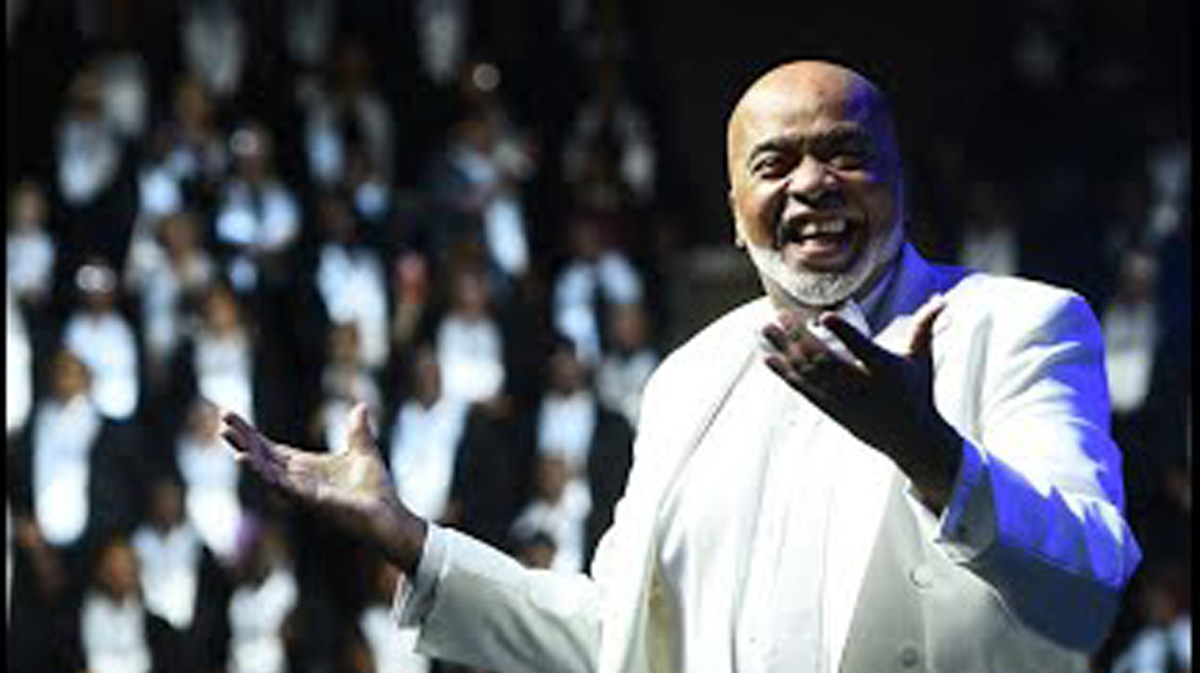
A. Curtis Farrow has spent decades shaping the sound and spirit of gospel music, but he has become equally known for another calling: guiding families and communities through the most visible and emotionally charged homegoing services in America. His work sits at the intersection of faith, culture, and public memory.
Farrow’s journey into planning high-profile funerals emerged from trust and necessity. After the passing of Whitney Houston, her mother, Cissy Houston (“My dear friend, my dearest little sister.”), asked him to take the lead. Farrow initially approached the service as he would any large-scale production—drawing on his background in Broadway shows and major events. He quickly experienced a shift in perspective. What began as a “show” transformed into something sacred.
He recalls that “God moment” as a turning point, “I realized I was not producing entertainment, but preparing a celebration to give back to God,” he said. For Houston’s service, he intentionally centered the Black church experience. “We used the ushers, nurses, and traditions of New Hope Baptist Church in Newark—Whitney’s home church.” Even the broadcast was carefully considered; a single camera was used so the world could see the service without disrupting its intimacy. The result— viewers described the feeling not as watching television, but as being present in church.
That service became a defining moment, establishing Farrow as a trusted figure in high-profile memorials. His work on the funeral of Aretha Franklin further cemented his reputation. While some focused on the length and star power of the multi-day celebration, Farrow produced a heartfelt tribute. “We celebrated her life by being grateful for the time she was with us. She was legitimately ‘The Queen’ so we had the pink Cadillacs.” He approached it not as an event to condense, but as a life to fully honor. Strategic decisions—such as releasing an official image of Franklin to prevent exploitation—demonstrated his understanding of both media dynamics and dignity for Franklin and her family.
Through these experiences, Farrow developed a core principle: “Their personality does not leave,” he explains. “It is your job to celebrate the embodiment of that spirit.” This belief carried into his involvement with the funeral of Reverend Jesse Jackson, one of the most influential civil rights leaders of the modern era. Farrow worked alongside a large team already in place. He focused on key elements such as the program and overall flow, eventually taking on a broader producing role. Central to the process was collaboration with the Jackson family including Jackson’s widow, Jacqueline, and children Jesse Jr, Santita, Yusef and their other siblings—who played active roles in shaping the service. He also worked closely with the Leak family of Leak and Sons Funeral Homes in Chicago.
The scale of the event reflected Jackson’s global impact. Leaders and dignitaries from around the world participated, underscoring his influence as a diplomat, activist, and minister. Yet Farrow remained focused on a simple guiding principle he repeated throughout his planning: “This is a church service.” He ensured that faith—not spectacle—remained at the center.
Balancing Jackson’s public stature with his private identity as a husband, father, and grandfather required careful attention. Farrow emphasizes that involving the family is not only respectful but crucial. He views participation as part of the grieving process—an “activation of grief” that allows loved ones to shape how the world remembers the person they lost. Through regular family meetings, decisions were made collectively, preserving both unity and authenticity.
Despite the magnitude of such events, Farrow resists framing his work in terms of personal achievement. He consistently points to teamwork and what he describes as a spiritual calling. “It’s not a show,” he says. “It’s a God assignment. This is God anointed, and appointed—He anointed and appointed me to do this, to prepare his child for celebration.” That mindset also shapes his decisions about which services to accept; he believes each opportunity must align with a deeper sense of purpose rather than prestige. Naturally, in 2024, Farrow directed the homegoing of his dear friend, Dr. Emily “Cissy” Houston—12 years after the death of her beloved daughter, Whitney.
Alongside this work, Farrow continues to lead McDonald’s Gospelfest, now in its 43rd year. The event, which he has produced for over 25 years, remains one of the largest gospel music showcases in the country. Recently adapted to changing audiences, it now includes performances in venues like Palladium Times Square, featuring artists such as The Clark Sisters, Le’Andria Johnson, and Jennifer Holliday. Like his memorial productions, Gospelfest reflects his commitment to faithcentered experiences that bring people together.
Of course, none of this would be possible without Farrow’s deep faith and his sincere, welcoming spirit. In honoring figures like Cissy and Whitney Houston, Aretha Franklin, and Reverend Jesse Jackson, he has helped shape how the world grieves—and how it remembers


