Franco the Great: A Life of Artistic Vision
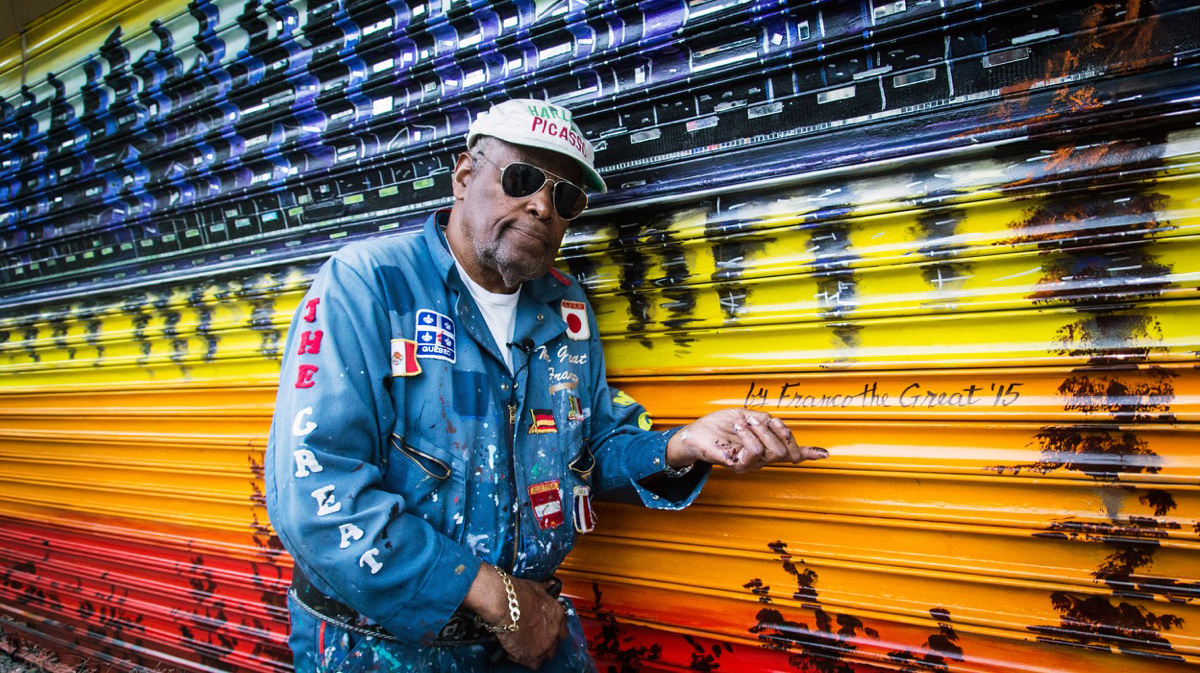
Franco the Great was a remarkable figure in New York City’s art and cultural history, particularly known for his distinctive approach to fashion, painting, performance, and public art. Born in Haiti and raised in Brooklyn, Franco developed an artistic identity that reflected both his Caribbean heritage and the creative energy of New York City. His work became especially visible in Harlem, where he transformed ordinary spaces into colorful expressions of imagination and culture.
One of Franco’s most recognizable contributions was his work with clothing and fashion. He became known for creating elaborate, colorful outfits that challenged conventional ideas about how people should dress. His clothing was more than fashion—it was a form of artistic expression. Through his unusual combinations of colors, textures, and designs, Franco created a visual identity that made him instantly recognizable on the streets of New York.
Franco also became closely associated with Harlem and its vibrant cultural community. His presence was particularly memorable because he did not simply observe the neighborhood’s culture; he participated in it. He became part of the visual landscape, using his appearance and artwork to bring attention to creativity within the Black community. For many people, Franco represented the freedom to be different and unapologetically artistic.
His artistic vision extended beyond clothing. Franco created paintings and other works that reflected his fascination with color, movement, spirituality, and everyday life. His art did not necessarily follow traditional rules about what serious art was supposed to look like. Instead, he embraced an expressive style that allowed his imagination to lead the way.
Franco’s story is also connected to the history of Haitian immigrants in New York. Like many immigrants, he brought cultural experiences from his homeland into a new environment. His Haitian background became an important part of his identity, while his experiences in Brooklyn and Harlem helped shape his artistic personality. His life demonstrated how immigrant communities contribute to the cultural richness of New York.
What made Franco particularly fascinating was his willingness to make himself part of his artwork. He became something of a living canvas. His clothing, personality, and public appearances were inseparable from his artistic identity. In an era when artists were often expected to remain behind their work, Franco challenged that idea by turning his own presence into a creative statement.
Franco also represented a larger tradition of unconventional Black artists who used creativity to challenge social expectations. His work suggested that art did not have to exist only inside galleries or museums. Art could appear on the street, in clothing, in conversation, and in the way an individual presented himself to the world. That philosophy helped make Franco an unforgettable character in New York’s cultural history.
His connection to Harlem is especially significant because Harlem has long served as a center for Black artistic expression. From the Harlem Renaissance to contemporary culture, the neighborhood has produced writers, musicians, painters, photographers, dancers, and performers. Franco belonged to that continuing tradition, contributing his own unusual combination of fashion, visual art, personality, and performance.
Although Franco the Great may not be as widely known as some of New York’s most famous artists, his story remains important because it illustrates another side of the city’s creative history. Not every influential artist becomes internationally famous or receives major museum exhibitions. Some artists influence their communities simply by being visible, imaginative, and courageous enough to create on their own terms.
Franco the Great ultimately represents the power of individuality. His life reminds us that artistic expression can take many forms and that an artist does not always need permission from traditional institutions to make an impact. Through his clothing, paintings, personality, and presence in Harlem, Franco created a unique cultural identity. His legacy is a reminder that sometimes the most memorable artists are those who dare to become completely themselves.