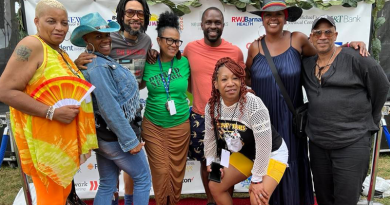
The Fred Hampton Museum

The Fred Hampton Museum, located in Maywood, Illinois, stands as both a memorial and a living community hub. What was once the childhood home of Fred Hampton, the charismatic chairman of the Illinois chapter of the Black Panther Party, has now been transformed into a space dedicated to preserving his story and the broader history of the movement he helped shape. Its presence is quiet, almost modest, but the power of the legacy it houses reverberates far beyond its walls.
Fred Hampton moved into the Maywood home at the age of ten. Here, within a working-class Black family shaped by the Great Migration, his early awareness of justice and inequality began to take root. In these very rooms, Hampton organized neighborhood initiatives for children, including small food programs, which foreshadowed the Black Panther Party’s famed Free Breakfast Program. His story reminds visitors that revolutionary consciousness often begins at home, in ordinary spaces, through acts of care and responsibility.
For decades, however, the house risked fading into obscurity. Years of neglect and the looming threat of foreclosure nearly erased this important landmark. By 2018, the home faced the auction block, and with it, the possibility of losing a physical connection to Hampton’s life. But Hampton’s family, led by his son Fred Hampton Jr., launched a campaign to save and restore the house. The “Save the Hampton House” initiative, backed by community members and supporters across the nation, was not just about bricks and mortar. It was about protecting a symbol of resilience, resistance, and possibility.
The campaign gained new momentum with the release of Judas and the Black Messiah in 2021, a film dramatizing Hampton’s leadership and his assassination at just 21 years old. As the film brought Hampton’s story to international audiences, donations for the house poured in. Supporters rallied behind the cause, pushing the campaign beyond its $350,000 goal. What could have been a demolition turned into a resurrection, with the home now standing as a permanent reminder of Hampton’s unfinished work.
In 2022, the Village of Maywood officially granted the house landmark status. This recognition was not merely ceremonial; it ensured the preservation of the property and acknowledged its cultural significance. For the community, and for activists across the country, the designation was a victory. It meant Hampton’s name, his history, and his contributions would remain tethered to a place where new generations could learn and reflect.
Inside, the museum serves as an educational center as much as a memorial. Plans include exhibits featuring rare photographs, archival newspapers from the Black Panther era, and documents that detail Hampton’s rise as a visionary leader. More than frozen artifacts, these displays aim to immerse visitors in the energy of a movement that emphasized both political education and practical community programs.
The museum also embraces the Panthers’ philosophy of creating “survival programs” that serve people’s needs. Proposals include establishing a community garden on the grounds, echoing the Panthers’ commitment to food justice, as well as creating a recording studio and radio broadcast space to amplify community voices. In this way, the house functions not just as a museum of the past but as a workshop for the future.
For Hampton’s family, the project is deeply personal. His widow, Akua Njeri, and his son, Fred Hampton Jr., continue to play active roles in shaping the museum and its outreach. Through the December 4th Committee, they organize events, distribute food and clothing, and ensure that Hampton’s philosophy of service is not confined to history books but practiced in real time. The museum becomes an extension of their ongoing activism, proving that memory can inspire present action.
Fred Hampton’s impact extended far beyond Maywood. As a young leader, he built alliances across racial and ethnic lines, forming the Rainbow Coalition that united the Black Panthers, the Puerto Rican Young Lords, and the poor white Young Patriots. This bold, inclusive vision is reflected in the museum’s mission, which emphasizes teaching visitors about solidarity across differences. The house is not just about one man, but about the networks of people he inspired and the coalition politics that remain urgent today.
Supporters emphasize that the Hampton House is more than a shrine to martyrdom. It is a site of empowerment. Visitors are encouraged not just to learn what happened in 1969, when Hampton was killed in a predawn police raid, but to consider what his unfinished work demands of them today. The museum positions itself as a cultural engine—one that continues Hampton’s call to “dare to struggle, dare to win.”
Local leaders have also celebrated the museum as an anchor for Maywood’s history and pride. Representative Bobby Rush, himself a co-founder of the Illinois Black Panther Party, has underscored the importance of preserving the home as a teaching tool. He and others note that Hampton’s early life and formative experiences in Maywood were as important to his development as his later years in Chicago. The museum, then, is not just about memorializing tragedy but about contextualizing a life rooted in community and nurtured by family.
The Hampton Museum also challenges traditional museum models. Rather than focusing on passive displays, it invites active participation. Political education workshops, storytelling sessions, and interactive exhibits encourage visitors to think critically about power, justice, and resistance. The house becomes less a monument and more a living classroom—one where Hampton’s ideals are constantly reexamined and applied to the present.
The preservation of the Hampton House is also symbolic of a larger struggle to protect Black historical sites nationwide. Too often, homes, schools, and community centers tied to Black history are left to decay, their significance ignored until they vanish. Saving Hampton’s home sets a precedent for how communities can reclaim these spaces, ensuring they remain not only standing but thriving as centers of culture and learning.
For younger generations, the museum offers an entry point into the life of a man who, though assassinated before his 22nd birthday, left an indelible mark on American history. By situating Hampton’s personal story within the broader context of the Black Panther Party and the social movements of the 1960s, the museum makes history tangible and immediate. It shows that revolutions are built not only in grand speeches or dramatic events but also in everyday acts of care, education, and solidarity.
Ultimately, the Fred Hampton Museum is both a sanctuary of memory and a seedbed for the future. It honors the radical vision of a young leader whose voice was silenced but never erased. By turning Hampton’s boyhood home into a place of learning, service, and cultural renewal, the museum ensures that his call for justice continues to echo across generations. It is more than a building—it is a living reminder that the struggle for freedom, equality, and dignity remains alive.